Best Mountaineering Watches of 2026
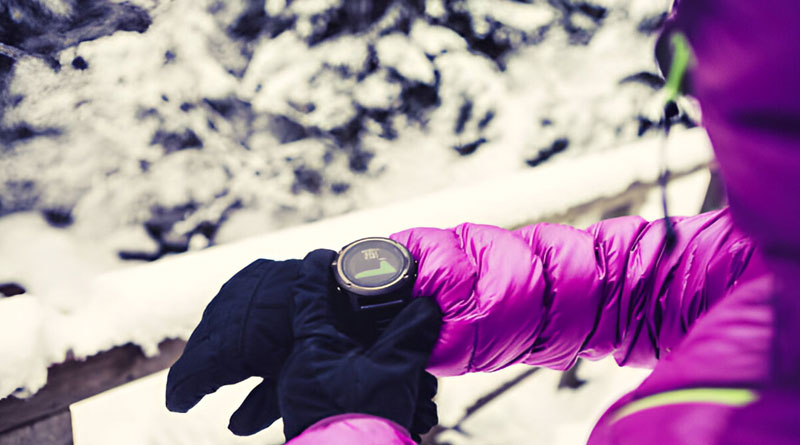
Looking for the best watch to take up a mountain? You need more than just a timekeeper. The right mountaineering watch tracks altitude, weather, and your route, all while handling freezing temps and rocky surfaces. Whether you’re a seasoned climber or a beginner hiker, a good watch can be a lifesaver. This guide breaks down the top picks—tough, reliable, and easy to use—so you can focus on the climb, not your gear.
1. Garmin fenix 8 Pro

- Display Size: 1.4 inches AMOLED
- Altimeter: Pressure-based
- Water-Resistant Depth: 100 meters
- Satellite Tracking: GPS detectable with preloaded Road and Topo maps
The Garmin fenix 8 Pro is a powerhouse designed for alpine environments where communication is critical. Serving as the first Garmin smartwatch to integrate built-in inReach technology, it allows you to utilize two-way messaging, place voice calls, and trigger interactive SOS alerts without relying on a smartphone. This safety-first focus makes it a reliable companion for remote high-altitude peaks.
Beyond safety, this watch offers an incredibly vibrant AMOLED display that remains crisp in bright conditions. The battery performance is highly adaptable, stretching up to 27 days in smart mode for the 51 mm version or 44 hours of continuous tracking in GPS-only mode. It also includes comprehensive physiological tracking tools like VO2 Max estimation and recovery advising.
Pros: Includes standalone inReach messaging, features a vivid AMOLED screen, and provides extensive map navigation tools.
Cons: Always-on display mode significantly reduces battery life, and the interface is complex for beginners.
See the Garmin fenix 8 Pro See the Garmin fenix 8
2. Garmin Instinct 3

- Display Size: 0.9 inches with solar charging lens
- Case Construction: 45 mm fiber-reinforced polymer
- Durability Standards: MIL-STD-810 thermal and shock resistance
- Navigation Hardware: 3-axis compass, barometric altimeter, and multi-band GPS
The Garmin Instinct 3 trades flashy design for utilitarian survivalism. Its standout attribute is an unlimited battery lifespan in smartwatch mode, achieved through an efficient solar charging lens that capitalizes on outdoor light exposure. Protected by a tough 45 mm case and metal-reinforced bezel, it easily handles accidental impacts against solid rock walls.
This timepiece excels in navigation, using SatIQ technology to toggle multi-band GPS configurations that optimize location accuracy while preserving energy reserves. Mountaineers will also appreciate the built-in multi-intensity LED flashlight, which serves as an excellent emergency backup illumination tool. Smart features like Garmin Pay and incident tracking round out its capabilities.
Pros: Offers unlimited battery through solar charging, features a bright integrated flashlight, and meets military durability standards.
Cons: Display is quite small at under one inch, and it lacks standard visual map rendering.
3. SUUNTO Core Classic
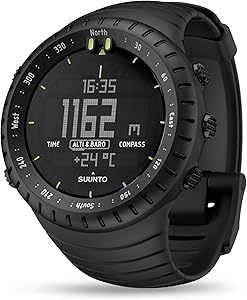
- Core Sensors: Altimeter, Barometer, and Digital Compass
- Environmental Alerts: Integrated Storm Alarm
- Water Safety: Depth meter accurate up to 30 feet
- Daylight Tracking: Predicted sunrise and sunset times
The SUUNTO Core Classic is a quintessential reference piece among backcountry traditionalists. Eschewing complex power-hungry satellite tracking, this durable digital device zeroes in on the ABC essentials: Altimeter, Barometer, and Compass. Its onboard weather sensor constantly tracks atmospheric trends, triggering a helpful Storm Alarm if a sudden pressure drop is detected.
Crafted with a clean Scandinavian design aesthetic, the Core Classic functions reliably across severe temperature variations. It serves as a great tool for timing camp setups, thanks to built-in sunrise and sunset calculators that help you optimize your remaining daylight. It also includes daily tools like dual time displays and basic activity tracking.
Pros: Features highly reliable real-time weather monitoring, requires no charging cords, and is very user-friendly.
Cons: Lacks any GPS positioning capabilities, and does not sync with modern fitness apps.
4. Garmin Enduro 3

- Display Size: 1.4 inches with solar-power capability
- GPS Tracking Life: Up to 120 hours in continuous GPS mode
- Smartwatch Battery: Up to 36 days on a single charge
- Water Resistance: Rated to a depth of 100 meters
The Garmin Enduro 3 is tailor-made for multi-day expeditions and ultra-endurance challenges where plugging into an outlet is impossible. This lightweight yet highly rugged piece sets a high bar for longevity, boasting a staggering 120 hours of performance when tracking continuously under regular GPS settings. Its integrated solar technology keeps the interface functioning for weeks on end.
Navigation is handled beautifully via preloaded topographical maps displayed across a bright 1.4-inch screen. The watch balances structural durability with biometric intelligence, utilizing its integrated wrist sensor to monitor heart rate target zones and blood oxygen levels. It stores up to 1,000 distinct custom navigation waypoints for remote route mapping.
Pros: Incredible multi-day battery lifespan, features preloaded topographical maps, and holds a vast amount of waypoint data.
Cons: Large case dimensions can feel bulky on small wrists, and uses standard backlight illumination instead of AMOLED.
5. COROS VERTIX 2S

- Satellite Connectivity: Dual-frequency global tracking for all major networks
- Standard GPS Battery: 118 hours of continuous use
- Daily Use Battery: Lasts up to 40 days
- Maps Included: Preloaded Road and Topo visual maps
The COROS VERTIX 2S is engineered to survive extreme mountain expeditions and grueling wilderness trails. Equipped with dual-frequency satellite communication technology, this device locks onto multiple networks simultaneously to maintain location accuracy inside deep rock chasms or dense forests. It balances this high power consumption with an exceptional battery that runs for 43 hours in top multi-network modes.
The watch is optimized for climbers and runners who require extensive route awareness. It displays crisp visual maps across its 1.4-inch screen and utilizes an internal pressure-based altimeter to log exact vertical gains. Post-workout analysis is streamlined, giving you instant metrics on training load, active calorie burn, and overall physical recovery.
Pros: Outstanding satellite accuracy in deep canyons, superb daily battery life, and high-quality map integration.
Cons: Accessory compatibility is limited primarily to Bluetooth, and it holds fewer custom waypoints than competitor models.
6. SUUNTO 9 Peak

- Battery Modes: 40 hours in best GPS mode, up to 300 hours in tour mode
- Charging Speed: Full power restoration in one hour
- Materials Used: Titanium, stainless steel, and sapphire glass
- Sport Settings: 97 dedicated tracking modes
- Weather Features: Built-in avalanche maps and weather alerts
The SUUNTO 9 Peak Pro pairs high-end Nordic styling with military-grade construction. Built by hand in Finland using renewable energy, its chassis combines titanium and sapphire crystal glass to protect against harsh alpine elements. Despite its slim profile, it provides robust tracking across four satellite networks, ensuring reliable routing through cliffs and mountain valleys.
This watch focuses heavily on keeping you safe from sudden environmental threats by including localized weather alerts and real-time avalanche maps. The battery architecture is highly versatile, extending up to 300 hours in custom touring modes, and its fast-charge system adds two hours of GPS tracking with a quick 10-minute plug-in.
Pros: Features exceptionally fast battery charging, provides helpful avalanche safety maps, and utilizes premium titanium craftsmanship.
Cons: Touchscreen can be tricky to navigate with heavy gloves, and screen brightness is lower than AMOLED alternatives.
7. Casio Pro Trek PRG-270-1
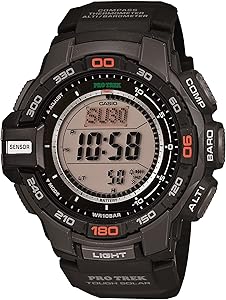
- Power Supply: Tough Solar charging system with battery indicator
- Environmental Range: Low-temperature resistance down to -10°C / 14°F
- Sensors Included: Digital compass, altimeter, barometer, and thermometer
- Water Resistance: Rated to 100 meters
The Casio Pro Trek PRG-270-1 is an incredibly reliable ABC watch built for budget-conscious backcountry explorers. Operating on Casio’s Tough Solar technology, it recharges its storage battery using ambient sunlight, letting it function up to nine months in absolute darkness. It is specially designed to withstand freezing cold temperatures without digital slowdowns.
The user interface provides quick, direct button access to clear temperature readouts, barometric trends, and heading data. It helps you schedule your trekking days perfectly by offering pre-calculated sunrise and sunset data across 31 global time zones. Additional outdoor tools include five daily alarms and a precise countdown timer.
Pros: Requires zero battery swaps, operates perfectly in freezing mountain cold, and offers straightforward sensor access.
Cons: Display lacks topographical mapping features, and the integrated resin band feels somewhat stiff initially.
8. Casio PRW3500 Series

- Water Resistance: Rated up to 200 meters
- Power Technology: Tough Solar rechargeable system
- Chassis Hardware: 55mm case with a rotating direction bezel
- Time Calibration: Multi-Band atomic radio signal reception
The Casio PRW3500 Series is a heavy-duty tactical timekeeper designed for rugged marine environments and wet mountain scrambles. It steps up its versatility with an upgraded 200-meter water resistance rating, making it ideal for serious water sports or bad weather. Its exterior includes a functional steel direction bezel to help with quick compass tracking.
This timepiece utilizes atomic timekeeping calibration, automatically correcting its internal settings via radio signals for pinpoint accuracy. Like its sister models, it remains fully operational down to -10°C and features a full suite of environmental sensors. A bright auto-LED backlight triggers with a flick of your wrist to ensure clear night visibility.
Pros: Features excellent 200m water resistance, auto-adjusts via radio signals, and has a durable rotating bezel.
Cons: The 55mm case size is very wide and heavy, and mineral glass scratches easier than sapphire crystal.
9. COROS APEX 4
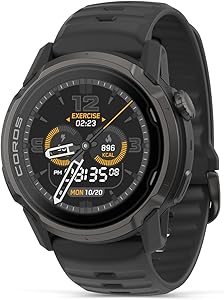
- Display Size: 1.3-inch sapphire touchscreen
- Battery Life: Up to 65 hours in All Systems GPS mode
- Navigation: Dual-frequency GPS with vertical algorithms
- Audio Hardware: Integrated microphone and speaker
The COROS APEX 4 delivers premium alpine-grade engineering in a lightweight titanium chassis designed to survive harsh mountain conditions. Equipped with reinforced lugs and a scratch-resistant sapphire glass touchscreen, this 46mm watch offers high-speed map and graphic rendering that is thirty times faster than previous generations. It displays landscape, topographic, and hydro maps with deep fifteen-meter zoom capabilities, helping climbers remain oriented even when completely off the grid.
Designed for ultra-endurance athletes tackling massive vertical gains, its dual-frequency tracking maintains strong connections near sheer rock walls and deep couloirs. The onboard microphone and speaker allow you to record rapid voice pins to note terrain data or answer hands-free phone calls during your trek. With specific activity profiles built for ski touring and big wall climbing, it acts as an excellent training partner for high-altitude endurance missions.
Pros: Fast map rendering, dual-frequency accuracy in steep terrain, lightweight titanium construction.
Cons: Screen size is smaller than some competitors, touchscreen can be sensitive in heavy rain.
10. Garmin Enduro 2

- Display Glass: 1.4-inch Power Sapphire solar lens
- GPS Technology: SatIQ auto-selecting satellite mode
- Illumination: Superbright built-in LED flashlight
- Strap Type: Lightweight UltraFit nylon band
The Garmin Enduro 2 is built to sustain performance over punishing multi-day backcountry journeys. Featuring a rugged yet remarkably lightweight design, this smartwatch utilizes a Power Sapphire lens to harvest solar energy, significantly extending runtime between charges. Its advanced SatIQ technology automatically switches between GPS modes to preserve battery capacity while providing pinpoint location data across complex, heavily forested routes.
Navigating unfamiliar mountain trails is highly intuitive thanks to preloaded TopoActive maps, ski resort layouts, and the helpful NextFork map guide that previews upcoming trail intersections. Safety is enhanced with an ultra-bright integrated LED flashlight that features adjustable intensity levels, a cadence-matching strobe, and a red preservation light. Performance telemetry like grade-adjusted pacing and automatic rest timers help you pace yourself during exhausting ascents.
Pros: Exceptional solar battery expansion, very bright flashlight, accurate trail guidance tools.
Cons: Large physical footprint on smaller wrists, premium price tag.
How to Choose Mountaineering Watches
Mountaineering is a thrilling pursuit that combines endurance, technical skills, and a deep respect for nature’s most rugged environments. Whether you are scaling snow-capped peaks, navigating glaciers, or trekking through high-altitude trails, having the right gear can make the difference between success and failure, comfort and hardship, or even safety and danger. Among these essential pieces of gear is a mountaineering watch—a specialized timepiece designed not only to tell the time but to serve as a survival tool in extreme conditions.
Unlike regular watches, mountaineering watches are built to withstand harsh weather, provide navigation assistance, and monitor your body’s performance under challenging conditions. But with so many options available, choosing the right one can feel overwhelming. This article explores the key features to look for and how to select the perfect watch for your adventures.
1. Understanding the Role of a Mountaineering Watch
A mountaineering watch is more than an accessory; it is a multi-functional tool. In the mountains, you may face unpredictable weather, high-altitude conditions, and the constant need to track your route and time. A good mountaineering watch can help with:
- Navigation: Through GPS, compass, and altimeter functions.
- Weather Awareness: Using barometers and storm alerts to anticipate sudden changes.
- Performance Monitoring: Tracking heart rate, oxygen levels, and calories burned.
- Survival: Providing accurate data when traditional maps or devices may fail.
In short, a mountaineering watch can be a lifeline, guiding your decisions and keeping you prepared in uncertain environments.
2. Essential Features to Consider
When choosing a mountaineering watch, certain features are non-negotiable. These functions distinguish a mountain-ready watch from a regular sports or digital watch.
a) Altimeter
An altimeter measures altitude—crucial for mountaineers who need to know how high they are, whether for pacing, acclimatization, or navigation. Look for watches with both GPS-based and barometric altimeters for greater accuracy.
b) Barometer
A barometer tracks air pressure and can predict weather changes. Sudden drops in pressure may signal an incoming storm, giving you time to find shelter.
c) Compass
A digital or traditional compass is vital for navigation, especially when maps and GPS signals fail in deep valleys or snowy conditions.
d) GPS and Navigation Features
Modern mountaineering watches often come with GPS navigation, route tracking, and even breadcrumb trails to help you retrace your path. This is especially useful in remote areas without clear trails.
e) Durability and Materials
The watch must withstand freezing temperatures, impact from falls, and exposure to water or snow. Look for scratch-resistant sapphire crystal, titanium or stainless steel cases, and rugged designs.
f) Battery Life
Battery life is critical, particularly on long expeditions where charging may not be possible. Choose a watch with extended GPS battery life (at least 20-40 hours in GPS mode) or solar charging capabilities.
g) Water Resistance
At high altitudes, you may face snow, ice, or heavy rain. A mountaineering watch should have at least 100 meters of water resistance to handle these conditions.
h) Thermometer
Tracking external temperature helps in adjusting clothing and planning for cold weather survival.
i) Heart Rate and Oxygen Monitoring
At high altitudes, oxygen levels drop, and your body struggles to adapt. Watches with pulse oximeters and heart rate monitors help climbers avoid altitude sickness by monitoring acclimatization.
j) Smartwatch Functions (Optional)
Some mountaineering watches offer smartphone notifications, music storage, and fitness apps. While not essential, they may be convenient for multi-purpose use.
3. Choosing the Right Watch for Your Needs
Not every mountaineer has the same requirements. The right watch depends on the type of climbing or trekking you plan to do.
a) Casual Hikers and Trekkers
If your adventures involve weekend hikes or low-altitude climbs, you may not need advanced features like oxygen monitoring. A basic ABC watch (Altimeter, Barometer, Compass) will suffice.
b) High-Altitude Climbers
For expeditions above 4,000–5,000 meters, watches with advanced features like pulse oximeters, GPS navigation, and extended battery life are essential.
c) Technical Mountaineers
Climbers tackling ice walls, glaciers, or mixed terrains need durability, shock resistance, and reliable navigation tools. Sapphire glass and titanium builds are ideal.
d) Expedition Leaders and Professionals
If you guide teams or undertake multi-week expeditions, invest in premium models with solar charging, detailed mapping, storm alerts, and robust tracking.
4. Popular Brands and Models
Several manufacturers specialize in mountaineering watches. Some of the most trusted brands include:
- Garmin: Known for GPS accuracy and advanced navigation features. Models like Garmin Fenix and Garmin Enduro are highly popular among climbers.
- Suunto: Pioneers of ABC watches, Suunto offers rugged and reliable devices like Suunto 9 Peak Pro.
- Casio (Pro Trek & G-Shock): Affordable yet durable, Casio watches are favorites for beginners.
- Coros: Lightweight watches with exceptional battery life, suitable for ultramarathoners and mountaineers.
Each brand offers models at different price points, so you can choose based on your budget and required features.
5. Budget Considerations
Mountaineering watches range from $150 entry-level models to $1,000+ premium editions. Before purchasing, ask yourself:
- How often will I use it? Occasional hikers may not need the most expensive model.
- Do I need GPS mapping? If you rely on paper maps, a simpler ABC watch may suffice.
- Will I climb high altitudes? If yes, invest in models with oxygen monitoring and weather alerts.
Remember, a watch is an investment in safety, not just style.
6. Practical Tips for Buying
- Try before you buy: Ensure the watch feels comfortable on your wrist, especially with gloves.
- Check readability: The display should be visible in bright sunlight and during night climbs.
- Update firmware: Modern smartwatches often receive updates that improve accuracy and add features.
- Consider weight: A heavy watch may feel cumbersome during long climbs.
- Backup plan: Always carry a map and compass; never rely solely on your watch.
Final Thoughts
Choosing a mountaineering watch is about balancing your needs, budget, and environment. While flashy features may sound attractive, focus on practicality: durability, battery life, and essential functions like altimeter, barometer, and compass. A reliable mountaineering watch should complement your skills, not replace them.
Ultimately, the best watch is the one that keeps you safe, helps you navigate effectively, and stands resilient in extreme conditions. Whether you are an occasional hiker or a professional alpinist, investing in the right mountaineering watch ensures that time—and safety—are always on your side.