Best Crampons for Mountaineering of 2025
Climbing icy peaks and snowy slopes requires the right gear, and crampons are one of the most important tools for safe mountaineering. These metal spikes attach to your boots to give grip on ice, hard snow, and mixed terrain, helping you stay secure when the ground gets slippery or steep. Choosing the right pair can make a big difference, as the wrong crampons can be uncomfortable or unsafe. In this guide, we look at the best crampons for mountaineering, comparing their features, comfort, and performance, so you can find the perfect pair for your adventures in the mountains.
1. Hillsound Trail Crampons

- Spike Material: Heat-treated carbon steel
- Harness: Stainless steel chain with an elastomer harness
- Weight (medium): 15.7 ounces (445 grams)
- Best For: Winter hiking, trail running, and glacier walking
The Hillsound Trail Crampons are a durable option for tackling icy and snowy terrain. Their design features heat-treated carbon steel spikes linked by a tough stainless steel chain, which provides excellent traction. A user noted that these crampons were superior to a friend’s cleats on thick ice, highlighting their effectiveness. The ergonomic plate system is another key feature, as it helps distribute pressure to improve grip and reduce muscle fatigue over long distances. The included hook-and-loop straps make them easy to secure and remove, which is a convenient feature in cold conditions. They even come with a storage bag, making them simple to pack and carry for any trip.
While they excel on ice, these crampons are also versatile enough for a variety of activities, including winter hiking and trail running. Their construction feels solid and built to last, with strong spikes and a dependable chain system. However, one user mentioned they are a bit tougher to stretch over boots compared to other brands, a minor trade-off for their secure fit. Overall, the Hillsound Trail Crampons are a reliable and high-performance choice for serious outdoor enthusiasts who need dependable traction on challenging winter trails.
Pros and Cons
Pros:
- Provides superior traction on thick ice and snow.
- Durable and strong carbon steel spikes.
- Ergonomic plate system helps reduce muscle fatigue.
- Includes a storage bag for easy transport.
Cons:
- Can be difficult to stretch over boots.
See the Hillsound Trail Crampons
2. Cimkiz Crampons Ice Cleats

- Spike Count: 19 stainless steel spikes
- Harness Material: Thermoplastic elastomer (TPE)
- Temperature Rating: Maintains performance down to -45°C (-49°F)
- Best For: Trail running, hiking, and ice fishing
The Cimkiz Crampons are designed to provide reliable traction in various challenging conditions. With 19 high-quality stainless steel spikes per foot and a sturdy chain system, they offer great grip on icy roads, driveways, and muddy trails. The spikes are strategically placed to ensure a secure footing and prevent slips and falls. The harness is made from a durable thermoplastic elastomer (TPE) that is 5mm thicker than standard rubber, giving it exceptional strength and elasticity. This material is built to withstand extreme cold temperatures down to -45°C without tearing or snapping. An adjustable strap ensures a snug fit over various types of footwear, from hiking boots to casual shoes.
These crampons are also highly practical. They are flexible and lightweight, making them easy to fold up and store in the included carry bag without taking up much space. This portability makes them a great option to keep in your backpack or car for unexpected icy conditions. The simple slip-on design with a strap makes them easy to put on and take off, which is a huge convenience when you’re on the go. Overall, these cleats are a versatile and dependable choice for anyone needing extra traction in winter or on slippery terrain. While they provide strong grip for most activities, they are not designed for technical mountaineering.
Pros and Cons
Pros:
- Strong 19-spike system for excellent traction.
- Durable TPE material resists tearing and cold.
- Lightweight and easy to carry.
- Adjustable strap provides a secure fit.
Cons:
- Not suitable for technical mountaineering.
See the Cimkiz Crampons Ice Cleats
3. Yaktrax Walk Traction Cleats

- Traction System: Steel coil technology
- Harness Material: Thermoplastic rubber
- Spike Count: No spikes, uses steel coils instead
- Best For: Walking on packed snow and ice
The Yaktrax Walk Traction Cleats offer a unique solution for stability on slippery surfaces. Unlike traditional crampons with sharp spikes, these cleats use an innovative coil technology made from durable, abrasion-resistant steel. This design provides 360-degree traction, adapting to various terrains without damaging surfaces or footwear. The steel coils are designed to grip evenly across ice and snow, providing a stable and confident stride. The thermoplastic rubber sling is another key feature, as it’s built to withstand cold temperatures without becoming brittle, ensuring long-lasting durability. The sling also has a convenient heel tab, making it easy to put on and take off.
These cleats are incredibly versatile and easy to use. The flexible sling stretches comfortably over a variety of footwear, from casual shoes to boots, ensuring a secure fit. Their lightweight and minimalist design make them an excellent choice for a wide range of everyday winter activities, such as walking the dog or strolling on a packed trail. The lack of sharp points means they won’t damage floors or car interiors if you forget to take them off. While they aren’t meant for steep, technical terrain, they are a fantastic option for anyone looking for reliable and comfortable traction for general use on icy or snowy sidewalks and paths.
Pros and Cons
Pros:
- Innovative steel coil technology provides 360-degree traction.
- Durable rubber sling stays flexible in the cold.
- Easy to put on and take off.
- Won’t damage floors or footwear.
Cons:
- Not designed for steep or technical climbing.
- Less aggressive grip than traditional spiked crampons.
See the Yaktrax Walk Traction Cleats
4. Tomaje 24 Spikes Crampons

- Spike Count: 24 premium stainless steel spikes
- Harness Material: Cold-resistant silicone
- Temperature Rating: Maintains performance down to -30°C (-22°F)
- Best For: Trail running, hiking, and snow mountain climbing
The Tomaje 24 Spikes Crampons are built for serious traction and durability. Featuring 24 premium stainless steel spikes, these crampons offer a significant increase in grip compared to many other models. The spikes are double-welded to the chain system, making them exceptionally strong and rust-resistant, while preventing side-to-side movement for a more secure footing. The harness is crafted from a thick, cold-resistant silicone that remains highly elastic and flexible even in temperatures as low as -30°C. This material is designed to resist tearing or snapping, ensuring long-lasting comfort and durability. The adjustable straps allow for a customized and snug fit, keeping the crampons securely in place during a variety of winter activities.
In addition to their strong performance, these crampons are also highly portable and versatile. Their flexible silicone construction allows them to be folded into a small, compact size that can easily fit into a backpack without taking up much space. This makes them a convenient accessory to bring along on any winter adventure. They are suitable for a wide range of footwear, including boots and athletic shoes, and come in three sizes to fit both men and women. Whether you’re trail running on an icy path or hiking in the mountains, the Tomaje 24 Spikes Crampons provide the reliable traction and safety you need to move confidently in challenging conditions.
Pros and Cons
Pros:
- 24 spikes provide superior traction.
- Durable silicone material is cold-resistant and stretchy.
- Adjustable straps ensure a secure, customized fit.
- Portable and easy to store.
Cons:
- Might be overkill for light use on flat surfaces.
See the Tomaje 24 Spikes Crampons
5. EnergeticSky Walk Traction Ice Cleat Spikes

- Spike Count: 19 multi-directional stainless steel spikes
- Harness Material: Proprietary silicone
- Temperature Rating: Flexible down to -60°F (-51°C)
- Best For: Winter trail running, hiking, and ice fishing
The EnergeticSky Walk Traction Ice Cleat Spikes are designed for robust and dependable performance on icy and snowy surfaces. Featuring 19 multi-directional, enhanced stainless steel spikes, these cleats offer excellent traction and are strategically placed to distribute weight evenly for lasting comfort. The spikes are linked by a strong, welded stainless steel chain, ensuring they won’t rust or break easily. This sturdy construction provides a high level of confidence when walking on slippery terrain. The cleat’s harness is made from a proprietary silicone material, which is not only highly elastic but also tested to remain flexible in extremely low temperatures, down to -60°F. This superior flexibility helps prevent tearing or snapping, even with repeated use in harsh conditions.
These cleats are incredibly practical and user-friendly. The silicone harness is lightweight and flexible, making it easy to slip over your existing shoes or boots. The full-sole coverage, with cleats on both the heel and forefoot, supports a natural stride while maintaining traction. Their compact design allows them to fold down small enough to be easily stored in a pack or a car. Suitable for men and women of all ages, the EnergeticSky cleats are a versatile option for a variety of outdoor activities, including winter hiking and trail running. Overall, they provide a reliable and durable solution to prevent slips and falls on winter trails and sidewalks.
Pros and Cons
Pros:
- 19-spike system provides excellent, multi-directional traction.
- High-quality silicone harness remains flexible in extreme cold.
- Lightweight and easy to carry.
- Durable, rust-resistant stainless steel spikes and chain.
Cons:
- Sizing can be tricky, so it’s important to check the size chart carefully.
See the EnergeticSky Walk Traction Ice Cleat Spikes
6. WIN.MAX Crampons
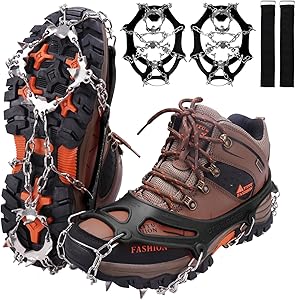
- Spike Count: 19 high-strength stainless steel teeth
- Harness Material: Thermoplastic elastomer (TPE), 5.49mm thick
- Temperature Rating: Flexible down to -90°F (-68°C)
- Best For: Trail running, hiking, and ice fishing
The WIN.MAX Crampons are built to be a strong and reliable partner for any winter adventure. They feature 19 high-strength stainless steel teeth connected by a durable double-chain design. This robust construction makes them more resistant to rust and wear, providing excellent traction on a wide range of slippery surfaces, from icy paths to snowy trails. The design helps reduce the risk of slips and falls, keeping you safe and injury-free. A standout feature is the high-quality thermoplastic elastomer (TPE) used for the shoe cover, which is a thick 5.49mm, making it one of the most durable materials on the market. This material is also tested to maintain flexibility in extremely cold temperatures, down to -90°F, ensuring it won’t tear or snap.
Practicality is another strength of the WIN.MAX Crampons. They are designed to be both lightweight and portable, easily folding to fit into the included carry bag without taking up much space. This makes them convenient to bring along on any trip. The adjustable straps make them easy to put on and take off, providing a snug and secure fit over various types of footwear, including sports shoes, hiking boots, and even casual shoes. These crampons are suitable for men and women of all ages, making them a versatile choice for the whole family. Whether you’re running, hiking, or ice fishing, these crampons offer the reliable grip and durability you need to stay active in winter conditions.
Pros and Cons
Pros:
- Very durable TPE material, resists tearing and extreme cold.
- 19 spikes and a double-chain design for excellent traction.
- Lightweight, portable, and includes a carry bag.
- Adjustable straps for a secure and comfortable fit.
Cons:
- May be overkill for simple walks on light snow.
7. Sportneer Crampons
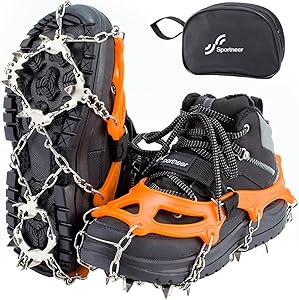
- Spike Count: 19 high-quality stainless steel spikes
- Harness Material: Reinforced thermoplastic elastomer (TPE)
- Temperature Rating: Flexible down to -45°C (-49°F)
- Best For: Winter hiking, ice fishing, and trail running
The Sportneer Crampons are designed to provide a secure and stable grip on a variety of slippery winter surfaces. They feature 19 high-quality stainless steel spikes, which, combined with a robust double-chain design, offer excellent traction and durability. This construction makes them resistant to rust and ensures they won’t easily break, providing a reliable safety measure against slips and falls. The harness is made from a 5mm thick reinforced thermoplastic elastomer (TPE), which improves its strength and elasticity. This material is designed to stay flexible and strong in temperatures as low as -45°C, preventing it from tearing or snapping even in harsh conditions. The added durability ensures these cleats will provide long-lasting performance for many winters to come.
These crampons are also highly user-friendly and portable. Each pair comes with an adjustable strap that helps keep the silicone frame and spikes perfectly positioned on your boots, ensuring a snug and secure fit. The design makes them easy to put on and take off, which is a great convenience in cold weather. They are suitable for a wide range of footwear, including sports shoes, hiking boots, and mountaineering boots. A durable and lightweight storage bag is included, allowing you to easily fold and pack them away without taking up much space. This makes them an excellent choice for anyone who wants a reliable and convenient traction solution for outdoor activities in winter conditions.
Pros and Cons
Pros:
- Durable TPE material resists tears and remains flexible in extreme cold.
- 19 stainless steel spikes provide a secure grip.
- Adjustable straps ensure a perfect fit.
- Includes a storage bag for easy transport.
Cons:
- The adjustable strap may take a moment to secure properly.
How to Choose Crampons for Mountaineering
Selecting the right crampons for mountaineering is a critical decision that can directly impact your safety and performance in the mountains. Crampons are a type of traction device that attaches to your boots, providing essential grip on snow and ice. They come in various designs, each suited for different types of terrain and activities. Choosing the wrong pair can be dangerous, leading to slips, falls, or equipment failure at a crucial moment. This guide will walk you through the key factors to consider, from the different types of crampons available to the features that matter most for your specific needs.
The first step in choosing crampons is to understand the different types and their intended uses. Crampons are generally categorized by their binding system and the material of their frames and points. The binding system determines what type of boot they can be used with, while the materials and design are optimized for different snow and ice conditions. For mountaineering, you will typically be looking at technical crampons designed for climbing, but understanding the full range is helpful.
Types of Crampons
1. Hinged Frame Crampons
Often referred to as flexible or semi-rigid crampons, these are a common choice for general mountaineering and glacier travel. They are built with a hinged frame that allows for some flexibility, making them compatible with both mountaineering boots and stiff hiking boots. This versatility is a major advantage, as it means you don’t need a dedicated, rigid mountaineering boot to use them. Hinged frame crampons are often used for activities like winter hiking, non-technical snow climbs, and glacier crossings. They are not recommended for vertical ice climbing because the flexibility can cause them to pop off your boot when you flex your foot, a scenario you want to avoid on a steep ice face.
2. Rigid Frame Crampons
Rigid frame crampons are built for high-performance mountaineering and ice climbing. They have a solid, non-flexible frame that maintains its shape, providing maximum stability and power transfer from your leg to the crampon points. This rigidity is essential for front-pointing on vertical ice and for mixed climbing, where you need a precise and secure placement. Rigid crampons must be used with a fully rigid mountaineering boot. These boots have no flex in the sole, which ensures the crampon stays securely attached and functions as intended. The combination of a rigid crampon and boot is the standard setup for technical ice and mixed climbing.
3. Hybrid Crampons
Also known as semi-automatic crampons, these are a popular compromise between the flexibility of hinged models and the security of rigid ones. They feature a hinged front section and a rigid back, with a heel lever-lock that snaps onto a heel welt on your boot. They are designed for boots with a stiff sole and a heel welt, but not necessarily a toe welt. This makes them a great option for a wide range of activities, from alpine climbing to general mountaineering on steeper terrain. They are more secure than hinged crampons but offer a bit more flexibility than fully rigid ones, making them a versatile choice for many climbers.
Binding Systems
The binding system is how the crampon attaches to your boot. There are three main types, and the one you choose must match the boot you will be using.
1. Strap-on Bindings
This is the most universal binding system. Strap-on crampons use a series of straps that wrap around the boot to secure the crampon in place. They can be used with almost any type of boot, from soft hiking boots to heavy mountaineering boots. While versatile, they are the least secure binding type and can be slower to put on and take off. They are a good option for less technical terrain and for users who want to use the same crampons with multiple pairs of boots.
2. Semi-Automatic Bindings
Semi-automatic bindings feature a toe basket in the front and a heel lever-lock in the back. The heel lever snaps onto a dedicated heel welt on your boot. This system provides a more secure and reliable connection than strap-on bindings. To use semi-automatic crampons, you need boots with a stiff sole and a heel welt. They are a great middle-ground option for general mountaineering and alpine climbing, offering a balance of security and ease of use.
3. Automatic Bindings
Automatic bindings, or step-in bindings, offer the most secure and precise connection. They use a wire bail in the front and a lever-lock in the back that snap onto both a toe and a heel welt on your boot. This system requires fully rigid mountaineering boots with both front and rear welts. Automatic bindings are quick and easy to attach and detach, making them a favorite for technical ice climbers and mountaineers. They provide the most stable platform for front-pointing and are the standard for vertical ice climbing.
Key Features to Consider
Beyond the type and binding system, several other features are crucial when selecting crampons for mountaineering.
1. Point Configuration and Material
The number and arrangement of the crampon points (or spikes) are vital for different types of climbing. Most mountaineering crampons have 10 to 12 points. For general snow and glacier travel, horizontal front points are sufficient. For steeper or vertical ice, vertical front points provide better penetration and stability. Some technical crampons have interchangeable front points, allowing you to switch between horizontal and vertical setups. The material of the points, typically hardened steel, is also important for durability and sharpness.
2. Anti-Balling Plates
Balling is when snow clumps up under the crampon, forming a large, slippery block. This is a common and dangerous problem. Anti-balling plates, usually made of flexible plastic or rubber, prevent this by flexing and dislodging snow. Almost all modern crampons come with these, and they are a non-negotiable feature for safety in snowy conditions.
3. Frame Adjustment
Most crampons are adjustable to fit a range of boot sizes. Make sure the crampons you choose have a simple and secure adjustment mechanism. It’s always a good idea to try on the crampons with your boots before a trip to ensure a perfect fit.
4. Weight and Durability
The weight of your crampons can make a difference on long climbs. Aluminum crampons are much lighter than steel but are less durable and wear out faster, making them suitable for snow-only climbs where weight is a priority. Steel crampons are heavier but are the standard for durability, especially on mixed terrain or rock. For serious mountaineering, steel is the preferred choice for its strength and reliability.
Final Considerations
Before making a final decision, consider the type of mountaineering you will be doing most frequently. For general use on glaciers and moderate snow slopes, a semi-automatic or hinged crampon with a strap-on binding might be sufficient. If you plan on tackling steep alpine routes or vertical ice, an automatic, rigid crampon is the only safe and effective choice. Always choose your crampons to match the most demanding conditions you expect to encounter. Proper fit and a secure binding are the most important factors for safety and performance in the mountains.