Best Tree Climbing Harnesses of 2025
Tree climbing is an exciting but challenging job, whether you are an arborist, a tree care worker, or someone who enjoys climbing for recreation. Safety and comfort are the most important things to consider, and that’s where a reliable tree climbing harness comes in. The right harness not only protects you from falls but also gives you the support and balance needed to move with ease while working at heights. With so many options available, choosing the best tree climbing harness can feel confusing. This article will guide you through the top choices, helping you find a harness that matches your needs for safety, comfort, and performance.
1. NewDoar Climbing Harness
- Material: High-strength polyester with reinforced stitching
- Weight Capacity: Up to 300 lbs (136 kg)
- Waist Size: Adjustable 31–51 inches
- Leg Straps: Adjustable 23–31 inches
The NewDoar Climbing Harness is a versatile option for both beginners and casual arborists. Built with durable polyester webbing and reinforced stitching, it provides a sturdy foundation for climbing safety. Its half-body design focuses on simplicity, making it quick to put on and adjust. The wide waist belt and adaptable leg loops accommodate a broad range of body types, ensuring a snug fit without overcomplicating adjustments.
When tested in real climbing scenarios, the harness performs well for light-to-moderate tasks such as tree pruning or recreational climbing. It distributes weight evenly, minimizing strain on the waist and legs during short climbs. However, it lacks advanced ergonomic features, so extended use may cause discomfort compared to higher-end harnesses. Overall, this is a reliable and budget-friendly option, especially for beginners or those seeking a secondary harness.
Pros
- Affordable and beginner-friendly
- Wide size adjustability
- Lightweight and easy to use
- Durable stitching and webbing
Cons
- Limited ergonomic padding
- Less suitable for long professional climbs
2. X XBEN Thicken Climbing Harness
- Material: Thickened polyester with heavy-duty buckles
- Weight Capacity: 330 lbs (150 kg)
- Waist Size: Adjustable 30–49 inches
- Certification: CE-certified safety standards
The X XBEN Thicken Harness is built for strength and safety, offering a robust choice for arborists who prioritize reliability. Its thickened polyester straps are reinforced with sturdy alloy buckles, ensuring secure support during climbs. The harness is CE-certified, which adds reassurance for safety-conscious climbers. The half-body structure offers flexibility and ease of movement, making it suitable for varied tasks.
In practice, the harness delivers dependable performance. The waist and leg straps are padded, which helps distribute weight evenly and improves comfort during longer climbs. While sturdier than entry-level harnesses, the extra thickness can make it feel less breathable, especially in warm weather. Still, it’s a dependable mid-range option that offers durability and safety without reaching premium prices.
Pros
- Strong thickened polyester build
- CE-certified for safety
- Padded for better comfort
- Affordable upgrade from entry-level gear
Cons
- Slightly stiff design
- Reduced breathability in heat
3. PETZL Sequoia SRT 1 Harness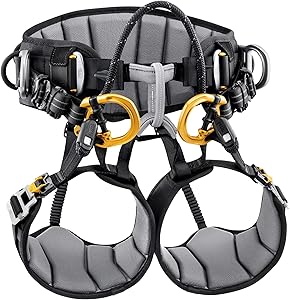
- Material: Lightweight nylon and polyester blend
- Weight Capacity: Up to 310 lbs (140 kg)
- Design: Semi-rigid waist belt with SRT-specific attachments
- Certification: CE and ANSI compliant
The PETZL Sequoia SRT 1 harness is tailored for professionals who specialize in single rope techniques (SRT). With a semi-rigid waist belt and optimized attachment points, it provides both comfort and efficiency for arborists who spend long hours suspended in trees. The harness uses high-quality materials and premium stitching to ensure long-term durability.
Out in the field, it shines as one of the most ergonomic harnesses available. The wide waist belt prevents pressure points, and the adjustable leg loops allow climbers to fine-tune their fit. With multiple gear loops, tools stay organized and accessible. Its price is on the higher side, but professionals who rely heavily on SRT will find the investment worthwhile.
Pros
- Professional-grade ergonomic design
- Highly durable and reliable
- Optimized for SRT climbing methods
- Certified for professional use
Cons
- Expensive
- May be excessive for casual users
4. EDELRID TreeRaptor Arborist Harness
- Material: Breathable mesh padding with reinforced webbing
- Weight Capacity: 300 lbs (136 kg)
- Waist Belt: Wide ergonomic padding with sliding D-ring
- Certification: EN and ANSI standards compliant
The EDELRID TreeRaptor is designed with comfort and freedom of movement in mind. Its breathable mesh padding keeps climbers cool during extended sessions, while the sliding D-ring allows for greater lateral mobility. The wide waist belt offers excellent lumbar support, and padded leg loops further enhance comfort.
During real climbing tasks, the TreeRaptor’s versatility becomes clear. It handles canopy navigation well, and its multiple attachment points make it practical for carrying tools. Professionals will appreciate the ergonomic design during long workdays, while newer climbers may need time to adjust to its advanced setup. Overall, it’s a reliable mid-to-high range harness for arborists who value comfort and adaptability.
Pros
- Comfortable breathable padding
- Sliding D-ring for mobility
- High safety certifications
- Good for long climbs
Cons
- More advanced than beginners may need
- Higher price point
5. SOB Tree Climbing Harness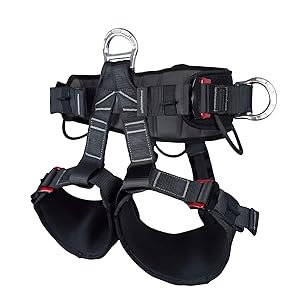
- Material: High-strength polyester with reinforced stitching
- Weight Capacity: 300 lbs (136 kg)
- Waist Size: Adjustable 29–47 inches
- Leg Straps: Adjustable 22–30 inches
The SOB Tree Climbing Harness is a practical, lightweight option for arborists and casual climbers. Built with durable polyester webbing, it provides a strong and secure base for safety. Its adjustable waist and leg straps ensure a proper fit for different body sizes, while the overall design remains simple and easy to use.
When climbing, the SOB harness offers sufficient support for light to moderate tasks such as trimming and small-scale pruning. It’s not heavily padded, which limits its comfort for prolonged climbs, but its lightweight structure makes it convenient for quick jobs. It’s a solid budget-friendly choice for beginners or as a backup harness for experienced climbers.
Pros
- Lightweight and practical
- Adjustable waist and leg loops
- Easy to wear and remove
- Budget-friendly option
Cons
- Limited padding
- Not ideal for long-duration climbs
6. CAMP Tree Access ANSI ST SIT Harness S-L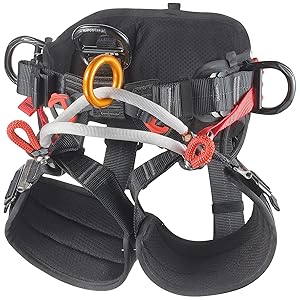
- Material: Nylon webbing with reinforced gear loops
- Weight Capacity: 310 lbs (140 kg)
- Waist Belt: Semi-rigid with adjustable padding
- Certification: ANSI and EN compliance
The CAMP Tree Access ANSI ST SIT Harness is a professional harness engineered for arborists who need a balance of comfort and durability. Its semi-rigid waist belt, along with adjustable padding, supports long climbs while reducing fatigue. The harness includes reinforced gear loops that make it easy to carry multiple tools.
In practice, the CAMP Tree Access harness performs exceptionally well for professionals. The design focuses on stability and comfort, distributing pressure evenly across the waist and legs. Arborists will find it reliable for extended canopy work. While the price is higher than entry-level models, its ergonomic design and certifications justify the investment for frequent climbers.
Pros
- Professional-grade build quality
- Semi-rigid waist belt enhances comfort
- Certified for safety standards
- Excellent for prolonged use
Cons
- Expensive
- Not ideal for casual climbers
7. HandAcc Tree Climbing Half Body Belt
- Material: Polyester webbing with steel buckles
- Weight Capacity: 300 lbs (136 kg)
- Waist Size: Adjustable 28–48 inches
- Leg Loops: Adjustable 20–30 inches
The HandAcc Tree Climbing Harness is targeted toward beginners, hobbyists, and occasional arborists. With a half-body design and straightforward adjustment system, it offers ease of use and safety at an affordable price point. The polyester webbing is reinforced with steel buckles, ensuring reliability during climbs.
For practical use, this harness works best for lighter tree tasks and recreational climbing. It doesn’t include advanced ergonomic padding, so comfort during extended climbs may be limited. However, its straightforward design makes it beginner-friendly, and the adjustability ensures that users of different sizes can fit comfortably. This harness is an excellent option for those just starting out or needing a backup harness.
Pros
- Very affordable
- Beginner-friendly design
- Lightweight and easy to adjust
- Sturdy buckles for safety
Cons
- Minimal padding
- Not suitable for professional, prolonged use
How to Choose Tree Climbing Harnesses
Tree climbing is more than just an adventurous activity—it’s a skill used by arborists, tree care professionals, recreational climbers, and researchers. Whether you are pruning branches, rescuing a cat, studying wildlife, or enjoying the thrill of climbing, one thing remains constant: safety. And at the core of climbing safety lies the tree climbing harness.
Choosing the right harness can feel overwhelming, especially for beginners. With so many models, designs, and features available, it is essential to understand what makes a harness suitable for your climbing needs. This guide will walk you through everything you need to know—comfort, safety, durability, and practical tips—so you can make a confident and informed choice.
1. Why the Right Harness Matters
The harness is the direct connection between your body and the climbing system. A well-chosen harness ensures:
- Safety: Prevents falls and injuries.
- Comfort: Reduces fatigue during long climbs.
- Efficiency: Improves mobility and access while working.
- Durability: Withstands daily wear and environmental stress.
Using the wrong harness, on the other hand, may lead to discomfort, reduced productivity, or even life-threatening accidents.
2. Types of Tree Climbing Harnesses
Before purchasing, you need to understand the different types available:
a) Saddle Harness (Work Positioning Harness)
- Designed for arborists and professionals.
- Offers multiple attachment points for tools and ropes.
- Provides strong back and leg support for long working hours.
b) Sit Harness (Basic Recreational Harness)
- Similar to rock climbing harnesses.
- Lightweight and minimalistic.
- Suitable for beginners or occasional climbers but less supportive for long hours.
c) Full-Body Harness
- Covers waist, legs, shoulders, and chest.
- Provides maximum fall protection.
- Ideal for children, beginners, or situations where extra safety is required.
Tip: Professionals often use saddle harnesses, while beginners may prefer full-body harnesses for added security.
3. Key Factors to Consider When Choosing a Harness
a) Comfort
Tree climbing often involves spending hours suspended in the air. Look for:
- Wide and padded waist belt.
- Adjustable leg loops with padding.
- Breathable materials to reduce sweating.
- Suspension bridge (rope or webbing connecting the leg loops) for better mobility.
A comfortable harness will reduce strain on your back and legs, allowing you to work efficiently.
b) Safety Features
Never compromise on safety. Check for:
- Certification Standards: Ensure the harness meets CE, ANSI, or UIAA standards.
- Strong Attachment Points: At least one central bridge point and multiple side D-rings.
- Durability of Webbing: Look for high-strength polyester or nylon.
- Load Capacity: Confirm the harness can safely support your weight and gear.
c) Adjustability
Every climber has a different body shape. The harness should allow:
- Adjustable waist and leg straps.
- Easily accessible buckles for quick fitting.
- Customization for different clothing layers (summer vs. winter climbing).
d) Weight and Mobility
- A lightweight harness is preferable for recreational climbers.
- Professionals may prioritize durability and tool-carrying capacity over weight.
- Ensure the harness does not restrict movement when reaching or swinging between branches.
e) Gear Attachment Points
Arborists and tree workers need to carry saws, ropes, and carabiners. Look for:
- Multiple gear loops.
- Sturdy D-rings for positioning lanyards.
- Tool holders and slots for accessories.
f) Durability and Materials
Your harness must withstand rough use, weather changes, and constant friction.
- Webbing: High-strength nylon or polyester.
- Buckles: Double-back or auto-locking metal buckles.
- Stitching: Reinforced and double-stitched seams for added strength.
g) Suspension Bridge System
Many modern harnesses use a suspension bridge to improve flexibility.
- Allows smooth side-to-side movement.
- Can be replaceable for safety and longevity.
- Essential for arborists who need to maneuver around the tree canopy.
4. How to Test a Harness Before Buying
If possible, always test the harness before purchase:
- Wear It Fully: Put on the harness, tighten all straps, and check for pressure points.
- Simulate a Hang Test: Hang in the harness for a few minutes—this shows how it distributes weight.
- Check Mobility: Try swinging side-to-side, reaching overhead, and bending.
- Verify Accessibility: Ensure you can easily access gear loops and attachment points.
5. Common Mistakes to Avoid
- Buying Only by Price: Cheap harnesses may lack durability and safety certifications.
- Ignoring Fit: A harness too loose or tight will cause discomfort and risk accidents.
- Overlooking Certification: Never buy non-certified harnesses, especially for professional use.
- Not Considering Purpose: Recreational and professional climbing have different needs—choose accordingly.
6. Recommended Brands and Models
While personal preference plays a role, some reliable brands include:
- Petzl (e.g., Petzl Sequoia, Petzl Avao)
- Tree Austria
- Weaver Leather
- Notch Equipment
- Buckingham
These brands are widely trusted for their safety, comfort, and innovation in arborist gear.
7. Maintenance Tips for Tree Climbing Harnesses
A good harness can last years if properly maintained:
- Inspect Regularly: Check for fraying, cuts, or weakened stitching.
- Clean Properly: Wash with mild soap and air dry—avoid harsh chemicals.
- Store Safely: Keep away from direct sunlight, moisture, and chemicals.
- Replace on Time: Even the best harness should be replaced after 5–7 years of use, or immediately if damaged.
8. Final Thoughts
Choosing the right tree climbing harness is an investment in your safety, comfort, and productivity. Think of it as your lifeline—it will carry your weight, tools, and trust high above the ground. By carefully considering factors such as type, comfort, safety standards, adjustability, and durability, you can find a harness that matches your climbing style and purpose.
Remember: there is no “one-size-fits-all” harness. A recreational climber might prioritize lightweight comfort, while an arborist needs a durable, tool-friendly saddle. Take your time, test before you buy if possible, and always prioritize safety certifications over low cost.
When chosen wisely and maintained properly, a harness becomes more than just equipment—it becomes your trusted partner in every climb.