Best Indoor Climbing Shoes of 2025
Indoor climbing has become one of the most popular sports for people who love adventure and fitness, and having the right gear makes a big difference. One of the most important items every climber needs is a good pair of climbing shoes. The best indoor climbing shoes are designed to give you grip, comfort, and support while helping you climb with confidence. Whether you are a beginner learning the basics or an experienced climber working on advanced moves, the right shoes can improve your performance and keep your feet safe. In this guide, we’ll explore some of the best options to help you find your perfect fit.
1. SCARPA Origin Shoes for Gym and Sport Climbing
- Upper: Suede leather for durability and comfort
- Closure: Dual hook-and-loop straps for easy adjustment
- Sole: Vision rubber, 5 mm thickness for grip and longevity
- Profile: Flat last with slight asymmetry for beginner-friendly fit
The SCARPA Men’s Origin shoes are designed as an entry-level option for gym and sport climbing. With a flat profile and relaxed fit, they provide all-day comfort without compromising too much on performance. The suede upper adapts to the shape of your foot, while the dual Velcro closure system allows quick adjustments between climbs. They shine in indoor climbing sessions where comfort and consistency matter more than aggressive downturn.
On the wall, the Vision rubber outsole delivers solid grip and durability, making them perfect for climbers progressing through the early grades. While not the most technical shoe in SCARPA’s lineup, the Origin balances support and sensitivity, giving beginners the confidence to trust their foot placements. Advanced climbers may find them less aggressive, but for training, gym sessions, or long multipitch routes, their comfort is unmatched.
Pros
- Comfortable fit ideal for beginners
- Durable rubber for long-lasting wear
- Easy on/off with Velcro straps
- Affordable entry-level option
Cons
- Lacks aggressive downturn for advanced routes
- Break-in period needed for snug fit
2. CASTIRON LIFT Sport Climbing Shoes for Indoor & Outdoor
- Upper: Synthetic microfiber for lightweight flexibility
- Closure: Lace-up system for precise fit
- Sole: 4 mm rubber with strong edging support
- Profile: Slightly downturned for versatility in indoor and outdoor use
The CASTIRON LIFT climbing shoes are tailored for climbers who want versatility across gym walls and outdoor crags. Built with synthetic microfiber, they stay lightweight and breathable, preventing sweat buildup during long sessions. The lace-up system provides a customized, glove-like fit, especially useful when tackling overhangs or edges that demand precision.
Performance-wise, the 4 mm rubber sole strikes a balance between durability and sensitivity. They edge well on small footholds while still offering enough flex for smearing on gym volumes. Beginners will appreciate the forgiving nature, while intermediate climbers will value the balance between comfort and control. However, highly advanced climbers may desire a more aggressive downturn for steep routes.
Pros
- Lightweight and breathable design
- Secure lace-up closure for precision fit
- Works well indoors and outdoors
- Good mix of edging and smearing ability
Cons
- Less aggressive for steep climbs
- Break-in may take longer due to synthetic upper
3. Butora Brava Knit Youth Climbing Shoes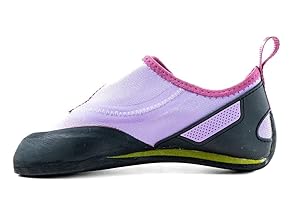
- Upper: Breathable knit fabric for comfort
- Closure: Single Velcro strap for easy use
- Sole: Butora NEO Fuse rubber for grip and durability
- Profile: Flat last suitable for young climbers
The Butora Brava Knit Youth shoe is a kid-friendly option that blends comfort, style, and performance. The breathable knit construction keeps feet cool and prevents overheating, a big plus during long climbing sessions. The single Velcro strap makes it simple for kids to put on and remove themselves without hassle.
On climbing walls, the NEO Fuse rubber delivers reliable traction, giving younger climbers confidence as they learn footwork. The flat last ensures comfort, making the shoe suitable for all-day wear without pain or hotspots. Parents will appreciate the durability and thoughtful design that supports developing climbers, though serious youth competitors may eventually require a more technical shoe.
Pros
- Breathable and lightweight for kids
- Easy Velcro closure system
- Reliable rubber grip for indoor climbing
- Comfortable flat profile
Cons
- Limited performance for advanced youth climbers
- Sizing may run slightly small
4. MASZRE Indoor Bouldering Sneakers
- Upper: Synthetic leather for flexibility
- Closure: Elastic slip-on design with pull tabs
- Sole: 4.5 mm sticky rubber for grip
- Profile: Flat design with moderate stiffness
MASZRE’s Rock Climbing Shoes are designed for indoor bouldering enthusiasts who want a balance of comfort and affordability. The slip-on elastic design makes them incredibly easy to wear, and the pull tabs at the heel add convenience. Their synthetic leather build ensures flexibility and adapts to foot shape quickly.
In terms of performance, the 4.5 mm rubber sole offers adequate grip for both bouldering holds and flat smearing surfaces. While they don’t have the aggressive downturn needed for steep, overhung routes, they provide reliable performance for beginners and casual gym climbers. Their flat profile makes them more suited to all-day sessions rather than high-intensity competition climbing.
Pros
- Affordable option for beginners
- Easy slip-on design with pull tabs
- Flexible and comfortable synthetic upper
- Decent grip for indoor use
Cons
- Not suitable for steep, technical climbing
- Less precise than lace-up or Velcro shoes
5. Five Ten Aleon Climbing Shoes
- Upper: Synthetic microfiber for lightweight comfort
- Closure: Single Velcro strap with sock-like fit
- Sole: Stealth C4 rubber, 3.5 mm thickness
- Profile: Aggressively downturned for advanced climbing
The Five Ten Aleon shoes are precision-engineered for performance. Featuring an aggressive downturn, they’re perfect for overhangs, steep bouldering problems, and technical sport climbing. The microfiber upper keeps the shoe light and breathable, while the sock-like fit enhances sensitivity without sacrificing power transfer.
The Stealth C4 rubber is legendary in climbing circles for its stickiness and precision. With these shoes, climbers can confidently toe in on micro-edges and smear on slick volumes. Though they aren’t the most comfortable for long sessions, advanced climbers will appreciate their razor-sharp performance. Beginners, however, may find the aggressive profile unforgiving.
Pros
- Exceptional grip with Stealth C4 rubber
- Aggressive profile ideal for steep routes
- Lightweight microfiber upper
- High-performance sensitivity
Cons
- Less comfortable for beginners
- Price point is on the higher side
6. GVONG Climbing Shoes for Indoor & Outdoor
- Upper: Breathable synthetic fabric for durability
- Closure: Dual Velcro straps for secure fit
- Sole: 4 mm rubber for balance between grip and support
- Profile: Slightly asymmetric design for performance and comfort
GVONG Climbing Shoes are designed to cater to a wide audience, from indoor gym-goers to outdoor climbers. The breathable fabric upper ensures good airflow, reducing sweat buildup, while the Velcro straps allow quick adjustments. Their slightly asymmetric profile provides a performance edge without being overly aggressive.
On the wall, these shoes offer reliable grip and enough stiffness for edging, while still allowing flexibility for smearing. They’re particularly suited for climbers who need a versatile, do-it-all shoe. While they may lack the razor-sharp precision of high-end models, they excel in comfort and adaptability, making them a solid mid-range choice.
Pros
- Breathable and comfortable design
- Easy Velcro adjustment system
- Balanced profile for varied climbing styles
- Affordable for intermediate climbers
Cons
- Not aggressive enough for elite routes
- May stretch slightly over time
7. SoleEase All-Around Climbing Shoes
- Upper: Split-grain leather for durability and comfort
- Closure: Lace-up system for snug, precise fit
- Sole: 5 mm sticky rubber outsole
- Profile: Neutral last suitable for all-day wear
The SoleEase All-Around climbing shoes live up to their name, offering a blend of comfort and performance for both sport climbing and bouldering. Built with split-grain leather, they mold well to the foot over time, creating a personalized fit. The lace-up closure ensures maximum adjustability, a feature climbers often prefer for longer routes.
Performance-wise, the 5 mm rubber sole offers dependable grip on holds and smears while retaining durability. The neutral last makes them less aggressive but far more comfortable for extended sessions, from gym training to outdoor multipitch climbs. They won’t outperform specialized aggressive shoes, but as a reliable all-rounder, they’re a great choice for beginners and intermediate climbers alike.
Pros
- Durable leather construction
- Comfortable fit for long sessions
- Adjustable lace-up closure
- Versatile for both gym and outdoor climbing
Cons
- Not aggressive enough for advanced technical climbs
- Longer break-in period due to leather upper
How to Choose Indoor Climbing Shoes
Indoor climbing has exploded in popularity over the past decade, becoming one of the most accessible and rewarding forms of fitness. Whether you’re bouldering, lead climbing, or just exploring the climbing gym for the first time, one essential piece of gear will make or break your experience: climbing shoes. The right pair not only enhances performance but also protects your feet and helps you learn proper technique. However, with so many brands, styles, and features on the market, choosing the perfect indoor climbing shoes can feel overwhelming.
This guide walks you through everything you need to know before making your purchase—from shoe types and fits to closure systems and materials—so you can confidently select shoes that match your climbing goals.
1. Understand the Role of Climbing Shoes
Unlike regular sneakers, climbing shoes are designed to maximize precision, friction, and support on small holds. They provide:
- Grip: Sticky rubber soles allow your feet to “stick” to plastic holds on gym walls.
- Sensitivity: Thin soles help you feel footholds, improving footwork.
- Power: Snug fits channel strength from your legs and core into your toes.
Because indoor climbing involves repetitive footwork on plastic holds, the right shoe will reduce fatigue, prevent slipping, and build your confidence as you progress.
2. Consider Your Climbing Style
Not all climbing shoes are created equal. Think about the type of indoor climbing you’ll be doing:
- Bouldering: Involves shorter, more powerful climbs. Shoes for bouldering are usually aggressive, with downturned toes for gripping overhangs.
- Top Rope & Lead Climbing: Involves longer climbs requiring comfort. Shoes here are often neutral or moderate in shape, offering a balance of precision and endurance.
- Beginner Climbing: Comfort is key. Beginners benefit from flat, neutral shoes that allow longer sessions without pain.
Ask yourself: Do I want shoes that prioritize comfort for learning, or performance for harder climbs? This will narrow your choices significantly.
3. Shoe Shape: Neutral, Moderate, or Aggressive
One of the most important features is the shoe’s profile shape:
- Neutral Shoes
- Flat profile, offering all-day comfort.
- Best for beginners and those who value endurance over extreme performance.
- Example: SCARPA Origin or Evolv Defy.
- Moderate Shoes
- Slight downturn, making them versatile for both vertical walls and overhangs.
- Great for intermediate climbers who want a balance between comfort and performance.
- Example: La Sportiva Katana or Butora Endeavor.
- Aggressive Shoes
- Sharply downturned, forcing your toes into a powerful position.
- Ideal for steep bouldering problems and advanced climbers.
- Less comfortable for long sessions.
- Example: Five Ten Aleon or La Sportiva Solution.
If you’re new, start neutral or moderate. Save aggressive shoes for when you’re tackling steep routes consistently.
4. Closure Systems: Laces, Velcro, or Slip-On
How the shoe fastens affects both fit and convenience.
- Laces: Provide the most adjustable fit, tightening evenly across the foot. Great if you have narrow or unusually shaped feet. Downside: slower to take on and off.
- Velcro Straps: Quick, easy, and ideal for bouldering or gym sessions where shoes come on and off often.
- Slip-Ons (Elastic): Minimalist and flexible. Good for training foot strength or crack climbing practice but can feel less secure.
For indoor climbing, Velcro shoes are the most popular—easy to adjust between attempts without wasting time.
5. Fit: Snug but Not Painful
Fit is where many beginners go wrong. Climbing shoes should feel much tighter than regular shoes, but they should not cause sharp pain or cut off circulation. Here’s how to test fit:
- Toes should touch the front but not curl painfully.
- Heel should sit snugly with no air gaps.
- Shoe should not shift when you edge on a foothold.
- Expect a little discomfort at first, but not unbearable pain.
Pro Tip: Don’t size up like sneakers. Most climbing shoes are worn tighter, often half to one size smaller than your street shoes. However, each brand fits differently, so always try before buying if possible.
6. Material: Leather vs. Synthetic
The shoe’s material affects comfort and how much it stretches over time.
- Leather: Stretches up to a full size with wear. Feels more natural but may loosen significantly.
- Synthetic: Maintains shape with minimal stretch. Good for consistent fit.
- Lined Leather: Stretches less than unlined, offering a balance.
For beginners, synthetic or lined leather is ideal since the fit stays more predictable.
7. Rubber Type and Thickness
The sole rubber determines grip and durability.
- Soft Rubber: Provides excellent sensitivity and grip, perfect for smearing on volumes. However, it wears down faster.
- Hard Rubber: More durable, better for edging on small holds, but less sensitive.
- Thickness:
- 3–4 mm: Thin, sensitive, good for advanced climbers.
- 4–5.5 mm: Thicker, more durable, perfect for beginners learning footwork.
Indoor climbers who train regularly may prefer harder, thicker rubber to withstand heavy use.
8. Breathability and Comfort
Indoor gyms can get hot, and feet sweat quickly inside snug shoes. Look for:
- Breathable mesh uppers if you plan long sessions.
- Padded tongues for extra comfort.
- Moisture-wicking linings to reduce odor buildup.
Comfort may not sound “hardcore,” but it ensures longer, more enjoyable sessions.
9. Budget Considerations
Climbing shoes range from $60 to $200+. How much should you spend?
- Beginners: A budget-friendly shoe under $100 is more than enough. At this stage, learning footwork is more important than buying aggressive shoes.
- Intermediate/Advanced: Investing in a $120–$180 pair with specialized features is worthwhile.
- Frequent Gym Climbers: Shoes wear out faster indoors. If you climb 3–4 times a week, consider getting two pairs: a comfortable pair for training and a performance pair for projects.
10. Try Before You Buy
Even with all this knowledge, climbing shoes are highly personal. Whenever possible:
- Visit a store and try on multiple models.
- Test them on a climbing wall if the shop has one.
- Compare how different brands fit—some run wide, others narrow.
If buying online, check return policies to ensure you can exchange for a better fit.
11. Care and Maintenance
Once you’ve chosen your shoes, take care of them:
- Avoid walking in them off the wall to preserve rubber.
- Clean soles regularly with a damp cloth to restore grip.
- Let them air dry—never leave them in a hot car.
- Use deodorizing sprays or inserts to fight odor.
Proper care extends shoe life, saving you money in the long run.
Final Thoughts
Choosing the right indoor climbing shoes is a balance between comfort, performance, and personal preference. Beginners should prioritize comfort and durability with neutral or moderate shoes, while advanced climbers can explore aggressive, specialized models for steep problems. Always remember: the “best” shoe is the one that fits your foot and matches your climbing style.
With the right pair, every step up the wall feels more secure, and you’ll progress faster—whether your goal is casual gym sessions, tackling boulder problems, or pushing your lead climbing grades.