Best Indoor Climbing Harnesses of 2025
Climbing indoors is a fun and safe way to enjoy the sport, but having the right gear is very important. One of the most essential pieces of equipment for climbers is the harness, as it keeps you secure while you focus on your moves. With so many options available, it can be hard to know which one will give you the best mix of comfort, safety, and value. Whether you are new to climbing or an experienced climber looking for an upgrade, choosing the right harness can make a big difference. In this article, we look at the best indoor climbing harnesses to help you find the perfect fit.
1. HEEJO Climbing Gear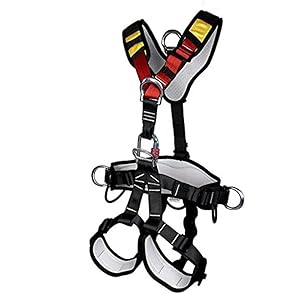
- Material: High-strength polyester webbing with reinforced stitching
- Weight Capacity: Supports up to 300 kg
- Buckle System: Dual adjustable steel buckles for waist and legs
- Design: Half-body harness suitable for gym and light outdoor climbing
The HEEJO Climbing Gear harness is a practical and budget-friendly choice for beginners stepping into the world of indoor climbing. Its construction emphasizes safety above all, with heavy-duty polyester webbing and reinforced stitching that can withstand repeated falls and consistent use in training environments. The dual adjustable buckle system ensures that the waist and leg loops can be fine-tuned quickly, offering a snug fit across a variety of body sizes. For new climbers, this simplicity is reassuring, as the harness is straightforward to put on and adjust without confusion.
Comfort is modest compared to premium models, but the harness does a respectable job for short gym sessions. While there’s less padding and minimal ventilation, the HEEJO still offers the flexibility and support needed for controlled climbs and practice falls. Advanced climbers may find it limiting for technical routes or prolonged sessions, yet for its price point, the HEEJO delivers reliability and durability. It’s an accessible harness that builds confidence without overwhelming new climbers with features they may not yet need.
Pros
- Budget-friendly and accessible for beginners
- Reinforced stitching ensures durability
- Lightweight design allows freedom of movement
- Quick-adjust buckle system
Cons
- Limited padding reduces comfort over long climbs
- Lacks advanced ventilation features
- Minimal gear loops for equipment storage
- Not suitable for professional or alpine climbing
2. ZELUGA Half Body Climbing Harness
- Material: Industrial-grade polyester webbing
- Load Capacity: Rated up to 300 kg
- Adjustment: Quick-release waist and leg buckles
- Design: Half-body style with wide waist support
The ZELUGA Half Body Climbing Harness is built for safety and stability, making it an ideal option for those who prioritize security over style. Crafted from industrial-grade polyester, the harness holds up well under demanding conditions, providing climbers with peace of mind when practicing in gyms or engaging in light outdoor climbs. Its load capacity of up to 300 kg reflects its emphasis on robustness, and the broad waist support adds an extra layer of comfort compared to more basic entry-level harnesses.
This harness stands out for its balance between affordability and reliability. Beginners will appreciate its straightforward buckle adjustments, which allow for quick tightening or loosening without compromising safety. Although it lacks the sleek padding and ventilation systems found in higher-end harnesses, the ZELUGA compensates with sheer sturdiness. For climbers focused on learning the fundamentals and practicing technique, it provides a dependable foundation. However, those planning multi-pitch or advanced climbs may find it restrictive in terms of gear storage and long-term comfort.
Pros
- High load capacity ensures strong performance
- Wide waist support offers added comfort
- Quick-release buckles simplify adjustments
- Affordable for entry-level climbers
Cons
- Lacks advanced padding and breathability
- Minimal gear loops for additional equipment
- Not optimized for technical or alpine climbing
- Bulkier feel compared to lightweight harnesses
3. KAILAS Professional Harness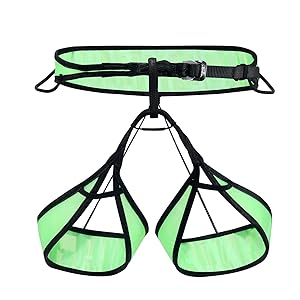
- Material: Nylon webbing with EVA foam padding
- Weight: Lightweight design at approx. 360 g
- Gear Loops: Four reinforced gear loops
- Safety: UIAA/CE certified for professional climbing use
The KAILAS Professional Harness is aimed at serious climbers who need both safety and comfort in one package. Its lightweight build makes it suitable for indoor training as well as more demanding outdoor climbs. Constructed with durable nylon webbing and cushioned with EVA foam padding, the harness offers superior comfort without compromising strength. The four reinforced gear loops provide ample space for quickdraws, chalk bags, or belay devices, making it highly versatile for varied climbing conditions.
What sets the KAILAS apart is its blend of professional-grade certification and user-oriented design. Climbers can trust its UIAA/CE approval, which ensures adherence to international safety standards. While it comes at a higher price than beginner-friendly harnesses, the investment pays off in performance and reliability. Long climbing sessions benefit from its ergonomic fit and breathable structure, reducing strain and discomfort. For intermediate to advanced climbers, this harness is a worthwhile upgrade, striking a balance between comfort, versatility, and technical dependability.
Pros
- Lightweight yet durable design
- Comfortable EVA foam padding
- Multiple gear loops for versatility
- Certified for professional use
Cons
- Higher cost compared to entry-level harnesses
- May feel too advanced for casual gym climbers
- Limited color/style options
- Requires careful sizing for best fit
4. Mammut Ophir 4 Slide Harness
- Material: Two-part webbing technology with breathable padding
- Adjustment: Four Slide-Bloc buckles for waist and legs
- Gear Loops: Four gear loops plus a rear haul loop
- Weight: Approx. 470 g
The Mammut Ophir 4 Slide Harness is designed with precision and comfort, catering to climbers who want adjustability and reliability in one package. Its standout feature is the four Slide-Bloc buckles that allow seamless adjustments to both waist and leg loops, making it easy to adapt to seasonal layering or varied clothing thickness. The two-part webbing construction distributes weight evenly, ensuring that climbers feel secure and balanced during falls or rests.
This harness shines in versatility, suitable for indoor gym use, sport climbing, and even longer sessions outdoors. The breathable padding ensures that even after hours of climbing, the harness remains comfortable without excessive sweating or chafing. The addition of a rear haul loop and multiple gear loops enhances its practicality for advanced routes. While it’s heavier than ultra-light alpine harnesses, its robustness and fit make it a trustworthy partner for a wide range of climbing scenarios.
Pros
- Highly adjustable with four buckles
- Comfortable and breathable padding
- Multiple gear loops for organization
- Strong and balanced webbing design
Cons
- Slightly heavier than minimalist models
- Bulkier for purely indoor use
- Premium price for casual climbers
- Requires attention to proper adjustment
5. Blue Ice Choucas Pro Harness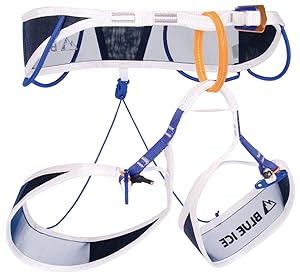
- Material: High-strength Dyneema-reinforced webbing
- Weight: Ultra-light at 180 g
- Gear Loops: Four lightweight gear loops plus ice clipper slots
- Design: Compact foldable design for alpine and ski mountaineering
The Blue Ice Choucas Pro Harness is engineered for mountaineers and ski tourers who need minimal weight without sacrificing safety. At just 180 grams, it is one of the lightest harnesses in its category, designed to pack small and carry easily in alpine environments. Despite its featherweight build, the harness incorporates Dyneema-reinforced webbing, ensuring impressive strength and durability against the elements. Ice clipper slots and multiple gear loops make it highly functional for technical expeditions.
Climbers who value efficiency will appreciate how quickly the Choucas Pro can be donned—even while wearing skis or crampons. Its compact design makes it an essential companion for those who prioritize mobility and speed in challenging environments. While it’s not padded like traditional indoor harnesses, that tradeoff is intentional to maintain minimal bulk. For indoor climbers, it may feel sparse, but for alpine and technical users, the Choucas Pro is a high-performance tool designed to meet specific, demanding needs.
Pros
- Ultra-light and highly portable
- Reinforced Dyneema webbing for strength
- Designed for ski mountaineering and alpine use
- Ice clipper slots add versatility
Cons
- Minimal padding reduces comfort indoors
- Specialized design not ideal for beginners
- Limited adjustability compared to gym harnesses
- Pricier than entry-level options
6. Black Diamond Momentum Harness S
- Material: Nylon with Dual Core Construction™
- Adjustment: Speed-adjust waist buckle with adjustable leg loops
- Gear Loops: Four pressure-molded gear loops
- Weight: Approx. 350 g
The Black Diamond Momentum Harness S is one of the most popular choices for both beginners and seasoned climbers. Known for its comfort and ease of use, it incorporates Dual Core Construction™, which evenly distributes weight while keeping the harness lightweight. The speed-adjust waist buckle simplifies fitting, and adjustable leg loops ensure flexibility for various body types and clothing layers. With four gear loops, it provides ample room for organizing climbing essentials.
Indoor climbers will find the Momentum to be a reliable all-rounder, while outdoor sport climbers can benefit from its durability and balance of features. It may not have the ultralight appeal of specialized alpine harnesses, but its versatility and comfort make it a dependable daily driver. Whether you’re top-roping at the gym or leading a sport route outdoors, the Momentum delivers a balance of affordability, comfort, and practicality.
Pros
- Comfortable Dual Core Construction™
- Easy-to-use speed-adjust waist buckle
- Versatile for gym and outdoor climbing
- Reliable and durable build
Cons
- Slightly heavier than minimalist models
- Not as compact for alpine use
- Lacks advanced ventilation features
- May feel bulky for purely indoor beginners
7. PETZL SAMA Unisex Harness
- Material: Nylon webbing with ENDOFRAME Technology
- Padding: Wide waist belt with breathable foam
- Gear Loops: Four gear loops plus rear accessory loop
- Weight: Approx. 420 g
The PETZL SAMA Unisex Harness is a premium option designed to combine comfort, support, and versatility. With ENDOFRAME Technology, it ensures excellent weight distribution across the waist and legs, minimizing pressure points during prolonged climbs. The wide waist belt and breathable foam padding enhance comfort, making it particularly suitable for long gym sessions and extended sport climbing routes. Its thoughtful design also includes four gear loops and a rear accessory loop, providing ample storage for equipment organization.
Where the SAMA excels is in combining technical performance with user comfort. Climbers will notice its stability and support when hanging or belaying, as the harness maintains balance without digging in. While it’s slightly heavier than ultralight harnesses, the comfort tradeoff makes it appealing for those who spend hours climbing or projecting routes. Its unisex design broadens accessibility, though proper sizing is key for optimal fit. For intermediate to advanced climbers seeking both reliability and comfort, the SAMA is a standout choice.
Pros
- Comfortable and supportive waist design
- ENDOFRAME Technology distributes weight evenly
- Multiple gear loops for efficient organization
- Reliable for prolonged indoor and outdoor use
Cons
- Heavier than minimalist harnesses
- Slightly pricier than entry-level models
- Bulkier for alpine applications
- Requires correct sizing for best comfort
How to Choose Indoor Climbing Harnesses
Indoor climbing has grown rapidly in popularity over the past decade, offering both newcomers and seasoned climbers a safe, accessible, and weather-proof environment to practice. While shoes and chalk often take the spotlight, one of the most critical pieces of gear is the climbing harness. A properly chosen harness ensures comfort, safety, and performance, especially during long sessions at the climbing gym. With dozens of options available, knowing how to pick the right indoor climbing harness can be overwhelming. This guide breaks down the essentials to help you make an informed decision.
1. Understanding the Role of a Climbing Harness
Before diving into features, it’s important to know what a climbing harness does. A harness connects you securely to the rope and belay system, distributing weight across your body to reduce strain and prevent injury. It consists of:
- Waistbelt: Wraps around the waist and provides primary support.
- Leg loops: Support the thighs and help distribute weight evenly.
- Belay loop: The strong central loop where belay devices are attached.
- Tie-in points: Reinforced areas where you tie the rope.
- Gear loops: Plastic or textile loops for carrying carabiners, chalk bags, or quickdraws.
In indoor gyms, you won’t need as much equipment capacity as outdoor climbers, but comfort, fit, and safety remain non-negotiable.
2. Prioritize Fit and Comfort
A harness must fit properly; otherwise, climbing can become uncomfortable or even dangerous. Fit is usually the first and most important factor.
- Waist Fit: The harness should sit above your hip bones. It needs to be snug but not overly tight—you should be able to slip two fingers between the harness and your body.
- Leg Loops: These should feel secure without cutting off circulation. Adjustable leg loops allow flexibility, especially if you plan to wear different clothing thicknesses.
- Mobility: Try squatting, lifting your legs, or hanging briefly if the gym allows test fits. A good harness should allow free movement without pinching.
Comfort is crucial indoors because climbers often spend long periods hanging on the rope while resting or belaying.
3. Consider Padding and Weight
Indoor climbing usually doesn’t require long approaches or heavy gear, so comfort outweighs the need for ultralight equipment.
- Padded Waistbelt and Leg Loops: These provide cushioning during extended hangs. Most indoor harnesses include ample foam padding, unlike minimalist alpine harnesses.
- Breathability: Gyms can get hot. Look for harnesses with mesh or ventilated padding that wick away sweat.
- Weight: While not as critical indoors, a lighter harness can still feel less restrictive, especially if you climb dynamically.
4. Adjustable vs. Fixed Leg Loops
Harnesses come in two main leg loop styles:
- Fixed Leg Loops: Lightweight, simple, and often more comfortable. They rely on elastic to stretch and fit most body types.
- Adjustable Leg Loops: Offer buckles that can be tightened or loosened. Useful for climbers who share gear, wear different clothing layers, or prefer precise adjustments.
For indoor climbing, fixed leg loops are typically sufficient, but adjustable ones provide more versatility if you’re unsure of sizing.
5. Buckle Systems and Safety
Harness buckles have evolved to simplify safety:
- Automatic Double-Back Buckles: The most common in modern harnesses, these lock securely without requiring manual threading, reducing the risk of user error.
- Manual Double-Back Buckles: Require you to thread the strap back through the buckle to lock it. Still safe but less common and less convenient.
- Quick-Adjust Systems: Found in newer designs, these allow for rapid fit adjustments.
When trying a harness, make sure you understand how the buckle system works and that it feels intuitive.
6. Belay Loop and Tie-In Points
For indoor climbing, you’ll primarily use the belay loop for belay devices and tie-in points for ropes. Key considerations:
- Strength: All certified belay loops and tie-in points meet international safety standards. Still, durability varies between brands.
- Reinforcement: Some harnesses add abrasion-resistant material at tie-in points to extend lifespan, which is valuable since gym ropes often see heavy use.
- Color Coding: Certain models use contrasting colors to help beginners identify where to tie in, reducing mistakes.
7. Gear Loops: Do You Need Many?
Indoor climbing generally requires minimal gear compared to outdoor sport or trad climbing. You’ll likely only need:
- 1–2 carabiners for belaying
- Chalk bag attachment
Most gym-specific harnesses come with 2–4 gear loops, which is more than enough. If you intend to transition outdoors later, a harness with 4 gear loops provides future flexibility.
8. Men’s vs. Women’s vs. Kids’ Harnesses
Harnesses are designed with body shape in mind:
- Men’s Harnesses: Standard fit, with waist-to-leg ratio suited to average male proportions.
- Women’s Harnesses: Higher waist-to-leg loop rise, more contoured waistbelts, and smaller leg loops to fit different anatomy.
- Kids’ Harnesses: Full-body harnesses for very young climbers (under 30–40 kg), and sit harnesses for older children. Safety and growth adjustability are key.
Trying different models is best, regardless of gender labeling, since body proportions vary widely.
9. Sizing and Trying Before Buying
Harness sizing isn’t universal—medium in one brand might fit like a small in another. Always check the manufacturer’s size chart. If possible:
- Visit a climbing gym or outdoor retailer to try harnesses.
- Hang in the harness to feel how it distributes weight.
- Make sure you can adjust straps enough for layering (if you’ll also use it outdoors).
Buying online is fine if you know your measurements, but testing in person avoids costly sizing mistakes.
10. Safety Certifications
Look for certifications such as:
- UIAA (International Climbing and Mountaineering Federation)
- CE (European Conformity)
These guarantee that the harness meets established safety standards. Never buy uncertified gear, especially from unknown or non-reputable brands.
11. Price vs. Value
Indoor climbing harnesses typically range from $50 to $100. More expensive doesn’t always mean better—it depends on features:
- Budget Models ($50–$70): Simple, safe, and perfectly fine for beginners. May lack extra padding or reinforced points.
- Mid-Range Models ($70–$90): Offer more comfort, durability, and sometimes extra features like adjustable leg loops.
- High-End Models ($100+): Designed for serious climbers who want lightweight, high-performance gear that also transitions outdoors.
For most indoor-only climbers, a mid-range harness balances comfort and value.
12. Maintenance and Lifespan
Even the best harness won’t last forever. Indoor climbing can wear harnesses down faster than expected due to constant use.
- Lifespan: Manufacturers often recommend replacing a harness every 3–5 years, even with minimal use. Heavy indoor climbers may need replacement sooner.
- Inspection: Regularly check stitching, tie-in points, and belay loops for fraying or damage.
- Storage: Keep your harness away from direct sunlight, chemicals, or extreme heat.
A well-maintained harness ensures maximum safety.
13. Top Brands to Consider
While many companies produce excellent harnesses, some of the most trusted indoor climbing brands include:
- Black Diamond – Known for reliable, versatile designs.
- Petzl – Offers comfort-focused harnesses with innovative features.
- Mammut – Durable, well-padded harnesses.
- Edelrid – Lightweight yet comfortable, with eco-friendly materials.
- Metolius – Great options for beginners and budget-conscious climbers.
Brand loyalty is less important than finding the right fit, but these names consistently meet high safety standards.
Conclusion
Choosing the right indoor climbing harness is about balancing comfort, safety, and personal fit. For most climbers, a padded, mid-range harness with fixed or lightly adjustable leg loops is ideal. Always prioritize fit above all else—a perfectly fitted budget harness is safer and more enjoyable than an ill-fitting premium model. Whether you’re a beginner learning to belay or a seasoned climber pushing grades indoors, the right harness can make the difference between a frustrating session and an enjoyable climb.
Investing time into choosing your harness wisely ensures that every climb at the gym is secure, comfortable, and confidence-inspiring.