Best Climbing Shoes for Intermediate Climbers of 2025
Finding the right climbing shoes can make a big difference as you move from beginner to intermediate climbing. At this stage, you already know the basics, but you need shoes that give you better grip, comfort, and support to improve your skills. The best climbing shoes for intermediate climbers help you tackle harder routes, practice new techniques, and climb with more confidence. With so many options available, it can be tricky to choose the right pair. This article will guide you through some of the top choices, focusing on comfort, performance, and value, so you can pick shoes that match your climbing goals and style.
1. Climb X Rave Strap Climbing Shoes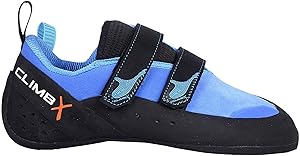
- Closure: Dual Velcro strap system for secure and adjustable fit.
- Upper Material: Synthetic leather with padded collar and heel for comfort.
- Sole: 4.2 mm rubber outsole providing durability and grip.
- Midsole: Stiff design to support edging and stability on small holds.
The Climb X Rave Strap is a well-rounded shoe designed for climbers looking to upgrade from their entry-level footwear. The dual Velcro system allows quick adjustments and makes it convenient for gym climbing where shoes often come on and off between routes. The synthetic leather holds its shape well and prevents excessive stretching, while the padded collar and heel reduce discomfort, making this pair an excellent choice for long climbing sessions. Its stiff midsole also helps maintain strong edging power, giving climbers better control on vertical faces.
Performance-wise, the Rave Strap shines on slabs and vertical routes, offering solid support and reliable grip. While the rubber may not rival top-tier premium compounds in stickiness, it still holds its own on most indoor holds and outdoor rock. For climbers exploring intermediate terrain, this shoe strikes a good balance between comfort, durability, and technical performance. However, it’s less aggressive than advanced models, so those focusing on overhangs or bouldering caves may feel its limitations. Overall, it’s a dependable, affordable step up for intermediates.
Pros
- Comfortable fit suitable for long climbs.
- Easy Velcro on/off system.
- Strong edging support for small holds.
- Great price-to-performance ratio.
Cons
- Rubber not as sticky as higher-end models.
- Limited performance on steep overhangs.
- Slightly bulky feel for precision work.
- Narrow-footed climbers may find fit less ideal.
2. Ocun Ozone Bouldering Shoes
- Closure: Velcro strap system for secure tightening.
- Upper Material: Microfiber synthetic with reinforced rand.
- Sole: Vibram XS Grip rubber for maximum friction.
- Shape: Aggressive downturn for overhang and bouldering performance.
The Ocun Ozone is crafted for climbers who want precision and aggressive performance, particularly in bouldering and steep sport climbing. Its sharp downturn ensures toes are always in a power position, making it easier to pull on overhang holds and toe-hook confidently. The microfiber upper prevents excessive stretch while keeping weight low, and the reinforced rand keeps the shoe’s shape intact even after repeated high-intensity use. Vibram XS Grip rubber, one of the most respected compounds in climbing, delivers sticky traction both indoors and outdoors.
Intermediate climbers transitioning into steeper terrain will appreciate how the Ozone sharpens footwork. The shoe excels on small edges and overhanging roofs, making it ideal for those pursuing bouldering progress. Comfort isn’t its strongest trait—this is a performance-oriented shoe, so expect a snug and precise fit rather than plush padding. Still, for climbers who want to push their technical limits, the Ocun Ozone provides a noticeable step up in control and stickiness, especially in situations requiring toe and heel hooks.
Pros
- Excellent grip with Vibram XS Grip rubber.
- Aggressive downturn enhances steep climbing ability.
- Precise fit for edging and toe hooks.
- Durable construction for heavy bouldering use.
Cons
- Less comfortable for long wear.
- Not ideal for slab or multi-pitch climbs.
- Break-in period can feel tight.
- Higher price compared to beginner models.
3. Five Ten NIAD Moccasym Climbing Shoes
- Closure: Slip-on design with elastic panels.
- Upper Material: Unlined leather that molds to the foot.
- Sole: Stealth C4 rubber outsole for maximum grip.
- Profile: Flat-lasted for comfort and versatility.
The Five Ten NIAD Moccasym is an updated version of a legendary slipper-style climbing shoe. Its slip-on design makes it fast to wear and allows climbers to feel highly connected to the wall. The unlined leather stretches over time, forming a custom fit around your foot—something climbers who value comfort will appreciate. Its Stealth C4 rubber, a hallmark of Five Ten shoes, provides exceptional grip, making smearing and friction climbing feel secure. The flat profile ensures all-day wearability, making it a favorite for crack climbing and gym training.
For intermediate climbers, the NIAD Moccasym offers a versatile platform. While it may not provide the aggressive downturn needed for overhang performance, its comfort and grip make it a fantastic shoe for slabs, cracks, and moderate sport routes. The slipper style also makes it a popular secondary shoe for training sessions or warm-ups. Though break-in can feel snug, the leather will expand significantly, so sizing down is often recommended. This shoe is a great companion for climbers who value simplicity and all-around performance.
Pros
- Exceptional grip with Stealth C4 rubber.
- Comfortable for long climbs and crack climbing.
- Custom fit develops with leather stretch.
- Easy slip-on design for convenience.
Cons
- Lacks aggressive downturn for steep climbing.
- Leather stretches a lot—careful sizing needed.
- Limited heel-hook security.
- Less supportive on tiny edges.
4. Adidas Five Ten Crawe Climbing Shoes
- Closure: Single Velcro strap with tensioned fit.
- Upper Material: Synthetic microfiber upper with padded tongue.
- Sole: Stealth HF rubber for sensitivity and grip.
- Shape: Moderate downturn for precision on steep routes.
The Adidas Five Ten Crawe is designed as a performance shoe that balances sensitivity and power. Featuring Stealth HF rubber, it excels at gripping both indoor volumes and outdoor edges, while the moderate downturn keeps climbers in a powerful toe position without the extreme discomfort of aggressively downturned models. The microfiber upper is lightweight and resists stretching, and the padded tongue adds a touch of comfort to an otherwise performance-driven design.
Intermediate climbers will find the Crawe a strong companion for tackling more challenging projects. Its precision on overhangs is impressive, while still being supportive enough for edging on vertical routes. Sensitivity is one of its standout qualities, allowing climbers to feel even the smallest footholds. While not as forgiving for all-day trad climbing or long multi-pitch, it serves as an excellent sport and bouldering shoe for intermediates looking to progress. Its mix of comfort and precision makes it a worthy investment for gym and outdoor use alike.
Pros
- Stealth HF rubber offers superior sensitivity and grip.
- Moderate downturn balances comfort and performance.
- Lightweight synthetic upper resists stretch.
- Strong choice for sport and bouldering progress.
Cons
- Less suitable for all-day climbing.
- Not as durable in crack climbing.
- Higher cost compared to entry shoes.
- Fit may feel narrow for wide feet.
5. DONFAAUK Ladies Rock Climbing Shoes
- Closure: Dual Velcro straps for adjustability.
- Upper Material: Breathable synthetic upper.
- Sole: Durable rubber outsole for grip and stability.
- Profile: Neutral shape designed for comfort and ease of use.
The DONFAAUK Ladies Rock Climbing Shoes are an affordable option tailored for women entering the intermediate stage of climbing. With dual Velcro straps, they provide quick and adjustable fitting, making them practical for both indoor and outdoor sessions. The breathable synthetic upper helps keep feet cooler during extended climbs, while the neutral profile prioritizes comfort over aggressive performance. The durable rubber outsole adds longevity, making them reliable for regular training.
These shoes shine in beginner to intermediate terrain, where comfort and stability are most important. For gym climbers or those just starting outdoor sport routes, they offer solid performance at a budget-friendly price. However, they lack the aggressive downturn and specialized rubber found in higher-end shoes, meaning advanced edging or steep overhangs will feel limited. Still, for climbers seeking an accessible, women-specific shoe that balances affordability and decent performance, the DONFAAUK is a practical stepping stone before investing in more technical models.
Pros
- Affordable and beginner-friendly price point.
- Comfortable fit with breathable upper.
- Easy Velcro strap closure.
- Good durability for regular use.
Cons
- Not suitable for steep or technical climbs.
- Grip less sticky compared to premium rubbers.
- Limited edging precision.
- Neutral profile less effective for progression into harder terrain.
6. BUTORA Women’s Endeavor Rock Climbing Shoe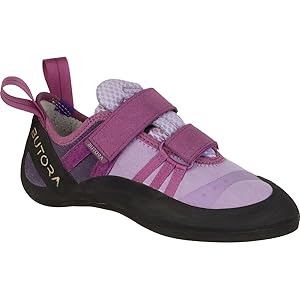
- Closure: Velcro straps for snug fit.
- Upper Material: Synthetic leather with cotton lining.
- Sole: Neo Fuse rubber compound for grip and durability.
- Profile: Slightly asymmetrical shape for balance of comfort and performance.
The BUTORA Women’s Endeavor is a carefully designed shoe aimed at female climbers seeking both comfort and intermediate-level performance. Its slightly asymmetrical last offers more precision than flat beginner shoes, while still remaining wearable for longer climbs. The cotton-lined upper minimizes odor and stretch, while the Velcro closure system secures the fit effectively. Neo Fuse rubber, Butora’s proprietary compound, performs impressively on both plastic and real rock, giving climbers confidence on smears and edges.
What makes the Endeavor stand out is its balance—it doesn’t force climbers into extreme aggressive shapes, but it still sharpens footwork noticeably compared to beginner shoes. It’s versatile enough for gym climbing, sport routes, and moderate bouldering. While not the most aggressive option for steep terrain, its comfort means it’s suitable for multi-pitch or long training sessions. For female climbers advancing into more technical climbs but not ready to sacrifice all comfort, the Endeavor offers a dependable middle ground.
Pros
- Comfortable yet precise fit.
- Neo Fuse rubber provides excellent grip.
- Lined upper reduces stretch and odor.
- Versatile for multiple climbing disciplines.
Cons
- Not aggressive enough for advanced bouldering.
- Slightly heavier than ultralight models.
- Break-in period needed.
- May feel too soft for micro edging.
7. Black Diamond Circuit M’s Shoes
- Closure: Slip-on style with elastic stretch.
- Upper Material: Knit synthetic for breathability.
- Sole: BlackLabel-Street rubber for grip.
- Profile: Flat and neutral for all-day comfort.
The Black Diamond Circuit M’s Shoes blend climbing-inspired design with lifestyle wear, making them a unique crossover option. While not a full-fledged aggressive climbing shoe, they feature BlackLabel-Street rubber that allows for casual climbing sessions, approach hikes, or scrambling. The knit synthetic upper enhances breathability and makes them feel like a lightweight sneaker, while the slip-on design is convenient for daily use. Their flat profile means they prioritize comfort above precision.
For intermediate climbers, the Circuit is best thought of as an approach or casual bouldering shoe rather than a primary climbing shoe. It’s excellent for gym warm-ups, training walls, or wearing on approaches to outdoor crags. However, it doesn’t offer the same edging power or downturn as dedicated climbing shoes, making it unsuitable for more technical climbs. Still, its versatility, comfort, and hybrid design make it a handy addition for climbers who want a do-it-all shoe that works both on the wall and off.
Pros
- Comfortable slip-on design.
- Breathable knit upper.
- Versatile for gym warm-ups and approaches.
- Stylish enough for everyday wear.
Cons
- Not a performance climbing shoe.
- Limited precision and edging.
- Flat profile unsuitable for steep climbs.
- Durability less than specialized models.
How to Choose Climbing Shoes for Intermediate Climbers
Climbing is as much about technique and precision as it is about strength. Once you move past the beginner stage, your gear choices start to play a bigger role in how you perform and progress. Among all climbing equipment, shoes arguably make the biggest difference. For intermediate climbers, choosing the right pair of climbing shoes can feel overwhelming because there are so many models, shapes, and features available. The right pair can unlock harder routes, improve comfort, and refine your climbing style, while the wrong pair can hold you back or even cause injury.
This article breaks down the key factors to consider when selecting climbing shoes at the intermediate level, from fit and design to climbing style and durability.
1. Understanding Your Progression as an Intermediate Climber
Intermediate climbers often find themselves in a transition phase. You’re no longer a complete beginner who only needs a comfortable, flat shoe, but you may not yet need the most aggressive, competition-level shoes either. At this stage, you are likely:
- Starting to project harder routes or problems.
- Learning to trust your feet on smaller holds.
- Exploring different climbing styles (bouldering, sport climbing, trad, or gym climbing).
- Wanting shoes that balance performance with comfort.
Because your skills are evolving, it’s important to find shoes that complement your growth without forcing you into overly specialized gear.
2. Types of Climbing Shoes
Climbing shoes generally fall into three categories: neutral, moderate, and aggressive.
- Neutral Shoes: Flat profile, designed for comfort. Best for beginners or long trad climbs.
- Moderate Shoes: Slightly downturned shape, versatile for various climbing styles. A great choice for intermediates because they balance performance and comfort.
- Aggressive Shoes: Strongly downturned, with a pointed toe. Ideal for overhanging routes and precise footwork but often less comfortable.
For most intermediate climbers, moderate shoes are the sweet spot. They allow you to test harder routes while still being wearable for longer sessions. If you lean toward steep bouldering or sport climbing, however, a pair of aggressive shoes might be worth considering.
3. Fit: The Most Important Factor
No matter how advanced the shoe design is, if it doesn’t fit your foot correctly, it won’t help you climb better. Fit should be snug but not painfully tight. Some points to keep in mind:
- Toe Position: Your toes should be close to the end of the shoe and slightly curled but not crammed.
- Heel Fit: The heel should sit securely without dead space, reducing the risk of slipping off holds.
- Width: Shoes come in different widths to accommodate narrow or wide feet. A poor match can cause discomfort or hotspots.
- Break-in: Leather shoes tend to stretch more (up to a full size), while synthetic shoes hold their shape better. Account for this when choosing size.
Remember: performance doesn’t always mean pain. Shoes that are too tight may hinder rather than help.
4. Closure Systems
Climbing shoes come with different closure systems, each offering advantages depending on your needs:
- Laces: Allow the most customizable fit, especially for people with narrow or wide feet. Great for long routes where comfort adjustments matter.
- Velcro (Strap): Easy to put on and take off, ideal for bouldering or gym climbing where you may remove shoes frequently.
- Slip-ons (Slippers): Elastic closures that are minimalist and sensitive. They excel at training and crack climbing but can stretch out quickly.
For intermediates, velcro is often the most versatile choice, though lace-ups are excellent if you spend more time outdoors on longer routes.
5. Sole Stiffness and Rubber Type
The sole determines both performance and comfort:
- Softer Soles: Offer more sensitivity and precision, making them great for smearing and feeling holds. However, they require stronger foot muscles and may tire you faster.
- Stiffer Soles: Provide more support, especially on tiny edges, making them excellent for longer climbs or climbers who want added stability.
Rubber compounds also vary. Stickier rubber provides better grip on plastic or rock, while harder rubber lasts longer. Popular options like Vibram XS Grip2 emphasize friction, while Vibram XS Edge balances grip and durability. As an intermediate, consider what type of climbing you do most often to pick the right rubber.
6. Matching Shoes to Climbing Style
Your preferred type of climbing should heavily influence your shoe choice:
- Bouldering: Shoes should be slightly more aggressive with sticky rubber for steep, powerful moves. Velcro closures are convenient for frequent on/off use.
- Sport Climbing: A downturned, precise shoe helps with overhangs and technical edging. Moderate-aggressive shoes are ideal here.
- Trad Climbing: Comfort is king since routes are longer. Neutral or moderate shoes with a stiffer sole are best.
- Indoor/Gym Climbing: Versatile shoes with good grip and comfort for repeated sessions. Durability matters more indoors due to frequent use.
If you enjoy multiple climbing styles, you might eventually own two pairs: one for performance and one for comfort.
7. Durability and Resole Potential
Intermediate climbers often spend more time climbing, meaning shoes wear out faster. Check for:
- Rubber Thickness: Thicker soles last longer but reduce sensitivity.
- Construction Quality: Double stitching, reinforced toe boxes, and high-quality materials extend lifespan.
- Resole Options: Some shoes can be resoled, making them a better long-term investment.
If you climb primarily indoors, expect faster wear, especially if you train multiple times per week.
8. Price vs. Value
Climbing shoes can range from budget-friendly to high-end. While price doesn’t always equal performance, more expensive shoes often use advanced materials and precise construction. As an intermediate climber, it may be worth investing a little more in a durable, well-fitting pair rather than sticking with entry-level models. That said, avoid splurging on highly specialized shoes unless you truly need them.
9. Trying Before Buying
Whenever possible, try shoes on in person. Walk around the store, stand on small edges, and check for pressure points. Different brands fit differently, so don’t assume your size will be the same across all models. If ordering online, check return policies.
Some brands also release gender-specific versions with slightly different shapes and fits, so experiment with both to find what suits your foot best.
10. Transitioning Between Pairs
As you progress, you may outgrow your current shoes. Many intermediate climbers benefit from owning at least two pairs:
- Comfort Pair – For warmups, long trad routes, or gym mileage.
- Performance Pair – For projecting, overhangs, or technical routes.
Rotating between pairs not only helps with performance but also extends shoe lifespan.
Final Thoughts
Choosing climbing shoes as an intermediate climber is about striking a balance. You’re no longer limited to entry-level models, but you also don’t want shoes so aggressive or specialized that they hold you back. Start with a moderate shoe that fits snugly, suits your preferred style, and offers both comfort and performance. Pay close attention to fit, sole stiffness, and closure systems.
Remember, climbing shoes are tools—no single pair works for every situation. The best shoe for you is the one that makes you feel confident, precise, and comfortable enough to keep climbing longer and harder. As you grow, your shoe collection may evolve, but for now, focus on a versatile pair that supports your transition from intermediate to advanced climbing.