Best Climbing Shoes for High Arches of 2026
Finding the right climbing shoes is especially important if you have high arches. The wrong fit can cause pain, hot spots, or poor performance on the wall. High-arch climbers need shoes that offer proper support, a snug but comfortable fit, and enough flexibility to avoid pressure points. The best climbing shoes for high arches balance precision with comfort, helping you trust your feet on small holds and steep routes. In this guide, we’ll look at top options designed to support high arches and improve your overall climbing experience.
1. La Sportiva Tarantulace

• Closure: Quick-pull lacing harness
• Rubber: FriXion RS
• Tongue: Lined for moisture management
• Profile: Flat-lasted, all-day comfort
The La Sportiva Tarantulace is positioned as the quintessential “do-it-all” climbing shoe, ideal for beginners and intermediates seeking a single, versatile pair. Its flat-last design prioritizes comfort, making it suitable for long gym sessions or full days at the crag. The quick-pull lacing system is a standout feature, allowing for easy adjustments to achieve a surprisingly precise and snug fit without complicated lacing techniques. This makes it an excellent choice for climbers who value convenience and consistent performance across various climbing styles.
Performance-wise, the durable FriXion RS rubber offers a solid balance of grip and longevity, capable of handling both plastic holds and natural rock. The lined tongue helps manage moisture, enhancing comfort during extended wear. While it lacks the aggressive downturn or sensitivity of specialized performance shoes, its strength lies in its reliability and all-around capability. For someone building foundational footwork or who climbs in diverse settings, the Tarantulace delivers dependable performance where it counts.
Pros: Extremely comfortable for all-day wear; easy and precise lacing system; versatile for gym and outdoor climbing; durable rubber compound.
Cons: Not suited for steep, overhanging, or highly technical routes; lacks sensitivity for advanced footwork.
See the La Sportiva Tarantulace
2. Climb X Rave Strap
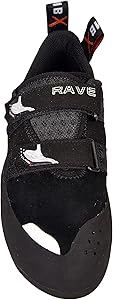
• Closure: Hook-and-loop strap
• Sole: Rubber
• Fit Feature: Padded collar and heel
• Sizing: Consult brand chart carefully
The Climb X Rave Strap is an entry-level climbing shoe focused on affordability and straightforward functionality. Its simple strap closure system allows for quick on-and-off, making it a convenient option for gym climbers or rental replacements. The padded collar and heel are designed to minimize discomfort and hot spots, which is a common complaint in budget-friendly shoes. This design philosophy makes the Rave Strap a practical first shoe for those testing the waters of the sport without a significant financial commitment.
In terms of performance, the shoe provides a basic rubber sole for grip on large holds and slabs. It is best suited for introductory top-roping and beginner bouldering where extreme precision or power is not yet required. Climbers should pay close attention to the sizing chart, as fit can be inconsistent. While it won’t offer the technical capabilities needed for advanced climbing, it serves its purpose as a comfortable and accessible tool for learning basic foot placement and building confidence on the wall.
Pros: Very affordable; easy on/off with strap; padded for comfort; good beginner option.
Cons: Basic grip and sensitivity; not for advanced or technical climbing; sizing can be tricky.
3. BLACK DIAMOND Momentum

• Upper: Engineered Knit Technology
• Outsole: 4.3mm rubber
• Closure: Dual hook-and-loop straps
• Midsole: Soft flex
The BLACK DIAMOND Momentum is designed with modern comfort and performance in mind, utilizing Engineered Knit Technology in its upper. This material provides a breathable, adaptive fit that stretches and supports the foot, making these shoes exceptional for long periods of wear. Whether you’re tackling a multi-pitch route, spending hours at the gym, or cragging, the Momentum’s focus on reducing fatigue is immediately apparent. The dual hook-and-loop straps offer a secure and highly customizable fit, accommodating various foot shapes and allowing for quick adjustments between climbs.
Performance is balanced for the progressing climber. The 4.3mm rubber outsole provides a dependable grip that works well on both plastic and rock, while the soft-flex midsole offers a good blend of sensitivity for feeling holds and support for edging. The lightweight and ventilated construction keeps feet cool, enhancing comfort during intense sessions. While not an aggressively downturned performance shoe, the Momentum excels as a high-quality, all-purpose workhorse that supports skill development without punishing your feet.
Pros: Exceptionally comfortable and breathable; easy-adjust straps; good for long sessions; versatile gym/outdoor grip.
Cons: Not aggressive enough for overhangs or high-level sport climbing; knit upper may lack the precision of leather or suede.
See the BLACK DIAMOND Momentum
4. SCARPA Origin

• Last: Flat, wide, high-volume
• Fit: Size to street shoe or larger
• Heel System: Pressure-absorbing design
• Upper: Unlined leather
The SCARPA Origin is a premier beginner-friendly shoe engineered for comfort and proper technique development. Its flat last, wide toe box, and high volume are designed to accommodate a man’s foot shape comfortably, reducing the painful break-in period often associated with first shoes. A key feature is the unique heel system, which distributes tension to alleviate pressure on the Achilles tendon—a common pain point. The unlined leather upper will stretch and mold to the foot over time, necessitating a fit with little to no dead space from the start, often at or above your street shoe size.
On the rock or gym wall, the Origin provides a solid, supportive platform that inspires confidence. The rubber offers reliable grip for learning foundational skills like edging and smearing. While it lacks the sensitivity or aggression for advanced maneuvers, this is by design. The Origin prioritizes creating a positive, comfortable introduction to climbing, allowing new climbers to focus on footwork without distraction. It’s an investment in building good habits from the ground up.
Pros: Outstanding all-day comfort; ideal for wider/higher-volume feet; innovative heel reduces Achilles pressure; excellent for learning.
Cons: Leather stretches significantly (size carefully); not for advanced, steep, or technical climbing.
5. La Sportiva Tarantula Boulder

• Sizing: Runs large; size down 1 full size
• Sole: Half-sole construction
• Heel: Enhanced rubber coverage
• Toe: Integrated rubber toe cap
The La Sportiva Tarantula Boulder is a specialized evolution of the classic Tarantula, tailored for bouldering and technical face climbing. It retains a relatively flat profile but incorporates performance features like a reinforced toe cap and a re-engineered heel. Critical sizing advice: this model runs large, and ordering a full size down from your street shoe is essential to achieve the intended performance fit. The half-sole construction is a notable design choice, aimed at increasing sensitivity and flexibility for precise foot placement while theoretically making resoling easier and less wasteful.
Performance-wise, the enhanced rubber coverage on the heel improves hooking security, a crucial factor in bouldering. The integrated toe rand also optimizes the shoe for toe hooks and adds durability to a high-wear area. The FriXion RS rubber provides a sticky, durable grip. While more technical than the original Tarantulace, it remains more forgiving than aggressively downturned shoes. It’s an ideal step-up shoe for climbers who have mastered basics and need more precision for boulder problems and technical routes without sacrificing too much comfort.
Pros: Good for bouldering and technical face climbs; improved heel and toe hooking; sensitive half-sole design; durable rubber.
Cons: Sizing is tricky (runs very large); not for overhung terrain; half-sole may feel less supportive for some.
See the La Sportiva Tarantula Boulder
6. La Sportiva Tarantula Rock
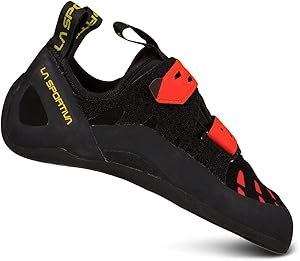
• Closure: Dual hook-and-loop straps
• Upper: Unlined leather with stretch insert
• Rubber: FriXion RS with aggressive heel rand
• Midsole: LaSpoflex for torsional rigidity
The La Sportiva Tarantula Rock offers a compelling blend of accessibility and performance-focused adjustments, primarily through its convenient hook-and-loop closure system. Like its lace-up sibling, it runs large, requiring a downsize of about a full size. The unlined leather upper and integrated stretch panel work together to provide a precise, adaptable fit that conforms to the foot over time. The updated heel cup is designed to lock the heel in securely without excessive pressure, addressing a common fit issue in entry-level shoes.
This model steps up the performance with an aggressive rubber rand on the heel and the trusted FriXion RS rubber underfoot, offering improved edging power and hooking capability. The LaSpoflex midsole provides good torsional rigidity, transferring power effectively to the toe. It’s an excellent choice for the climber who values the quick adjustment of straps and is ready for a shoe that offers more technical features than a pure beginner model, yet remains comfortable enough for extended sessions on varied terrain.
Pros: Convenient and adjustable strap closure; secure heel fit; good edging platform; comfortable unlined leather.
Cons: Sizes run large; leather will stretch (fit snugly initially); not a dedicated performance downturn.
See the La Sportiva Tarantula Rock
7. BLACK DIAMOND Momentum – Women’s
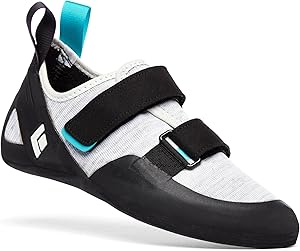
• Design: Women-specific shape & volume
• Upper: Engineered Knit Technology
• Outsole: 4.3mm Black Diamond rubber
• Midsole: Soft flex for sensitivity
The BLACK DIAMOND Women’s Momentum takes the successful comfort-oriented design of the neutral model and tailors it specifically to the anatomy of a woman’s foot. This includes a narrower heel, lower volume, and a different proportional fit through the forefoot. Combined with the adaptive Engineered Knit upper, this results in a precise, glove-like fit that eliminates dead space without causing hot spots. The focus remains on all-day comfort, making it ideal for long gym sessions, sport climbing days, or multi-pitch adventures where foot fatigue is a primary concern.
Performance mirrors the men’s version but with the enhanced precision of a gender-specific last. The 4.3mm rubber provides dependable grip, and the soft-flex midsole offers an excellent balance, allowing climbers to feel the rock while maintaining support for small edges. The dual hook-and-loop straps ensure easy adjustability and a secure fit. It’s a standout shoe for female climbers seeking a comfortable, versatile, and performance-ready shoe that truly fits from day one, supporting progression across a wide range of disciplines.
Pros: True women-specific fit; exceptionally comfortable and breathable; great for long days; versatile performance.
Cons: Not designed for steep overhangs or high-level competition bouldering; knit upper may lack ultimate precision.
See the BLACK DIAMOND Momentum – Women’s
8. SCARPA Arpia V
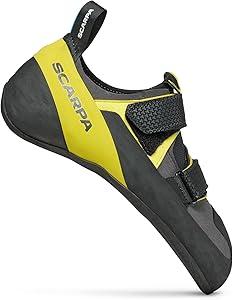
• Profile: Slightly downturned
• Rubber: Vibram XS Grip 2
• Upper: Microsuede with two straps
• Fit: Synthetic, minimal stretch
The SCARPA Arpia V is a performance-oriented hybrid shoe that masterfully bridges the gap between comfort and aggression. Its slight downturn provides more power and precision on small holds than a flat shoe, without the extreme discomfort of a fully aggressive model. The microsuede upper, fastened by two hook-and-loop straps, is key: it’s a synthetic material that minimizes stretch, ensuring the precise fit you achieve on day one remains consistent over the shoe’s lifetime. This makes sizing critical—aim for a performance-oriented, snug fit with no dead space.
Equipped with the soft and sticky Vibram XS Grip 2 rubber, the Arpia V excels on both plastic and rock, offering superb friction for smears and pockets. The rubber toe cap enhances durability and toe-hooking performance. It’s an ideal shoe for intermediate to advanced climbers tackling steep sport routes, technical face climbs, or challenging gym sets where a bit of extra power and sensitivity is needed, but all-day comfort hasn’t been entirely sacrificed. It’s a true “performance all-rounder.”
Pros: Excellent balance of comfort and performance; sticky Vibram rubber; synthetic upper maintains fit; good for technical routes and boulders.
Cons: Requires a snug, performance fit that may not suit beginners; not for all-day multi-pitch comfort.
9. SCARPA Drago
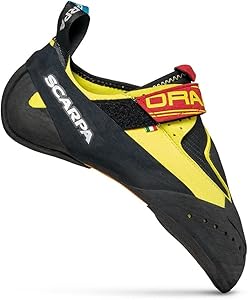
• Profile: Aggressively downturned
• Rubber: Vibram XS Grip 2
• Upper: Synthetic microfiber
• Technology: PCB Active Rand
The SCARPA Drago is a top-tier performance shoe built for the steepest terrain. Its highly downturned profile and super-soft construction are engineered for maximum sensitivity and power on overhanging sport climbs and boulders. The PCB (Power Connection Band) Active Rand is a defining technology, connecting the heel and toe to enhance power transmission and sensitivity by minimizing material between your foot and the rock. The synthetic microfiber upper ensures minimal stretch, demanding an exact, tight fit from the start—climbers often downsize significantly.
This shoe is about feel and precision. The Vibram XS Grip 2 rubber is exceptionally soft and sticky, perfect for gripping on slick holds and tenuous smears. The Drago feels almost like an extension of your foot, allowing for incredible precision on micro-edges and pockets. However, this performance comes at the cost of comfort and support; it’s not a shoe for all-day edging or slab climbing. It’s a specialist tool for climbers pushing their limits on steep angles where every point of contact is critical.
Pros: Unmatched sensitivity and grip on steep terrain; powerful downturn; synthetic upper maintains fit; excellent for toe/heel hooking.
Cons: Very uncomfortable for flat-footing or long sessions; requires an aggressive, tight fit; not durable for frequent edging.
10. SCARPA Instinct VS

• Fit: Wider, for medium to high volume
• Rubber: Vibram XS Edge (forefoot), XS Grip 2 (heel)
• Toe: Large rubber patch for hooking
• Sizing: Downsize ~0.5 from street
The SCARPA Instinct VS is a high-performance shoe renowned for its versatility and unique blend of technologies. It features a slight downturn and a stiffness that provides excellent support for edging, yet it’s sensitive enough for precise footwork. The fit is notably wider and higher volume than many performance shoes, making it a favorite among climbers with similarly shaped feet who struggle with narrow, painful toe boxes. Sizing typically involves a moderate downsize of about half a size from your street shoe for the optimal performance fit.
The strategic rubber compounds set the Instinct VS apart: the stiff Vibram XS Edge in the forefoot provides a stable platform for standing on the smallest edges, while the softer XS Grip 2 in the heel molds perfectly for secure heel hooks. The large rubber toe patch offers exceptional coverage for toe hooks and bat-hangs. This combination makes the shoe a phenomenal all-around performer, equally at home on technical vertical face climbs, overhangs, and demanding boulder problems, offering power and precision where needed.
Pros: Excellent edging power; comfortable for a performance shoe (wider fit); versatile for various climbing styles; outstanding heel and toe hook rubber.
Cons: Toe box may be too wide for low-volume/narrow feet; not as sensitive as fully soft shoes; requires careful sizing.
How to Choose Climbing Shoes for High Arches
Choosing the right climbing shoes is critical for comfort, performance, and injury prevention, especially if you have high arches. High arches change how your foot contacts the shoe and the rock, often creating pressure points, dead space, or instability if the shoe is not well matched to your foot shape. Many climbers struggle with foot pain, numb toes, or poor edging simply because their shoes do not support their arch properly. This guide explains what high arches mean for climbing, what features to look for, and how to find shoes that fit and perform well.
Understanding High Arches in Climbing
A high arch means the middle part of your foot curves more than average, leaving less surface area in contact with the ground. In climbing shoes, this can lead to gaps under the arch, excess pressure on the heel and forefoot, and reduced sensitivity. While high arches can be strong and powerful, they need the right shoe structure to work effectively on small holds and steep terrain.
Common Problems High-Arch Climbers Face
Climbers with high arches often experience pain on the top of the foot, cramping in the arch, or burning sensations after short sessions. Shoes may feel tight in some areas but loose in others. Heel tension may feel aggressive, while the midfoot lacks support. Understanding these issues helps narrow down shoe choices.
Fit Comes Before Everything Else
No amount of advanced features can make up for poor fit. High-arch climbers should prioritize fit over brand, style, or stiffness. A good fit supports the arch without forcing it flat or leaving empty space.
Snug but Not Crushing
The shoe should feel snug across the midfoot without sharp pressure points. Avoid shoes that painfully dig into the top of the foot, especially under Velcro straps or laces. At the same time, avoid shoes that feel loose in the arch area, as this reduces control and increases fatigue.
Volume and Shape Matter
Many climbing shoes are designed for low to medium arches. Look for shoes with a slightly higher internal volume or a more curved profile that matches your foot shape. Some brands naturally fit high arches better due to their last design.
Choosing the Right Closure System
The closure system affects how well you can adjust the shoe to your arch height. High arches benefit from systems that allow fine-tuning across the midfoot.
Laces
Laced climbing shoes are often the best choice for high arches. They allow precise adjustment along the entire foot, making it easier to relieve pressure on the top of the arch while maintaining a secure fit. Laces are ideal for long sessions, multi-pitch routes, and trad climbing.
Velcro
Velcro shoes are convenient but can be hit or miss for high arches. Look for models with multiple Velcro straps instead of a single strap. More straps mean better adjustability and pressure distribution.
Slip-On
Slip-on or elastic shoes are usually not ideal for high arches. They often lack adjustability and can either squeeze the arch too much or leave it unsupported.
Stiffness and Support Levels
Shoe stiffness plays a major role in comfort and performance for high-arch climbers.
Moderate to Stiff Shoes
Moderately stiff or stiff shoes often work better for high arches because they provide structure under the foot. This helps distribute pressure evenly and reduces arch fatigue, especially on edging-heavy routes.
Very Soft Shoes
Very soft shoes can work for high arches in steep bouldering or gym climbing, but only if the fit is excellent. Without enough support, soft shoes may cause the arch to collapse uncomfortably or lead to cramping.
Downturn and Arch Tension
Downturn refers to how curved the shoe is. Arch tension systems pull the foot into a powerful shape, which can be beneficial or problematic for high arches.
Moderate Downturn
Shoes with moderate downturn often suit high arches best. They support the natural curve of the foot without forcing excessive tension. This balance works well for sport climbing and all-around use.
Aggressive Downturn
Highly aggressive shoes can feel uncomfortable for some high-arch climbers, especially during long sessions. If you choose aggressive models, ensure the arch tension feels supportive rather than painful.
Toe Box and Forefoot Fit
High arches often come with a narrower or more pointed forefoot, but this is not always the case. Toe box shape still matters.
Asymmetry
Moderately asymmetric shoes can improve precision without overloading the toes. Extremely asymmetric shoes may increase pressure on the forefoot and worsen discomfort.
Toe Position
Your toes should feel powerful but not painfully curled. Excessive toe pain often distracts from arch comfort and reduces overall performance.
Heel Fit and Tension
Heel fit is closely connected to arch comfort. Too much heel tension can pull aggressively on the arch, while too little can reduce control.
Secure but Comfortable Heels
The heel should feel secure during heel hooks without digging into the Achilles or arch. Test heel hooks when trying shoes to ensure balanced tension.
Sole Thickness and Rubber Choice
Sole thickness affects sensitivity, durability, and support.
Medium Thickness Soles
Soles around 4mm often provide a good balance for high arches. They offer enough support for edging while maintaining reasonable sensitivity.
Rubber Type
Stickier rubber improves grip, but slightly firmer rubber can help high-arch climbers feel more supported on small footholds.
Climbing Style and Environment
Your climbing style should guide your final decision.
Gym and Bouldering
Indoor climbers may prefer slightly softer shoes with good adjustability. Comfort matters for repeated attempts and training sessions.
Sport and Trad Climbing
Outdoor routes often reward support and comfort. Laced, moderately stiff shoes are popular choices for high-arch climbers in these disciplines.
Trying Shoes and Breaking Them In
Always try shoes on later in the day when your feet are slightly swollen. Walk, stand on edges, and test flexibility in the shop. Expect a short break-in period, but shoes should not be painfully tight from the start.
Final Thoughts
High arches are not a disadvantage in climbing when supported by the right shoes. Focus on fit, adjustability, and balanced support rather than extreme designs. Laced or adjustable Velcro shoes with moderate stiffness and downturn usually offer the best experience. Taking time to find the right pair will improve comfort, performance, and confidence on the wall.