Best Soft Climbing Shoes of 2026
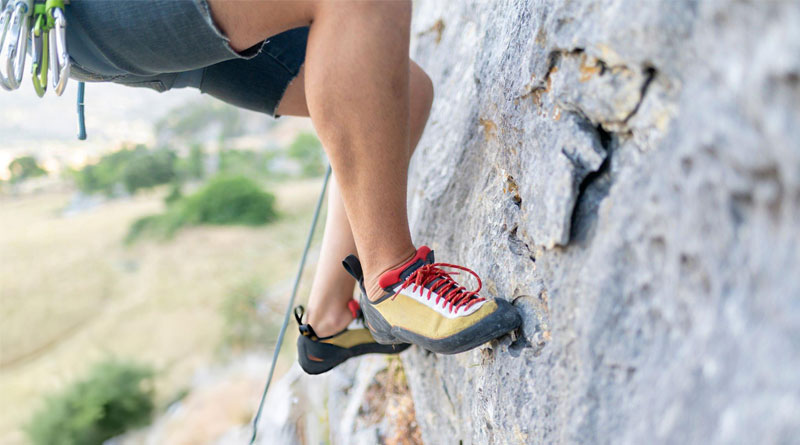
Soft climbing shoes are a game-changer for climbers who love sensitivity and “feeling” the rock. Unlike stiff shoes, soft models use thinner rubber and less midsole support, allowing your foot to wrap around holds and smear across flat surfaces with ease. They are perfect for steep bouldering and indoor gym sessions where friction is everything. In this guide, we’ll break down the best soft climbing shoes on the market to help you find the perfect balance of comfort, flexibility, and elite performance.
1. La Sportiva Tarantulace

- Closure: Quick pull lacing harness
- Rubber: FriXion RS compound
- Upper: Synthetic with lined tongue
- Use Type: All-day indoor and outdoor climbing
The La Sportiva Tarantulace is a true all-rounder designed for climbers who want one shoe to handle everything. Its flat profile and comfortable construction make it especially appealing for beginners and intermediate climbers who spend long sessions at the gym or full days at the crag. The quick pull lacing system allows you to dial in a snug, precise fit across the entire foot, improving stability without creating pressure points.
The FriXion RS rubber delivers reliable grip on both plastic holds and real rock while remaining durable enough for frequent use. A lined tongue helps manage moisture and improves comfort during warmer sessions. While it is not an aggressive performance shoe, the Tarantulace excels as a dependable, comfortable option for learning technique, building footwork skills, and enjoying long climbs without foot fatigue.
- Pros: Comfortable fit, durable rubber, versatile design, good for long sessions
- Cons: Limited performance on steep overhangs, not highly sensitive
See the La Sportiva Tarantulace
2. Climb X Rave Strap
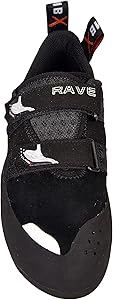
- Closure: Hook-and-loop strap
- Sole: Rubber outsole
- Padding: Padded collar and heel
- Fit: Beginner-friendly sizing
The Climb X Rave Strap is built with comfort and simplicity in mind, making it a solid choice for new climbers or casual gym users. Its flat profile promotes natural foot positioning, helping climbers focus on technique rather than foot pain. The hook-and-loop strap makes the shoe easy to put on and remove, which is especially convenient during gym sessions.
A rubber sole provides dependable traction on indoor holds, while the padded collar and heel reduce pressure and rubbing during longer climbs. While the Rave Strap lacks advanced performance features, it excels as an affordable and comfortable entry-level shoe that supports skill development and confidence on the wall.
- Pros: Comfortable padding, easy on/off, beginner-friendly price
- Cons: Limited sensitivity, not ideal for advanced climbing
3. BLACK DIAMOND Momentum

- Upper: Engineered knit
- Rubber Thickness: 4.3mm outsole
- Closure: Dual hook-and-loop straps
- Use Type: Gym, sport, and multi-pitch
The Black Diamond Momentum is designed for climbers who prioritize comfort without sacrificing reliability. Its engineered knit upper offers breathability and stretch, making it ideal for long gym sessions or extended outdoor climbs. The neutral shape supports natural movement, helping reduce foot fatigue over time.
A durable 4.3mm rubber sole balances grip and longevity, performing well on both plastic holds and natural rock. The dual hook-and-loop straps allow fast adjustments and a secure fit. While it is not intended for aggressive terrain, the Momentum shines as a dependable, lightweight shoe for all-day climbing.
- Pros: Excellent comfort, breathable upper, durable sole
- Cons: Limited downturn, less precise on steep routes
See the BLACK DIAMOND Momentum
4. SCARPA Origin

- Last: Flat and wide fit
- Upper: Leather
- Heel System: Pressure-absorbing design
- Use Type: Beginner and comfort-focused climbing
The SCARPA Origin is built to help new climbers start strong with comfort and confidence. Its flat-lasted design and wide fit accommodate a variety of foot shapes, making it especially appealing to climbers who struggle with tight performance shoes. The leather upper adapts over time, improving overall comfort.
A unique heel tension system reduces pressure on the Achilles while maintaining forward support. The Origin provides reliable grip for learning foot placement and edging techniques. Although it is not designed for aggressive climbing, it excels as a foundational shoe for gym training and easy outdoor routes.
- Pros: Very comfortable, wide fit, supportive heel
- Cons: Minimal performance features, heavier feel
5. La Sportiva Tarantula Boulder

- Construction: Half-sole design
- Heel: Enhanced rubber coverage
- Toe: Integrated rubber toe cap
- Use Type: Bouldering and gym climbing
The La Sportiva Tarantula Boulder is tailored for climbers who focus on bouldering and technical gym routes. Its updated heel and toe rubber provide improved hooking performance, giving you more confidence on modern problems. The shoe offers a comfortable yet performance-oriented fit.
The half-sole construction enhances sensitivity while reducing material waste during resoling. Durable rubber ensures long-term use, making it a great option for climbers progressing into more demanding styles. While it runs large, proper sizing delivers an excellent balance of comfort and control.
- Pros: Great toe and heel hooking, durable, sensitive feel
- Cons: Sizing runs large, less suited for long routes
See the La Sportiva Tarantula Boulder
6. La Sportiva Tarantula Rock
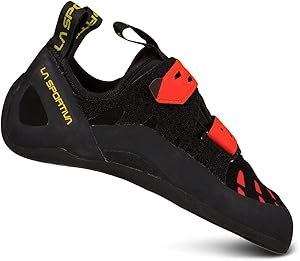
- Closure: Dual hook & loop straps
- Rubber: FriXion RS compound
- Upper: All-leather, unlined
- Midsole: LaSpoflex ultra-thin
The La Sportiva Tarantula Rock is designed for climbers entering the sport who want comfort, durability, and easy adjustability. Its rounded forefoot and higher-volume fit accommodate a wide range of foot shapes, making it ideal for beginners spending long hours in the gym or on easy outdoor routes. The hook-and-loop closure system allows quick adjustments and reliable lockdown.
An updated heel cup improves stability and comfort, while the FriXion RS rubber provides dependable grip for edging and smearing. The leather upper remains breathable and adapts to your foot over time. While not aggressive, the Tarantula Rock offers excellent all-day comfort and versatility for skill progression.
- Pros: Comfortable fit, durable materials, easy adjustability
- Cons: Runs large, limited performance on steep terrain
See the La Sportiva Tarantula Rock
7. BLACK DIAMOND Momentum – Women’s
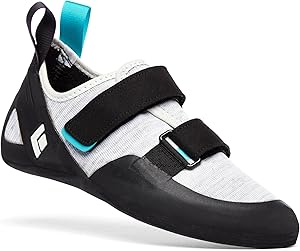
- Fit: Women-specific design
- Upper: Engineered knit
- Rubber: 4.3mm outsole
- Midsole: Soft flex support
The Black Diamond Momentum Women’s is engineered to deliver comfort and control for female climbers across gym and outdoor environments. Its women-specific shape provides a precise fit with reduced volume, helping improve confidence on footholds. The neutral profile supports natural movement for long training sessions.
The breathable knit upper enhances airflow and moisture control, while the 4.3mm rubber outsole ensures consistent grip and durability. A soft flex midsole balances sensitivity and support, making it ideal for learning footwork techniques. This shoe excels as a comfortable, reliable option for progression-focused climbers.
- Pros: Comfortable women’s fit, breathable, durable rubber
- Cons: Not aggressive, limited power on steep climbs
See the BLACK DIAMOND Momentum – Women’s
8. SCARPA Arpia V
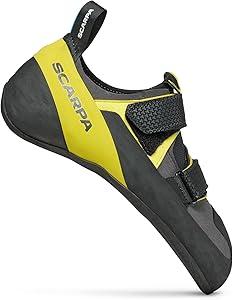
- Profile: Slightly downturned
- Rubber: Vibram XS Grip 2
- Upper: Microsuede synthetic
- Closure: Dual hook-and-loop straps
The SCARPA Arpia V bridges the gap between comfort and performance, making it an excellent choice for climbers tackling challenging gym routes and outdoor climbs. Its slightly downturned profile adds power without sacrificing comfort, allowing extended wear during longer sessions.
The Vibram XS Grip 2 rubber offers strong traction on both plastic and rock, while the synthetic upper resists stretching for consistent fit. Added toe rubber enhances toe hooking, making this shoe versatile for modern climbing styles. It performs best when sized snug for precision.
- Pros: Balanced performance, strong grip, durable upper
- Cons: Less comfortable for all-day wear, minimal stretch
9. SCARPA Drago
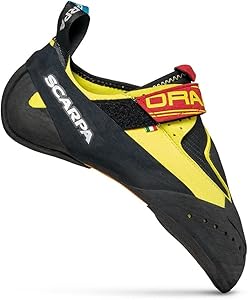
- Profile: Aggressive downturn
- Rubber: Vibram XS Grip 2
- Upper: Synthetic microfiber
- Rand: PCB Active system
The SCARPA Drago is built for climbers who demand maximum sensitivity on steep sport routes and technical boulders. Its aggressive downturn and thin midsole allow precise feedback from footholds, making it a favorite for advanced climbers tackling overhangs.
The synthetic upper maintains shape over time, while the PCB Active Rand enhances power transfer and precision. Vibram XS Grip 2 rubber delivers exceptional friction on all rock types. While extremely sensitive, the Drago prioritizes performance over comfort.
- Pros: Outstanding sensitivity, excellent grip, high precision
- Cons: Less comfortable, requires aggressive downsizing
10. SCARPA Instinct VS

- Fit: Wider forefoot design
- Rubber: XS Edge forefoot, XS Grip 2 heel
- Sole: Thin, stiff platform
- Toe: Extended rubber coverage
The SCARPA Instinct VS is a performance-focused climbing shoe designed for precision and power. Its slightly softer construction enhances sensitivity while retaining enough stiffness for standing on small edges. The wider toe box makes it popular among climbers who struggle with narrow performance shoes.
Vibram XS Edge rubber excels on micro-edges, while the XS Grip 2 heel molds securely for confident heel hooks. Extensive toe rubber supports toe hooks and steep climbing techniques. This shoe rewards precise footwork and strong technique.
- Pros: Excellent edging, strong toe and heel hooking, supportive fit
- Cons: Less forgiving, not ideal for beginners
Choosing the right climbing shoe is one of the most personal decisions a climber can make. While stiff shoes are often recommended for beginners or long multi-pitch routes, soft climbing shoes have become the gold standard for modern bouldering and steep sport climbing. They offer a level of “feel” and adaptability that stiff shoes simply cannot match. However, because they lack structural support, choosing the wrong pair can lead to foot fatigue or poor performance.
This guide will walk you through everything you need to know to select the perfect soft climbing shoes for your foot shape and climbing style.
Understanding the Appeal of Soft Climbing Shoes
Soft climbing shoes are defined by their lack of a rigid midsole. In a traditional stiff shoe, a plastic or fiber insert runs the length of the sole to provide a platform for your foot. In a soft shoe, this insert is either very thin, localized only to the toes, or removed entirely.
The result is a shoe that acts like a second skin. When you step on a volume or a rounded sloper, the shoe deforms and molds to the shape of the hold, increasing the surface area of the rubber in contact with the rock. This is known as “smearing,” and it is the primary reason why indoor competition climbers and steep-wall specialists prefer soft rubber.
Sensitivity and Feedback
The primary benefit of a soft shoe is sensitivity. When the rubber is thin and the midsole is flexible, you can actually feel the texture of the rock through the shoe. This sensory feedback allows you to make micro-adjustments to your foot position, ensuring you are applying pressure in the exact right spot. For advanced climbers, this “tactile” climbing style is essential for trust on difficult movements.
Mechanical Advantage in Overhanging Terrain
On steep, overhanging routes, you aren’t standing on your feet so much as you are pulling with them. Soft shoes allow you to flex your foot like a claw, “hooking” into holds and pulling your body closer to the wall. A stiff shoe would resist this motion, making it harder to stay engaged on steep terrain.
Key Features to Evaluate
When shopping for soft shoes, you cannot rely on the same metrics used for all-around shoes. You need to look specifically at how the shoe manages its lack of structure.
The Midsole (or Lack Thereof)
Even among “soft” shoes, there is a spectrum. Some shoes have a “minimalist” midsole, usually a 0.5mm to 1.0mm thickness, which provides just enough support to prevent the shoe from flopping. Others have no midsole at all, relying entirely on the tension of the rand (the rubber wrapping around the shoe) to hold its shape.
Full-Length vs. Half-Sole
Most high-performance soft shoes feature a “split sole” design. This means the front rubber and the heel rubber are separate pieces. This design maximizes flexibility in the arch, allowing the shoe to bend and twist freely, which is vital for modern bouldering movements like 3D volume stepping.
Rubber Compounds
Soft shoes almost always use “soft” rubber compounds. Brands like Vibram (XS Grip 2) or Stealth (HF or Mi6) specialize in rubber that is sticky and pliable. While this rubber provides incredible friction, it does wear down faster than the harder rubber found on beginner shoes. When choosing a shoe, check if the rubber is 3mm or 3.5mm; thinner rubber increases sensitivity but decreases the lifespan of the shoe.
Tension Systems
Because soft shoes lack a stiff internal frame, they rely on a “tension system” to keep your toes at the front of the shoe. This is usually a rubber band that runs from the heel to the toe box. A well-designed tension system ensures that even though the shoe is flexible, it still provides power when you need to press down on a small chip.
Matching the Shoe to Your Climbing Style
Not all soft shoes are built for the same tasks. Identifying where you spend most of your time will help narrow down the options.
Indoor Bouldering and Competition
If you climb primarily on plastic, you want the softest shoe possible. Modern gym setting involves many large, friction-dependent volumes. You need a shoe that can smear effectively. Look for shoes with a lot of rubber coverage on the top of the toe (for toe hooking) and a flexible midfoot.
Steep Limestone and Overhangs
For outdoor sport climbing on steep limestone, you might want a “medium-soft” shoe. These provide the clawing ability needed for overhangs but offer a tiny bit more support for when the route gets vertical and the holds get smaller.
Smearing on Granite
Granite slab climbing requires maximum rubber contact. A soft shoe allows your heel to drop lower, pressing more rubber into the rock. However, if the granite involves “edging” (standing on tiny, sharp blades of rock), a soft shoe will be exhausting for your calves.
Sizing and Fit for Soft Shoes
Sizing soft shoes is notoriously difficult. Because there is no stiff midsole to hold the foot in place, many climbers “downsize” aggressively to ensure the shoe doesn’t shift during hard moves.
The “Vacuum” Fit
A soft shoe should feel like a vacuum seal around your foot. There should be no dead space in the arch or the heel. If there is a gap under your arch, the shoe will fold awkwardly when you try to smear. If the heel is baggy, your heel hooks will feel insecure.
The Trade-off: Performance vs. Pain
While a tight fit is necessary for performance, soft shoes are generally more forgiving than stiff ones. Because the materials are pliable, they will mold to your foot shape over time. Look for unlined leather if you want the shoe to stretch (up to a full size), or synthetic materials if you want the fit to stay consistent throughout the life of the shoe.
Toe Position
In a soft shoe, your toes should be comfortably “knuckled up” or crimped. This position provides the power needed to compensate for the lack of a stiff sole. If your toes are flat, you won’t be able to generate force on small holds.
Common Pitfalls to Avoid
Before you commit to a pair, be aware of the limitations of soft footwear.
The “Weak Foot” Syndrome
If you have never worn soft shoes before, your feet will get tired quickly. Stiff shoes do the work for you; soft shoes require your intrinsic foot muscles to do the lifting. It is common for your arches to ache during the first few weeks of transition. Don’t assume the shoe is “bad”—your feet just need to get stronger.
Vertical Edging
Soft shoes are terrible for long, vertical routes with tiny edges. If you are standing on a dime-sized edge for five minutes on a 30-meter route, a soft shoe will cause your foot to flex and fatigue, eventually leading to a “pop-off.” Save the soft shoes for the steep stuff.
Rapid Wear and Tear
Because soft rubber is thinner and more pliable, it disappears faster. If you have “sloppy” footwork—dragging your toes or readjusting constantly—you will burn through a pair of soft shoes in a matter of months. Precision is key to making these shoes a cost-effective investment.
Final Recommendations
To choose the best soft climbing shoe, start by trying on several brands. Every manufacturer (La Sportiva, Scarpa, Unparallel, Five Ten) uses a different “last” (foot mold). Some are better for narrow feet, while others cater to wide forefoots with narrow heels.
Walk around the shop, stand on the edge of a testing block, and most importantly, try to “smear” against a flat surface. If the shoe feels like a natural extension of your foot and allows you to feel the contours of the floor, you’ve likely found your match. Soft shoes are about confidence; when you can feel the hold, you can trust the move.