Best Trad Climbing Shoes of 2026
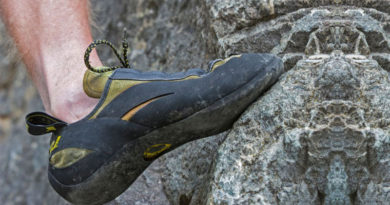
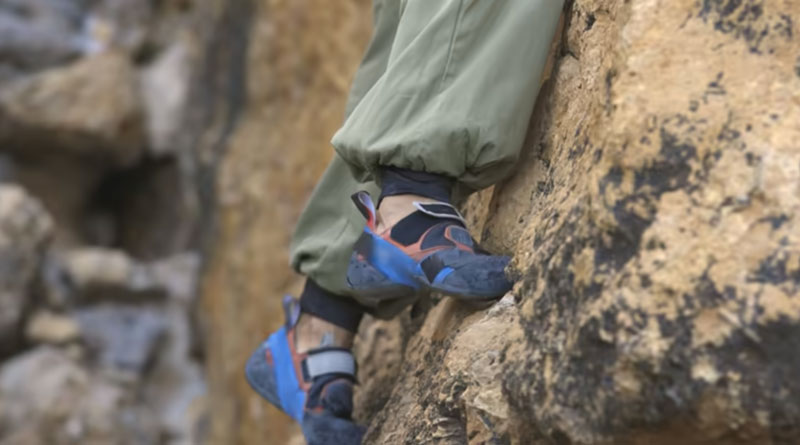
Choosing the best trad climbing shoes isn’t about finding the most aggressive shoe. It’s about comfort and precision for long days on the rock. You need a shoe that feels secure on tiny edges but forgiving enough to wear for hours. A good trad shoe supports your foot during crack climbing and provides sensitivity for delicate slabs. Let’s explore models that blend these features, helping you climb confidently and comfortably, one secure placement at a time.
1. BLACK DIAMOND Momentum

- Upper: Engineered knit synthetic
- Closure: Dual hook-and-loop straps
- Sole: 4.3mm durable rubber
- Profile: Neutral, flat-lasted
The Black Diamond Momentum is designed with comfort as its main priority, making it an excellent choice for beginners and climbers who spend long hours in the gym or at the crag. The engineered knit upper stretches naturally with your foot while remaining breathable, helping to prevent hot spots during extended sessions. This construction also keeps the shoe lightweight, reducing foot fatigue on multi-pitch routes or long training days.
Performance-wise, the 4.3mm rubber outsole strikes a solid balance between grip and durability. It provides dependable traction on indoor holds and real rock without wearing down too quickly. The dual hook-and-loop straps allow quick adjustments and easy on-and-off between climbs, delivering a secure yet forgiving fit. Overall, the Momentum is a versatile, all-day climbing shoe focused on comfort, consistency, and reliability rather than aggressive performance.
- Pros: Comfortable fit, breathable upper, durable outsole, easy adjustments
- Cons: Not ideal for steep or highly technical climbs
See the BLACK DIAMOND Momentum
2. SCARPA Helix Lace

- Upper: Leather
- Closure: Traditional lace-up
- Rubber: Vibram XS Edge
- Profile: Symmetrical, flat
The SCARPA Helix Lace is a classic climbing shoe that continues to earn its reputation among guides and beginner climbers alike. Its traditional lace-up design allows precise adjustments across the entire foot, making it easy to dial in comfort for long days on the wall. The nearly symmetrical shape follows the natural contours of the foot, making it especially suitable for slab and crack climbing.
Comfort is further enhanced by the padded heel cup, which holds the heel securely without irritating the Achilles. The Vibram XS Edge rubber provides excellent support and consistency, helping climbers learn accurate foot placements while offering long-lasting durability. The passive rand prioritizes comfort over aggressive power, allowing the Helix to be worn all day without excessive foot fatigue. This shoe is ideal for climbers who value reliability, comfort, and timeless design.
- Pros: All-day comfort, precise lacing, durable rubber, great for learning
- Cons: Less sensitivity on steep terrain
3. Climb X Rave
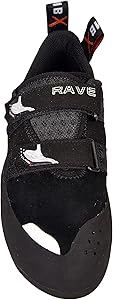
- Upper: Synthetic
- Closure: Slip-on with strap
- Sole: Rubber outsole
- Cushioning: Padded collar and heel
The Climb X Rave is a budget-friendly climbing shoe designed for comfort and ease of use. Its padded collar and heel help reduce pressure points, making it approachable for beginners or casual climbers. The simple design allows quick entry and exit, which is useful during gym sessions where shoes come off frequently.
The rubber sole provides reliable grip for indoor climbing and light outdoor use, while the forgiving fit helps new climbers focus on technique rather than foot pain. Although it lacks aggressive shaping or advanced features, the Rave performs well for entry-level climbing and training sessions. It is best suited for those who want a comfortable, no-frills shoe that gets them started without a steep learning curve.
- Pros: Affordable, comfortable padding, beginner-friendly
- Cons: Limited performance for advanced climbing
4. La Sportiva Tarantula
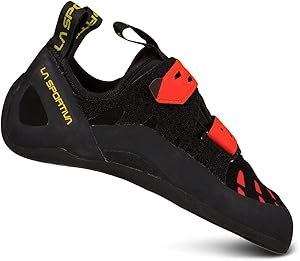
- Upper: Unlined leather
- Closure: Dual hook-and-loop
- Rubber: FriXion RS
- Midsole: LaSpoflex
The La Sportiva Tarantula is a versatile climbing shoe aimed at beginners seeking comfort and adaptability. Its rounded forefoot and higher-volume design accommodate a wide range of foot shapes, while the leather upper offers breathability and long-term durability. The hook-and-loop closure system allows quick adjustments and a secure fit.
Performance comes from the FriXion RS rubber, which provides dependable grip and durability for both gym and outdoor climbing. The thin LaSpoflex midsole adds torsional rigidity, supporting edging without sacrificing comfort. An updated heel cup improves stability and security, making the Tarantula a reliable choice for climbers developing their skills across multiple disciplines.
- Pros: Comfortable fit, versatile performance, durable materials
- Cons: Runs large, not aggressive
5. SCARPA Origin

- Upper: Leather
- Fit: Wide, high volume
- Profile: Flat-lasted
- Heel: Pressure-absorbing system
The SCARPA Origin is built for climbers who prioritize comfort while learning proper footwork. Its flat-lasted design keeps the foot in a natural position, reducing strain during long sessions. The wide last and higher volume make it especially suitable for climbers with broader feet.
A standout feature is the pressure-absorbing heel system, which distributes tension evenly and minimizes Achilles discomfort. The leather upper adapts over time for a more personalized fit. While it is not intended for aggressive climbing, the Origin provides reliable grip and support for developing technique in both gym and outdoor settings.
- Pros: Very comfortable, wide fit, great for beginners
- Cons: Limited precision for advanced routes
6. SCARPA Instinct VS

- Upper: Synthetic and leather
- Rubber: Vibram XS Edge / XS Grip 2
- Closure: Dual hook-and-loop
- Profile: Moderately aggressive
The SCARPA Instinct VS is a performance-oriented climbing shoe designed for precision and power. Its slightly softer construction improves sensitivity while maintaining enough stiffness for confident edging. The wider fit appeals to climbers who need extra room in the toe box without sacrificing performance.
Vibram XS Edge rubber in the forefoot excels on tiny edges, while the XS Grip 2 rubber on the heel enhances hooking performance. A large toe rubber patch supports advanced toe hooks and steep climbing techniques. The Instinct VS is well suited for experienced climbers tackling technical sport routes and bouldering problems.
- Pros: Excellent edging, powerful toe and heel hooks
- Cons: Less comfortable for long sessions
7. SoleEase Climbing Shoes

- Fit: Performance-oriented snug fit
- Sole: High-traction rubber
- Upper: Abrasion-resistant materials
- Padding: Targeted comfort zones
SoleEase Climbing Shoes are designed for climbers seeking a balance between performance and comfort. The snug fit enhances control and power transfer, making edging and precise placements more effective. The specialized rubber outsole delivers strong traction across different rock types.
Despite their performance focus, these shoes include padding in key areas to reduce pressure during extended climbs. Durable construction and reinforced stitching ensure longevity, even with frequent use. Their versatile design supports multiple climbing styles, making them a practical choice for climbers who want one shoe for varied challenges.
- Pros: Strong grip, durable build, versatile design
- Cons: Requires precise sizing for comfort
See the SoleEase Climbing Shoes
How to Choose Trad Climbing Shoes: A Complete Guide
Choosing the right shoes for traditional climbing is one of the most important gear decisions you’ll make. Unlike sport climbing, where performance often centers on sheer grip and power, trad climbing introduces a unique set of demands: long days, varied terrain, and the need for both precision and endurance. The wrong shoe can turn an epic adventure into a painful ordeal. This guide will walk you through the key considerations to help you find the perfect pair of trad climbing shoes for your next adventure on the rock.
Understanding the Trad Climbing Philosophy: Comfort is King
First and foremost, trad climbing is a game of endurance. You might be wearing your shoes for an entire multi-pitch route, standing on small edges for minutes at a time while you place gear, or jamming your feet into cracks. A shoe that is excruciatingly painful after twenty minutes has no place here. The overarching principle for a trad shoe is all-day comfort. This doesn’t mean a sloppy fit, but rather a precise, supportive fit that doesn’t rely on extreme deformation of your foot. You should be able to forget about your feet and focus on the climb and the gear.
Key Features to Evaluate
Let’s break down the specific characteristics that define a great trad climbing shoe.
1. Last and Asymmetry: The Foundation of the Fit
The “last” is the shape around which the shoe is built. For trad climbing, you generally want a shoe with a moderate to low asymmetry. High-asymmetry shoes pull your toes into a powerful, curled position ideal for steep sport climbs, but this quickly becomes agonizing on a long trad route. A more neutral last allows your toes to lie in a flatter, more natural position, distributing pressure and vastly improving comfort over many hours.
2. Stiffness vs. Sensitivity: Finding the Balance
This is a crucial trade-off. A very stiff, supportive midsole is excellent for standing on tiny edges and crystal smears all day, as it reduces foot fatigue. However, too much stiffness can make a shoe feel “dead” and less sensitive on delicate slab climbs or when you need to feel the rock inside a crack. Conversely, a very sensitive shoe can cause your feet to tire quickly. The ideal trad shoe offers a balanced, medium-stiff flex: enough support for edging, but enough feedback for nuanced footwork.
3. The All-Important Toe Box
The front of your shoe is your primary tool. For trad, especially crack climbing, a flat, moderately thick toe rand is advantageous. A heavily downturned (“aggressive”) toe hook makes jamming painful and inefficient. A flat profile allows you to jam your foot comfortably into cracks. Additionally, look for a defined, but not overly pointed, toe edge. A precise toe allows for accurate placement on small features and in pin scars, which is essential for technical face climbing that often accompanies crack systems.
4. Upper Construction and Materials
Leather uppers are a classic choice for trad shoes because they stretch and mold to your foot over time, often becoming more comfortable. Synthetic uppers stretch less, offering a more consistent fit from day one. Consider whether you prefer a shoe that will adapt to you (leather) or one that maintains its precise shape (synthetic). Also, look for uppers with minimal seams in high-wear areas to increase durability during crack jamming.
5. Closure System: Laces, Velcro, or Slip-On?
Each system has merits for trad climbing:
Laces: Offer the most customizable, precise fit. You can loosen them for the approach and rappel, and cinch them perfectly for different parts of a climb. They are also highly repairable in the field.
Velcro (Hook-and-Loop): Incredibly convenient for taking shoes on and off frequently at belays or on a big wall. They provide a good, adjustable fit, though often less micro-adjustable than laces.
Slip-On (Slipper): Typically the most sensitive and minimalist option, but often lack the heel tension and precise edging support needed for many trad scenarios. Best for experienced climbers on specific, crack-heavy routes.
6. The Heel: Secure but Not Aggressive
A good trad heel cup should be secure and snug without excessive padding. An overly large, padded heel designed for hooking on steep terrain is unnecessary and can create a dead spot. You need the heel to stay on during heel-toe jams in cracks and to provide a little support, but it shouldn’t be the primary focus of the shoe’s design.
Putting It All Together: Fit and Feel
Technical specs are useless without the right fit. When trying on trad shoes:
Try them on in the afternoon when your feet are naturally slightly swollen.
Wear the socks you intend to climb in (often thin or none).
Your toes should touch the end but not be painfully curled or crammed. They should lie relatively flat.
There should be no significant pressure points or empty spaces, especially in the heel.
Stand on a small edge (like a book or a door threshold) to feel the support.
Remember, leather shoes may stretch a half-size or more. Your initial fit should be snug but not punishing.
Matching the Shoe to Your Terrain
Consider the type of trad climbing you do most:
Granite Crack Climbs: Prioritize a flat toe box, a stiffish sole for jamming, and a durable upper. Laces are popular here for their adjustable, secure fit.
Limestone or Gritstone Edging: Look for a shoe with excellent edge precision and medium stiffness. A defined toe is key.
Long Alpine/Multi-Pitch Routes: Comfort and versatility are paramount. A shoe you can hike in for short approaches and that performs well on both cracks and face is ideal. Easy-on, easy-off closures like Velcro can be a big advantage.
Slab Climbing: Sensitivity becomes more important. A slightly softer, flatter shoe with a good rubber compound will help you feel the friction.
Conclusion: Your Trusted Partner on the Rock
The perfect trad climbing shoe is a trusted partner. It’s not the weapon you use to attack a short, hard sport project, but the reliable tool that supports you through a long, engaging adventure. By prioritizing comfort, a balanced blend of stiffness and sensitivity, and a toe box designed for real rock features, you’ll find a shoe that enhances your connection to the rock rather than distracting you from it. Take your time, try on multiple models, and remember: the best trad shoe is the one you forget you’re wearing, letting you fully immerse yourself in the unique challenge and joy of traditional climbing.