Best Sport Climbing Harnesses of 2026
Looking for a comfortable and safe harness for sport climbing? You’ve come to the right place. A good harness is your most important piece of gear, keeping you secure on the wall. The best ones are light, well-padded for long days, and easy to adjust. With so many options, choosing can be tricky. Our guide cuts through the noise. We’ve tested the top models to help you find the perfect fit for your climbing adventures, whether you’re a beginner or pushing your limits.
1. BLACK DIAMOND Momentum
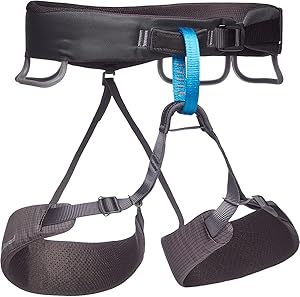
- Material: Nylon, Aluminum, Polyester
- Construction: Dual Core Construction
- Adjustment: Speed Adjust waistbelt, trakFIT leg loops
- Gear Loops: 4 pressure-molded loops + haul loop
The Black Diamond Momentum is a versatile climbing harness designed for both beginners and experienced climbers who want reliable comfort throughout long sessions. Its Dual Core Construction evenly distributes weight across the waist and legs, reducing pressure points during prolonged hangs or belays. This makes it especially well suited for gym climbing, sport routes, and casual trad climbing where comfort matters just as much as safety.
Adjustment is fast and frustration-free thanks to the pre-threaded Speed Adjust buckle and trakFIT leg-loop system, allowing climbers to dial in a secure fit in seconds. The lightweight, low-profile design avoids unnecessary bulk while still feeling supportive. With four sturdy gear loops and a haul loop, it easily carries essential hardware without feeling cluttered. Built from durable, high-strength materials, the Momentum stands up well to regular indoor training and outdoor use, making it a dependable everyday harness.
- Pros: Excellent all-day comfort, easy adjustments, durable build
- Cons: Limited padding for extended hanging, no ice clipper slots
See the BLACK DIAMOND Momentum
2. BLACK DIAMOND Women’s Momentum
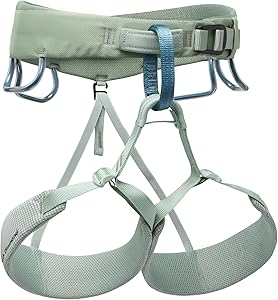
- Fit: Women-specific geometry
- Construction: Dual Core Construction
- Adjustment: Speed Adjust buckle, trakFIT leg loops
- Gear Loops: 4 molded loops + rear haul loop
The Black Diamond Women’s Momentum Harness is designed specifically to match a woman’s body shape, offering a more ergonomic and comfortable fit than unisex models. The contoured waistbelt and tapered leg loops help eliminate pressure points, making it a solid choice for gym sessions, sport climbing, and long days on the wall. Dual Core Construction ensures even weight distribution without adding unnecessary bulk.
Setup is quick and intuitive thanks to the pre-threaded Speed Adjust waistbelt buckle, while trakFIT leg loops allow instant micro-adjustments. The breathable liner and soft internal padding help maintain comfort during warmer conditions or extended climbs. With four pressure-molded gear loops and a rear haul loop, it offers plenty of space for organizing essential climbing gear. Lightweight yet durable, this harness performs well both indoors and outdoors and is ideal for climbers seeking dependable comfort with a tailored fit.
- Pros: Excellent women-specific fit, lightweight, easy to adjust
- Cons: Minimal padding for hanging belays, no ice-specific features
See the BLACK DIAMOND Women’s Momentum
3. Ttechouter Climbing Harness

- Material: High-strength polyester fiber
- Weight Limit: 300kg
- Breaking Strength: 25kN
- Weight: 2.2 lbs
The Ttechouter Climbing Harness is a heavy-duty option designed for users who prioritize strength and versatility. Made from thick, high-strength polyester with reinforced stitching, it delivers strong load-bearing capacity and impressive durability. The wider, padded construction provides a comfortable feel during climbing, working at height, or extended suspension.
Four durable equipment hooks allow easy access to tools without interfering with movement, while strong D-rings enhance overall safety. Fully adjustable waist and leg buckles accommodate a wide range of body sizes, making it suitable for multiple users. Although heavier than performance-oriented rock climbing harnesses, it excels in applications like mountaineering, tree climbing, and industrial tasks. Its robust build and high safety ratings make it a reliable choice for demanding environments.
- Pros: Extremely strong, wide size range, versatile use
- Cons: Heavier than sport harnesses, less flexible fit
See the Ttechouter Climbing Harness
4. HandAcc Climbing Belts

- Material: Premium polyester
- Weight Limit: 300kg
- Breaking Strength: 25kN
- Certification: CE Certified
The HandAcc Climbing Belt is a simple yet strong harness aimed at general safety and utility use. Built from high-tensile polyester with a low friction coefficient, it offers a lightweight but durable structure. Breathable mesh lining in the waist and leg loops improves comfort, especially during extended wear.
This harness features traditional adjustable buckles for quick sizing and secure fit. A single equipment hook provides space for hanging small tools or chalk bags. Its wide size range makes it suitable for adults and children, allowing it to be shared among family members. While not intended for dedicated gym climbing, it works well for construction, emergency tasks, ziplining, and outdoor activities where dependable support is required.
- Pros: Strong load rating, breathable padding, wide fit range
- Cons: Limited gear storage, not gym-climbing certified
See the HandAcc Climbing Belts
5. NewDoar Climbing Harness

- Material: High-strength polyester
- Weight Limit: 125kg
- Breaking Strength: 18kN
- Weight: 560g
The NewDoar Climbing Harness is a lightweight, safety-focused option suitable for a wide range of climbing and working-at-height activities. Constructed from thickened polyester webbing, it provides reliable strength while remaining comfortable to wear. CE certification adds reassurance for users seeking dependable safety standards.
A reinforced belay loop improves durability and weight distribution, reducing discomfort during suspension. The harness is easy to put on and remove, with adjustable steel buckles on the waist and leg loops to fit various body sizes. A single tool ring allows basic gear carrying without clutter. Ideal for rappelling, tree climbing, and general climbing use, it balances comfort, weight, and safety effectively.
- Pros: Lightweight, certified safety, easy adjustments
- Cons: Limited gear loops, lower weight rating than industrial models
See the NewDoar Climbing Harness
6. SOB Climbing Harness
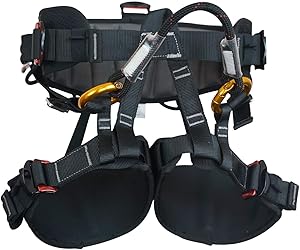
- Material: Thickened polyester webbing
- Breaking Strength: 23kN
- Certification: ANSI Z359.11-2021
- Max Load: 220 lbs
The SOB Climbing Harness is designed with workplace safety and stability in mind. Certified to ANSI standards, it provides dependable strength for positioning, rescue, and climbing-related tasks. The widened, thickened waist cushion improves comfort while maintaining breathability during extended use.
Ergonomically shaped leg loops conform closely to the body, reducing strain and improving overall comfort. Adjustable straps allow a secure, customized fit, while rear tool rings offer space for carrying essential equipment. Built with aluminum alloy buckles and reinforced stitching, this harness is well suited for construction, rappelling, and tree climbing when paired with proper safety systems.
- Pros: Strong certification, comfortable padding, durable materials
- Cons: Heavier design, limited for sport climbing
7. Kailas Airo Rock Climbing Harness

- Material: 90% Polyester, 10% Spandex
- Certification: CE0082 EN12277 UIAA Type C
- Design: Integrated ergonomic frame
- Buckle: Hot-forged quick buckle
The Kailas Airo Rock Climbing Harness is a lightweight, performance-oriented harness built for climbers who value comfort and freedom of movement. Its ergonomic waistbelt and leg loop design distribute weight evenly, eliminating pressure points during long climbs. The breathable mesh interior keeps the harness comfortable even in warm conditions.
Certified to UIAA and CE standards, the Airo offers excellent safety and durability for rock and ice climbing, mountaineering, and technical descents. Multiple tool loops and hanging points provide convenient gear access without interfering with backpacks. The quick-adjust waist buckle allows fast, secure fitting, making this harness a strong choice for serious climbers seeking comfort, safety, and efficiency.
- Pros: Lightweight, excellent comfort, high safety certification
- Cons: Premium price, minimal padding for heavy hauling
See the Kailas Airo Rock Climbing Harness
How to Choose a Sport Climbing Harness: Your Complete Guide
Your harness is the literal link between you and the rope. In sport climbing, where you’re focused on movement and clipping bolts, a good harness should feel like a secure, comfortable extension of your body. It should disappear when you’re climbing and inspire total confidence when you’re resting or taking a fall. With a dizzying array of options, choosing the right one is crucial. This guide will walk you through every key feature and consideration to help you find your perfect match for the crag.
Understanding Sport Climbing Harness Anatomy
Before diving into choices, know the parts you’ll be evaluating. Every harness consists of a waistbelt and leg loops, connected by the critical tie-in points.
The Waistbelt
This is the primary anchor of the harness. It should sit comfortably above your hip bones. Key features include the buckle system for adjustment and often, gear loops.
The Leg Loops
These distribute force during a fall. They can be fixed (sewn in one size) or adjustable. Some harnesses offer a floating or “asymmetric” connection to the waistbelt for better mobility.
The Tie-In Points
These are the two reinforced fabric points—one for your rope’s tie-in knot (the “belay loop” is NOT a tie-in point) and the belay/rappel loop. Look for clear markings and robust construction.
Gear Loops
These rigid or semi-rigid loops are for carrying quickdraws, carabiners, and other gear. Sport-specific harnesses typically have 4 to 6.
Key Features for Sport Climbing
Not all harnesses are created equal. For sport climbing, prioritize these specific attributes.
Comfort and Padding
This is paramount. You’ll spend long days at the crag, hanging on the rope to work a route or belaying your partner. Look for ample, breathable foam padding in the waistbelt and leg loops. However, more padding often means more weight and bulk—find your personal balance.
Weight and Bulk
Sport climbers often value lightweight, streamlined harnesses that don’t hinder movement or add unnecessary weight on long approaches. A minimalist harness can feel incredibly freeing during dynamic moves.
Number and Type of Gear Loops
Four gear loops are often sufficient, but many sport climbers prefer five or six. This allows you to organize draws efficiently (e.g., gates facing out on some, facing in on others). Semi-rigid loops that stay open are a huge advantage for quick, one-handed clipping.
Adjustability and Fit
A secure, snug fit is non-negotiable for safety. Most modern harnesses use double-back buckles for secure waist adjustment. For leg loops, consider if you need adjustability. Fixed loops are lighter, but adjustable loops (via a buckle or elastic risers) are versatile if you climb in different clothing seasons.
The Fit: Your Most Important Decision
A harness can have all the features in the world, but if it doesn’t fit, it’s useless. Here’s how to get it right.
Waistbelt Fit
With the harness fully buckled, you should be able to slip your flat hand between your body and the waistbelt, but not your fist. It must sit above your hip bones (iliac crest). Push down on the belay loop; the harness should not slide up over your hips.
Leg Loop Fit
Leg loops should be snug but not restrictive. You should be able to slide your hand between the loop and your thigh. They are there to catch you in a fall, not to hold the harness up—that’s the waistbelt’s job.
Testing in a Hanging Position
This is critical. Most shops have a hanging bar or rope. When you hang freely, the harness should remain comfortable with no excessive pressure points. The waistbelt should not ride up, and the leg loops should not cut uncomfortably into your thighs. This simulates a fall or hanging rest.
Consider Clothing Layers
Think about when you’ll use it. If you only climb in a gym or warm weather, a slim fit is fine. If you’ll use it year-round, ensure it can adjust to fit over a pair of thermal leggings or under your climbing pants.
Specialized Options to Consider
Harness designs have evolved to meet specific climber needs.
Men’s vs. Women’s Specific Designs
Women’s harnesses are typically designed with a shorter waistbelt, more room in the hips, and differently shaped/placed leg loops and padding to better fit female anatomy. Many brands offer excellent gender-specific models that dramatically improve comfort.
Adjustable vs. Fixed Leg Loops
Fixed Leg Loops: Lighter, simpler, and often more comfortable as they have fewer pressure points. Best for climbers whose weight is stable and who climb in similar clothing.
Adjustable Leg Loops: Offer versatility for varying clothing layers or weight fluctuations. Slightly heavier and bulkier, but a great “one harness for all conditions” choice.
Minimalist vs. Padded Models
Minimalist (Lightweight): Made with thinner materials and less padding. Ideal for performance-oriented climbers, long multi-pitch sport routes, or hot climates where breathability is key.
Padded (Comfort-Oriented): Feature thicker, plusher foam. The best choice for long days of projecting, frequent hanging, or for those who simply prioritize comfort above all else.
Putting It All Together: Choosing Your Harness
Now, match the features to your climbing style and goals.
For the Beginner/All-Around Climber
Look for a well-padded, adjustable harness with 4 sturdy gear loops. Versatility and comfort for long learning sessions are key. An adjustable waist and legs will accommodate your changing needs.
For the Performance-Oriented/Project Climber
Prioritize lightweight construction and minimal bulk to maximize movement. Four to six stiff gear loops are essential for organizing draws on your project. Fixed leg loops can save precious grams.
For the Multi-Pitch Sport Climber
Comfort for hours of wear is critical. Consider a harness with extra padding and perhaps a fifth gear loop for carrying extra gear like a lightweight jacket, snacks, or a camera. Breathable fabric is a big plus.
For the Gym Climber
A simple, durable, and comfortable harness is perfect. Gear loop count is less important. Easy adjustability and washability are great features for a harness that will see frequent, sweaty use.
Final Checklist Before You Buy
- Try it On: Never buy a harness untried. Visit a shop.
- Hang in It: Use the in-store rig to simulate a fall. Check for comfort and security.
- Move Around: Mimic climbing movements—raise your knees, twist your torso. Ensure it doesn’t pinch or restrict.
- Check the Buckles: Ensure they operate smoothly and you understand the double-back safety system.
- Inspect the Tie-In Points: Look for any irregularities in the stitching or fabric.
- Consider Your Future: Will this harness still suit you if you start climbing outside or trying longer routes?
Choosing the right sport climbing harness is an investment in your comfort, performance, and most importantly, your safety. By understanding the features, prioritizing fit above all else, and aligning the harness with your climbing ambitions, you’ll find a trusted partner for every ascent. Remember, the best harness is the one you forget you’re wearing, allowing you to focus entirely on the joy of the climb.