Best Gym Climbing Harnesses of 2026
Finding the right climbing harness is key to a safe and enjoyable gym session. It’s your vital link to the rope, so comfort and security are everything. This guide cuts through the clutter to highlight the top harnesses for indoor climbing. Whether you’re just starting out or are a regular at the plastic holds, we’ve found options that offer a great fit, easy adjustments, and reliable safety. Get ready to discover your perfect match for bouldering falls and long top-rope climbs.
1. BLACK DIAMOND Momentum
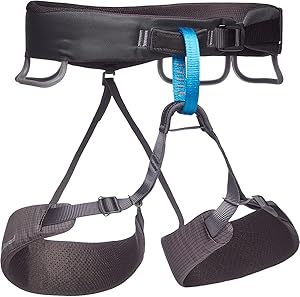
- Materials: Nylon, aluminum, polyester
- Construction: Dual Core Construction
- Gear Loops: 4 pressure-molded loops + haul loop
- Adjustment: Speed Adjust waistbelt, trakFIT leg loops
The BLACK DIAMOND Momentum is a versatile harness designed for climbers who want reliable comfort without unnecessary bulk. Its Dual Core Construction distributes pressure evenly across the waist and legs, making it comfortable for long gym sessions or extended outdoor climbs. The padding strikes a smart balance, offering support without feeling bulky or restrictive, which is ideal for both beginners and experienced climbers.
Adjustment is quick and intuitive thanks to the pre-threaded Speed Adjust waistbelt and trakFIT leg loops. This makes dialing in the fit fast and frustration-free. Four pressure-molded gear loops provide ample space for sport and trad racks, while the haul loop adds extra utility. Durable materials ensure it holds up to repeated use, whether you’re training indoors or tackling outdoor routes.
- Pros: Comfortable for long sessions, easy adjustments, lightweight design
- Cons: Not the most padded option for all-day hanging belays
See the BLACK DIAMOND Momentum
2. BLACK DIAMOND Women’s Momentum
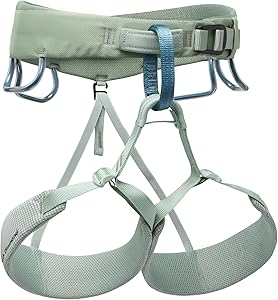
- Fit: Women-specific geometry
- Construction: Dual Core Construction
- Gear Loops: 4 pressure-molded loops + haul loop
- Adjustment: Speed Adjust waistbelt, trakFIT leg loops
The BLACK DIAMOND Women’s Momentum is purpose-built to match a woman’s body shape, offering a contoured waistbelt and tapered leg loops for a secure, ergonomic fit. The Dual Core Construction spreads pressure evenly, reducing hot spots and making the harness comfortable for gym climbing, sport routes, and longer days on the wall.
Quick adjustment is a standout feature. The pre-threaded Speed Adjust buckle allows fast setup, while trakFIT leg loops make on-the-fly adjustments easy. Four gear loops provide plenty of room for essential equipment, and the rear haul loop adds practicality. Lightweight materials and breathable padding help keep you cool and comfortable without sacrificing durability.
- Pros: Excellent women-specific fit, lightweight, easy to adjust
- Cons: Limited padding for extended hanging sessions
See the BLACK DIAMOND Women’s Momentum
3. Ttechouter Climbing Harness

- Material: High-strength polyester fiber
- Max Load: 300 kg
- Breaking Strength: 25 kN
- Weight: 2.2 lbs
The Ttechouter Climbing Harness is built for durability and versatility, making it suitable for a wide range of vertical activities. Constructed from thick, high-strength polyester, it offers strong load-bearing capacity while remaining comfortable during use. Reinforced stitching and robust D-rings inspire confidence when working at height or climbing outdoors.
This harness features four durable equipment hooks that allow easy gear organization without interfering with movement. Fully adjustable waist and leg loops provide a secure fit for a wide range of body sizes. Its one-size-fits-all design makes it convenient for shared use, while the heavy-duty construction suits climbing, mountaineering, and industrial applications.
- Pros: High load capacity, durable build, adjustable fit
- Cons: Heavier than sport-focused harnesses
See the Ttechouter Climbing Harness
4. HandAcc Climbing Belts

- Material: Premium polyester
- Max Load: 300 kg
- Breaking Strength: 25 kN
- Certification: CE certified
The HandAcc Climbing Belt focuses on simplicity, strength, and comfort. Made from durable polyester with high tensile strength, it offers reliable performance for various working-at-height tasks. The traditional buckle system helps distribute pressure evenly, while breathable mesh padding improves comfort during extended use.
This harness is highly adjustable, fitting a wide range of waist and leg sizes for adults and children. A single equipment hook provides space for essential gear like chalk bags or tools. While not designed specifically for gym climbing, it excels in construction, rescue, and outdoor utility applications.
- Pros: Strong, versatile, family-friendly sizing
- Cons: Limited gear storage, not gym-certified
See the HandAcc Climbing Belts
5. NewDoar Climbing Harness

- Material: High-strength polyester
- Max Weight: 125 kg
- Breaking Strength: 18 kN
- Weight: 1.23 lbs
The NewDoar Climbing Harness is a lightweight, safety-focused option designed for a wide range of climbing and working-at-height activities. Built from thickened polyester and CE-certified, it delivers dependable strength while keeping weight to a minimum. The reinforced belay loop improves load distribution and comfort.
Its one-size-fits-all design accommodates a wide range of users, making it easy to share. Adjustable steel buckles allow fast fitting, while the single tool ring offers space for essential gear. This harness is well suited for indoor and outdoor climbing, rappelling, and rescue scenarios.
- Pros: Lightweight, certified safety, easy adjustment
- Cons: Limited padding for long hangs
See the NewDoar Climbing Harness
6. SOB Climbing Harness
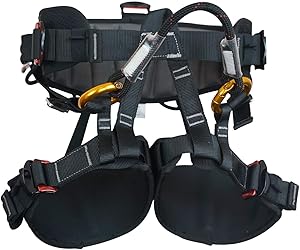
- Material: High-strength polyester
- Certification: ANSI Z359.11-2021
- Breaking Strength: 23 kN
- Max Weight: 220 lbs
The SOB Climbing Harness is engineered for safety and comfort in demanding environments. Certified to ANSI standards, it offers dependable strength for professional and recreational use. The widened, thickened waist padding improves comfort while maintaining breathability during extended wear.
Adjustable waist and leg loops ensure a secure fit, while aluminum alloy buckles enhance durability without excessive weight. Multiple rear tool rings make it practical for carrying equipment. This harness is ideal for climbing, rescue work, and construction when paired with proper safety systems.
- Pros: Certified safety, comfortable padding, durable hardware
- Cons: Heavier than minimalist climbing harnesses
7. Kailas Airo Rock Climbing Harness

- Material: 90% polyester, 10% spandex
- Certification: CE0082 EN12277, UIAA Type C
- Design: Integrated ergonomic frame
- Adjustment: Quick Buckle waist system
The Kailas Airo Rock Climbing Harness is designed for climbers who prioritize freedom of movement and comfort. Its ergonomic construction distributes weight evenly, eliminating pressure points and allowing unrestricted motion. Breathable mesh lining keeps the harness comfortable in warm conditions.
Certified for safety and built with high-strength materials, it inspires confidence on rock, ice, and alpine routes. Multiple gear loops and hanging points allow efficient equipment management without interfering with backpacks. Quick-adjust buckles make fitting fast and secure for changing layers.
- Pros: Extremely comfortable, lightweight, excellent gear access
- Cons: Premium price compared to basic harnesses
See the Kailas Airo Rock Climbing Harness
How to Choose the Perfect Gym Climbing Harness
Stepping into the world of indoor climbing is an exciting adventure. Between the colorful holds and the friendly community, it’s easy to get hooked. But before you tie in for your first climb, there’s one essential piece of gear you need to get right: the harness. Unlike your shoes or chalk bag, your harness is a critical safety item. Choosing the right one isn’t just about performance; it’s about comfort, security, and building the confidence to push your limits. This guide will walk you through everything you need to know to select the ideal gym climbing harness.
Understanding Harness Core Components
First, let’s break down the parts of a harness. Knowing the terminology will make your shopping and fitting much easier.
The Waistbelt
This is the wide band that sits around your hips (not your waist!). It’s the primary anchor point for your body’s weight. Look for a padded, stiffened belt that will stay in place and be comfortable when you’re hanging. The buckle is key here—most gym harnesses use a double-back buckle system for secure, adjustable closure.
The Leg Loops
These loops support your thighs. They come in two main styles: fixed and adjustable. Fixed leg loops are sewn into a specific size, offering a sleek, minimalist fit. Adjustable leg loops have a buckle or elastic band, allowing you to fine-tune the fit, which is great if you wear different thicknesses of clothing.
The Tie-In Points
This is the most critical safety feature. You’ll see two reinforced fabric loops at the front of the harness: the belay loop (the sturdy, short loop at the front) and the tie-in points (the two larger loops above it, marked “A” and “B”). You always tie your rope directly through the two tie-in points—never just the belay loop. The belay loop is for attaching your belay device or auto-belay carabiner.
Gear Loops
These are the plastic or fabric loops on the waistbelt. For gym climbing, you typically don’t need many. They’re handy for clipping a chalk bag, a carabiner for your shoes, or, if you progress to lead climbing, quickdraws. Two to four gear loops are standard and perfectly sufficient for the gym.
Key Factors to Consider When Choosing
With the basics covered, let’s dive into the practical considerations that will guide your choice.
1. Fit: The Non-Negotiable Priority
A harness must fit snugly and comfortably. Here’s how to check:
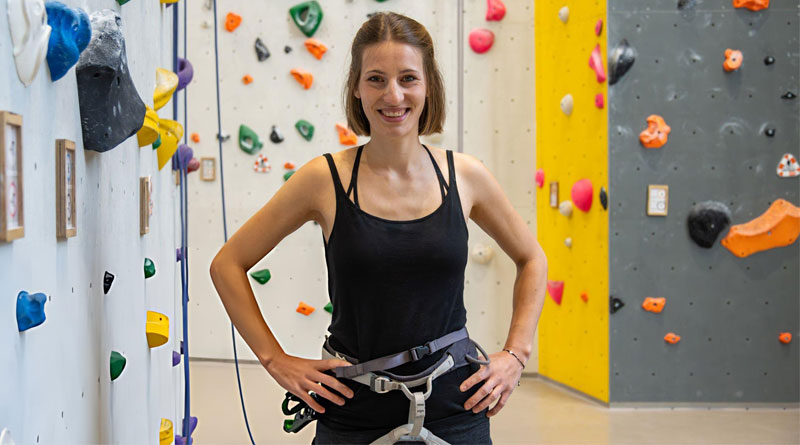
Waistbelt: It should sit on your hip bones, above your iliac crest. You should be able to snug it down so you cannot pull it down over your hips. Once fastened, you should be able to fit a flat hand between your body and the belt, but not a fist. It should not ride up toward your ribs when weighted.
Leg Loops: They should be snug but not constricting. You should be able to slide your open hand between the loop and your thigh. With adjustable leg loops, you can dial this in perfectly. Fixed loops should feel secure without cutting off circulation.
The Hang Test: The ultimate test! In the store (or at home with proper safety measures), ask to hang in the harness. Your weight should be distributed comfortably between the waistbelt and leg loops, with no painful pinching or excessive pressure on your thighs. The harness should remain stable and not shift.
2. Comfort vs. Weight & Bulk
This is a major trade-off. Padded harnesses offer more comfort for long top-rope sessions, frequent falls, or if you have a heavier build. The downside is they are bulkier and slightly heavier.
Minimalist/sport harnesses are lighter, less bulky, and often cheaper. They’re fantastic for bouldering (for falls) or lead climbing where mobility and less gear is preferred. However, they offer less cushioning on hanging belays or long falls.
For most beginner and intermediate gym climbers, a moderately padded harness offers the best balance, providing all-day comfort as you learn.
3. Adjustability for Versatility
An adjustable waistbelt (which is standard) and adjustable leg loops add great versatility. They allow for changes in clothing layers—from summer shorts to winter sweatpants—and can accommodate slight body weight fluctuations. They also make it easier to get a precise fit. For a dedicated gym harness you’ll use year-round, adjustability is highly recommended.
4. Harness Type: Buckle vs. Speed Buckle
Traditional double-back buckles are the gold standard for safety. You thread the webbing back through the buckle twice, ensuring it cannot accidentally come loose. They are utterly reliable but can be slightly slower to put on and take off.
Some modern gym harnesses feature speed buckles (like the Petzl CNECT or Black Diamond Buckle-Less). These use a click-lock mechanism that is incredibly fast and easy to use, especially with one hand. They are just as safe when used correctly but often come at a higher price point. For a gym environment where you’re taking the harness on and off frequently, a speed buckle can be a nice luxury.
Special Considerations for Gym Use
The indoor climbing environment presents unique needs that your harness should address.
Durability and Fabric
Gym harnesses live a tough life—they get dragged across textured floors, coated in chalk and rubber dust, and may see frequent use. Look for robust nylon construction. Some harnesses have reinforced abrasion zones in high-wear areas. While all climbing harnesses are durable, a gym-specific model doesn’t need to be ultralight for multi-day alpine climbs, so it can prioritize tougher materials.
Comfort for Frequent Hanging and Falling
In the gym, you might take more falls (especially while lead climbing) and could be hanging on the rope more often while figuring out a sequence. A harness with adequate padding in the waistbelt and leg loops will make these experiences much more pleasant and keep you climbing longer.
Ease of Use and Convenience
Since you’ll be putting it on and taking it off multiple times per session, consider how easy it is to don. Are the buckles intuitive? Can you adjust it quickly? Features like a speed buckle or color-coded tie-in points (common on kid’s harnesses, but helpful for everyone) can streamline your gym routine.
Final Steps: Trying and Buying
Armed with this knowledge, you’re ready to make a decision.
Try Before You Buy (If Possible)
Visit a local climbing shop or a gym with a pro shop. Try on multiple models from different brands (like Petzl, Black Diamond, Arc’teryx, Mammut, Edelrid). Sizing varies significantly between brands and even models. Don’t assume your pant size translates to a harness size.
Check for Certifications
Any harness you buy must be certified by a recognized standards organization (like UIAA or CE). This is non-negotiable and ensures it has passed rigorous safety tests. The certification will be clearly marked on the waistbelt.
Think About Your Future
Are you purely a gym climber, or do you dream of outdoor sport climbing someday? A good all-around sport harness will serve you well in both environments. If you’re solely focused on indoor bouldering and top-roping, a more basic, comfortable model is perfect.
Conclusion
Choosing your first gym climbing harness is a significant step in your climbing journey. By prioritizing a safe, secure fit above all else, then balancing comfort with the features that suit your climbing style, you’ll find a harness that feels like a natural extension of your body. Remember, the best harness isn’t the most expensive or technical one—it’s the one you forget you’re wearing because it fits so well, allowing you to focus completely on the joy of the climb. Take your time, try a few on, and invest in the safety and comfort that will support your vertical adventures for years to come.