
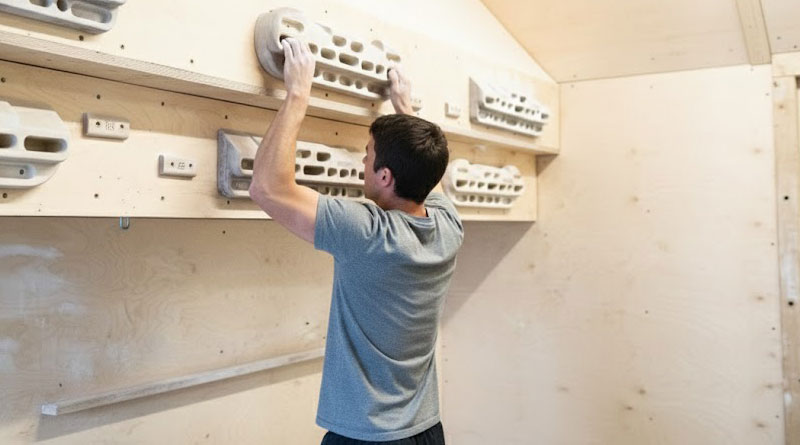
Best Budget Climbing Hangboards of 2026
Looking to build stronger fingers without spending a lot? A good hangboard is the perfect tool. You don’t need the most expensive one to see great results. This guide shows you the best budget-friendly hangboards that offer excellent quality. We’ve picked options that are durable, have useful holds, and give you the most value for your money. Start training effectively at home and improve your climbing today, all while keeping your wallet happy.
1. TWO STONES Climbing Hangboard
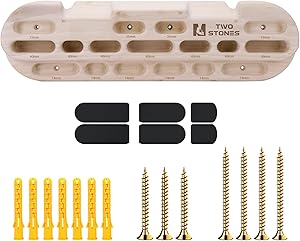
- Material: Solid CNC-milled natural wood
- Grip Types: Jugs, slopes, edges, 2/3/4-finger pockets
- Pocket Depths: Four different depths
- Mounting: Doorway or wall-mounted with hardware
The TWO STONES Climbing Hangboard is a well-rounded training board designed to simulate real rock climbing holds. It combines outer jugs, dual-angle slopers, multiple finger pockets, and edges to target grip strength from every angle. This variety makes it suitable for structured hangboard routines as well as general strength conditioning. Whether you are working on dead hangs, offset hangs, or controlled pull-ups, the layout supports progressive training without feeling overwhelming.
Constructed from a single solid block of wood, this hangboard stands out for comfort and durability. The polished surface and rounded pocket edges reduce skin irritation, allowing longer sessions without pain. It feels skin-friendly even during extended hangs, which is especially important for frequent training. Installation is straightforward with included screws and anchors, making it practical for home gyms or doorway setups. Overall, it’s a reliable option for climbers who want a balanced, long-term finger strength tool.
- Pros: Comfortable polished wood, wide variety of grips, beginner to advanced friendly
- Cons: Backboard not included, doorway space required
See the TWO STONES Climbing Hangboard
2. GRIPNATIC FingerPeg 1.0
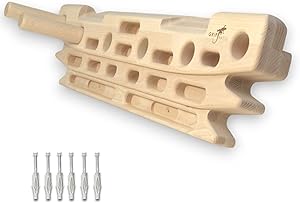
- Material: Class A beech hardwood
- Pocket Depths: 0.6–1.6 inches (6 levels)
- Sloper Angles: 20° and 35°
- Load Capacity: Up to 265 lbs
The GRIPNATIC FingerPeg 1.0 is a compact yet highly versatile hangboard designed for climbers who value efficiency and clean design. It offers a wide range of pocket depths for 2, 3, and 4 fingers, allowing precise progression as finger strength improves. The addition of slopers makes it suitable for warming up or adding variety to structured hangboard routines without switching equipment.
One standout feature is the integrated calisthenics bar holes, which expand training beyond finger strength into full upper-body conditioning. Pull-ups, leg raises, and bodyweight exercises fit naturally into climbing-focused workouts. The rounded edges and finely sanded beech wood give it a premium feel while remaining skin-friendly. Installation is quick above door frames or wooden beams, making it ideal for home use. This board blends minimalist aesthetics with serious training potential.
- Pros: Wide depth range, calisthenics support, high load capacity
- Cons: Compact size may feel limited for taller climbers
See the GRIPNATIC FingerPeg 1.0
3. POWER GUIDANCE Wooden Hangboard

- Material: Oak wood handles with braided rope
- Max Load: 150 kg
- Grip Width: Extra-wide design
- Attachment: Rope strap with dual carabiners
The POWER GUIDANCE Wooden Hangboard takes a slightly different approach, focusing on grip strength and versatility rather than traditional wall-mounted holds. Designed primarily as a multifunctional training handle, it integrates seamlessly with resistance bands, cable machines, and bodyweight setups. This makes it useful not only for climbers, but also for general strength athletes looking to improve grip endurance.
The oak wood handles are smooth, comfortable, and naturally durable, even under heavy loads. The braided climbing rope and reinforced carabiners ensure reliable performance during intense sessions. Its wide grip accommodates all hand sizes, making it easy to share or rotate exercises. While it doesn’t replicate classic climbing holds, it excels as a supplemental tool for building forearm, wrist, and pulling strength. It’s best suited for climbers who want a portable, gym-compatible grip trainer.
- Pros: Extremely versatile, high load capacity, portable design
- Cons: Not a traditional fingerboard, no wall mounting
See the POWER GUIDANCE Wooden Hangboard
4. ebeau Climbing Hangboard
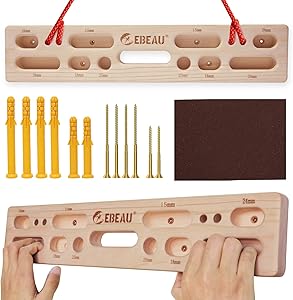
- Material: Single-piece solid hardwood
- Weight: 1.65 lbs
- Dimensions: 19.6 x 4.0 x 1.2 inches
- Mounting: Screws or safety rope
The ebeau Climbing Hangboard is designed with portability and simplicity in mind. Featuring four pockets of varying sizes and depths, it focuses on essential finger strength rather than complex layouts. This makes it an excellent choice for climbers who want a lightweight board for warming up, travel, or outdoor training sessions at the crag.
Its solid hardwood construction feels robust despite the compact size. The polished surface and absence of glued seams or splinters provide a comfortable, skin-safe experience. Installation is flexible, allowing either permanent mounting or quick rope-based setup without drilling. This adaptability makes it suitable for apartments and temporary spaces. While advanced climbers may want more grip variety, it serves as a reliable, no-frills training tool for consistent finger development.
- Pros: Lightweight and portable, smooth finish, flexible mounting
- Cons: Limited grip variety, smaller training surface
See the ebeau Climbing Hangboard
5. MOST GRIP Finger Hangboard

- Material: High-quality natural wood
- Grip Types: 2/3/4-finger holes, crimps, pinches
- Mounting: Rope-hanging or wall-mounted
- Training Style: Beginner to advanced
The MOST GRIP Finger Hangboard is built for flexibility, offering both rope-hanging and wall-mounted installation options. This makes it particularly appealing to climbers who rent or frequently change training locations. The board features multiple finger hole sizes and depths, allowing users to target different grip styles and address specific weaknesses.
The wooden construction is smooth and comfortable, reducing hand fatigue during longer sessions. It supports a wide range of exercises, from simple dead hangs to advanced one-arm pull-ups and core-focused movements. MOST GRIP’s focus on adaptability and customer support adds confidence for long-term use. While the design is more traditional, it delivers consistent performance for climbers aiming to improve overall finger and upper-body strength.
- Pros: Flexible mounting options, durable wood, wide exercise range
- Cons: Fewer advanced slopers, basic visual design
See the MOST GRIP Finger Hangboard
6. VERTIPEAK Wooden Climbing Hangboard

- Material: Solid beech wood
- Pocket Depths: 0.4–1.6 inches
- Slope Angles: 15° and 45°
- Extras: Installation kit and sandpaper
The VERTIPEAK Wooden Climbing Hangboard is designed for climbers who want variety and progression in a single board. With multiple pocket depths, outer jugs, and angled slopers, it supports gradual strength development from beginner to advanced levels. The thoughtful layout encourages controlled training rather than rushed progression.
Made from a single block of beech wood, it offers excellent durability and a comfortable grip texture. Hand-polished edges eliminate sharp spots, allowing longer, safer sessions. Installation is secure thanks to the included heavy-duty hardware. The addition of sandpaper lets users fine-tune surface texture to personal preference. Overall, it’s a strong choice for serious home training setups.
- Pros: Wide grip variety, smooth finish, solid construction
- Cons: Requires solid wall mounting, larger footprint
See the VERTIPEAK Wooden Climbing Hangboard
7. AWNOM Climbing Hangboard

- Design: Integrated hangboard and pull-up station
- Grip Types: Jugs, slopes, edges, pockets
- Mounting: Door-mounted system
- Training Focus: Finger and upper-body strength
The AWNOM Climbing Hangboard combines a fingerboard with a pull-up bar, creating a compact doorway training station. This integrated design is ideal for climbers with limited space who still want access to varied strength exercises. The mix of jugs, slopes, and pockets supports both finger-specific training and general pulling strength.
Its door-mounted setup allows quick installation without permanent modifications, making it suitable for apartments. The board encourages efficient workouts by combining hangs and pull-ups in one unit. While it may not offer the depth variety of dedicated hangboards, it delivers solid functionality for consistent indoor training. It’s best suited for climbers who want convenience without sacrificing core training essentials.
- Pros: Space-saving design, easy installation, multi-purpose use
- Cons: Limited pocket depth options, doorway dependent
See the AWNOM Climbing Hangboard
How to Choose Budget Climbing Hangboard
Building finger strength is one of the most direct ways to improve your climbing performance. For many climbers, a hangboard is the ultimate tool for this. However, the price tags on some high-end models can be daunting. The good news is that you don’t need to spend a fortune to get an effective, durable training tool. Choosing the right cheap hangboard is about understanding what features matter most for your goals and avoiding unnecessary extras. This guide will walk you through the key considerations to help you find the perfect hangboard.
Understanding Your Needs First
Before you look at any products, take a moment to assess your situation. A cheap hangboard is only a good deal if you’ll actually use it effectively and safely.
Your Climbing Level and Goals
Are you a beginner looking to build foundational strength? An intermediate climber aiming to break through a plateau? Your experience level dictates the type of holds you need. Beginners should prioritize larger, more comfortable edges and jugs to build tendon resilience safely. Intermediates will benefit from a wider variety of edge depths, including smaller pockets and slopers. Avoid boards covered in tiny, brutal holds meant for elite climbers; they increase injury risk and offer less value if you can’t use them yet.
Available Space and Mounting
Where will the board live? Do you have a doorframe, a dedicated section of wall, or a freestanding structure? This decision is crucial. Some cheaper boards are designed as portable door-frame pull-up bars with attached holds. Others are simple wooden panels that must be permanently screwed into a sturdy wall or beam. Permanent mounting typically offers the most stable and secure setup, but portability can be a major advantage for renters or those with limited space.
Key Features to Evaluate on a Budget
With your needs in mind, you can now focus on the specific attributes that separate a good affordable hangboard from a bad one.
Material and Construction
Budget hangboards are primarily made from wood or resin/plastic composites.
Wood: Wooden boards, typically made from maple or birch ply, are often the best feeling on the skin. They provide natural friction and are less harsh than plastic in colder conditions. On a budget, ensure the wood is sanded smoothly with no splinters and has a durable finish. The grain should run perpendicular to the edge for longevity.
Resin/Plastic: These boards are extremely durable and weather-resistant, making them suitable for garages or outdoor mounts. They can be more abrasive on the skin and sometimes feel slippery when sweaty. Look for textured surfaces that improve grip.
Regardless of material, check the mounting hole placement. Boards with multiple, reinforced holes offer more mounting flexibility and stability.
The Hold Selection: Variety Over Quantity
You don’t need 50 different holds. You need a smart selection that allows for progressive training. Look for these essential hold types:
Jugs: For warming up, pull-ups, and accommodating exercises.
Varied Edge Depths: This is the core of finger training. A good budget board should have at least 3-4 different edge depths (e.g., 20mm, 15mm, 10mm). This allows you to gradually increase intensity.
Pockets (2 & 3-Finger): For training specific finger combinations. A basic two-finger pocket is invaluable.
A Sloper or Two: Having at least one rounded sloper helps train open-hand strength and contact technique.
Avoid boards that are just a line of identical edges. The value comes from a thoughtful, versatile array.
Ergonomics and Comfort
Pay close attention to the hold shaping. Are the edges “incut” (angled inward) or “neutral”? A slight incut can make a smaller edge feel more manageable. Are the edges radiused (slightly rounded) or sharp? A subtle radius is gentler on the skin and more closely mimics real rock. Sharp, 90-degree edges can become painful quickly. Look for photos that show the profile of the holds.
What to Sacrifice (and What to Never Compromise On)
When shopping on a budget, you must make smart compromises.
Acceptable Compromises
Brand Name: Many lesser-known brands or even generic models offer fantastic quality for the price.
Aesthetics: Fancy colors, laser-engraved logos, or exotic wood types add cost but not function.
Extensive Hold Collections: You likely don’t need a board with monos (one-finger pockets) or complex dual-texture holds at this stage.
Integrated Systems: Features like modular hold systems or built-in training timers are nice but not essential.
Non-Negotiables
Safety and Structural Integrity: The board must be solid, without flex or creaking. Mounting hardware (screws, bolts) must be strong and appropriate for your wall material. Never skimp here.
Safe Hold Design: Avoid holds with sharp, unfinished edges or awkward angles that could cause strain. Pockets should be deep enough to prevent slipping but not trap fingers dangerously.
Reasonable Versatility: It must have the basic hold types mentioned above to allow for a well-rounded routine.
Top Budget Hangboard Styles to Consider
Budget boards generally fall into a few categories. Understanding these can narrow your search.
The Simple Wooden Panel
This is the classic budget champion. It’s a slab of wood with holds routed into it. It’s minimalist, effective, and often the cheapest option. It requires permanent mounting to a very solid surface (like a structural wall stud). This style often offers the best “pure training” value.
The Door-Frame Pull-Up Bar Combo
These units are great for portability and renters. They use a tension-mounted pull-up bar that spans a doorway, with a hangboard attached below. Be aware that not all doorframes are suitable, and the setup can sometimes have slight flex. Ensure the model has a wide, stable base and robust tension mechanism.
The “All-in-One” Training Station
Some inexpensive boards integrate other features like pull-up bars, gymnastic rings attachments, or even small campus rungs. While these add versatility, ensure the hangboard section itself is well-designed and not an afterthought. This can be excellent value if you want a multi-purpose home gym setup.
Final Tips Before You Buy
Do your research beyond the product listing. Read user reviews focusing on durability, grip feel, and any issues with mounting or shipping damage. Watch video reviews to see the board in action and hear real feedback. Check the weight capacity of the board and any included mounting hardware.
Remember, the board itself is only part of the cost. Factor in any additional items you might need: heavy-duty screws for mounting, a power drill, a level, and possibly a basic pulley system for weight-offsetting (highly recommended for safe, progressive training).
Choosing the cheapest climbing hangboard is a smart move. By focusing on solid construction, a versatile but sensible hold selection, and a style that fits your space, you can acquire a tool that will serve your strength journey for years without straining your wallet. Invest your time in learning proper hangboard protocol—warm-ups, gradual progression, and listening to your body—and your budget board will pay for itself many times over in gains on the wall.