
Best Climbing Ropes for Beginners of 2025
Climbing is an exciting adventure, but safety should always come first. A good rope is one of the most important tools for beginners. The right climbing rope can give you confidence and protect you in case of a fall. It should be strong, reliable, and easy to handle. Many ropes are available, but not all are beginner-friendly. As a new climber, you need a rope that balances safety, durability, and comfort. The right choice can make learning easier and more enjoyable. In this guide, we explore the best climbing ropes for beginners. You will discover their features, benefits, and how they can improve your climbing experience.
1. X XBEN Outdoor Climbing Rope
-
Length options: 10M, 20M, 30M, 50M, 70M, 152M, and 352M
-
Diameter: 10mm static rope
-
Material: High-strength polyester outer and polypropylene inner core
-
Breaking strength: Approximately 15KN (3,372 lbs)
The X XBEN Outdoor Climbing Rope is a versatile static rope designed for a range of activities, from climbing and rescue operations to rappelling and boating. Its high-strength polyester construction provides excellent abrasion resistance, making it durable for rugged outdoor conditions. The rope feels firm yet flexible, allowing for better handling and knot tying without becoming too stiff. Beginners will appreciate the reliable grip and consistent diameter, which improves confidence during climbs or safety training drills.
One standout feature is its wide range of available lengths, ensuring that you can choose the exact size for your intended use. Whether it’s for emergency rescue kits, tree climbing, or setting up fixed lines, this rope delivers dependable performance. While it’s not intended for dynamic climbing (falls with high impact), it’s an excellent choice for controlled environments and stationary load applications. With its affordable pricing and durability, it’s a worthy addition to any beginner’s climbing gear set.
Pros
-
Multiple length options for different uses
-
Strong and abrasion-resistant outer sheath
-
Flexible for easy knot tying
-
Suitable for various outdoor and rescue tasks
Cons
-
Not designed for dynamic climbing falls
-
Can feel slightly heavier than some alternatives
2. Lopevex 1/2 Inch Climbing Rope
-
Length: 150 feet
-
Diameter: 1/2 inch (about 12.7mm)
-
Material: Nylon-polyester blend with 48-strand braided sheath
-
Breaking strength: Rated for high static load capacity
The Lopevex 1/2 Inch Climbing Rope is a heavy-duty, multipurpose static rope, ideal for arborist work, tree climbing, and rigging tasks. Its 48-strand braided sheath offers excellent resistance to abrasion and moisture, making it dependable for outdoor use. The nylon-polyester blend provides a good balance between strength and flexibility, ensuring that knots hold well without slippage. Beginners will find the thick diameter comfortable to grip, reducing hand fatigue during prolonged climbs or hauling activities.
Beyond climbing, this rope shines in tree pulling, nautical rigging, and swing setups, making it a versatile investment. The vibrant red color also improves visibility in dense foliage or low-light conditions. While it’s not suitable for dynamic climbing or high-impact falls, it’s an excellent choice for controlled load situations and training. Its durability, grip comfort, and professional-grade design make it a solid pick for beginners who want a rope that can handle both recreational and practical tasks.
Pros
-
Excellent grip due to thicker diameter
-
Highly durable braided sheath
-
Good visibility with bright color
-
Multipurpose use
Cons
-
Heavier than thinner ropes
-
Not suitable for lead climbing
3. Sodlar Climbing Rope Gym Workout
-
Diameter: 1.5 inches (38mm)
-
Length options: 10FT, 15FT, 20FT, 25FT, 30FT, 35FT
-
Material: Heavy-duty jute fiber
-
End finishing: Heat-shrink caps to prevent fraying
The Sodlar Climbing Rope is designed primarily for fitness and strength training rather than rock climbing. Its thick 1.5-inch diameter challenges grip strength, making it an excellent tool for gym workouts, CrossFit routines, or military-style obstacle courses. The jute fiber material offers a natural feel that’s comfortable to hold, although it can shed fibers over time. The heat-shrink caps on the ends help prevent unraveling, adding to the rope’s longevity.
For beginners, this rope provides an excellent introduction to climbing-style movements without the risks of outdoor heights. It can be anchored indoors or outdoors for versatile training setups. While jute is not as weather-resistant as synthetic ropes, its traditional texture and sturdy build make it a popular choice for strength conditioning. If you’re starting your climbing journey in a controlled gym or home workout environment, this rope is a great pick.
Pros
-
Great for developing grip and upper body strength
-
Traditional jute texture for firm grip
-
Multiple length options for different setups
-
Durable heat-shrink ends
Cons
-
Not weatherproof
-
Can shed fibers with heavy use
4. Keepark Climbing Rope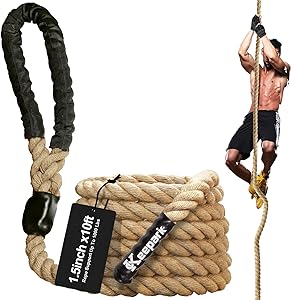
-
Diameter: 1.5 inches (38mm)
-
Length options: 10FT, 15FT, 20FT, 25FT, 30FT, 35FT
-
Material: High-strength polyester
-
End caps: Sealed to prevent fraying
The Keepark Climbing Rope is built for both indoor and outdoor training, offering a durable polyester construction that resists fraying and moisture damage. The 1.5-inch thickness challenges grip strength, making it ideal for gym workouts, CrossFit, and obstacle courses. Polyester fibers ensure a smoother, more weather-resistant surface compared to natural jute, making it suitable for outdoor installations without rapid wear.
Beginners will appreciate its balance between grip comfort and durability. It can be mounted to pull-up bars, beams, or trees, making it versatile for different exercise setups. While it’s not intended for technical climbing on rock faces, it excels as a functional training tool to build climbing-related strength. The range of lengths allows you to tailor your rope to your available space and training needs.
Pros
-
Weather-resistant polyester material
-
Versatile indoor/outdoor use
-
Sealed ends prevent fraying
-
Multiple lengths available
Cons
-
Not designed for dynamic or rock climbing
-
Thicker rope may be hard for beginners to grip
5. GINEE Static Climbing Ropes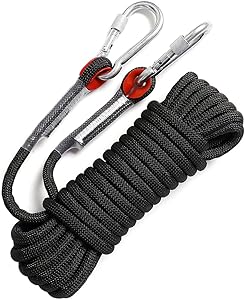
-
Length options: 35FT, 50FT, 100FT, 150FT, 200FT, 250FT
-
Diameter options: 10mm and 16mm
-
Material: Polyester with reinforced core
-
Breaking strength: Suitable for static load applications
The GINEE Static Climbing Rope offers a robust design for rescue, rappelling, and training applications. Available in both 10mm and thicker 16mm diameters, it caters to different grip preferences and load requirements. The polyester outer sheath provides solid abrasion resistance, while the reinforced core ensures reliable strength. Its static nature makes it unsuitable for absorbing dynamic falls, but perfect for fixed-line climbing, rescue drills, or hauling.
Beginners will appreciate its durability and range of sizes, allowing them to choose a rope that matches their comfort level and intended use. The rope’s smooth yet firm surface makes knot tying easy and secure. Whether you need it for emergency preparedness, work positioning, or outdoor activities like caving, this rope delivers steady performance.
Pros
-
Multiple diameter and length options
-
Strong and abrasion-resistant build
-
Reliable for rescue and fixed-line use
-
Easy to handle and knot
Cons
-
Not suitable for dynamic climbing falls
-
Thicker 16mm version can be heavy
6. DAJOUJS Climbing Rope
-
Diameter: 1.5 inches (38mm)
-
Length options: 10FT, 15FT, 20FT, 30FT
-
Material: Polyester blend
-
Color: Black with sealed ends
The DAJOUJS Climbing Rope is designed for fitness-focused users, offering a heavy-duty polyester blend construction that holds up well against fraying and wear. Its black color gives it a sleek, professional look, while the sealed ends ensure longevity. The 1.5-inch diameter makes it a great grip-strength trainer, ideal for gym settings, home workouts, and outdoor exercise setups.
Beginners will find this rope a solid choice for building upper body and core strength in a controlled environment. It’s easy to install and can be attached to beams, rigs, or sturdy tree branches. Polyester’s weather resistance makes it more versatile than natural fiber ropes, though it still isn’t designed for technical outdoor climbing. For functional training and conditioning, it’s a dependable and durable choice.
Pros
-
Durable polyester blend material
-
Sleek black design with sealed ends
-
Weather-resistant for outdoor use
-
Good for grip and strength training
Cons
-
Not for dynamic climbing
-
Thicker diameter can be challenging for smaller hands
7. NorthPada Static Rope
-
Length options: 5M, 10M, 20M, 30M
-
Diameter options: 8mm, 10mm, 12mm
-
Material: Polyester with reflective threads
-
Application: Marine, anchor, rappelling, tree swing, rescue
The NorthPada Static Rope is a multipurpose line that works well for climbing-related activities, boating, and rescue operations. The polyester sheath provides weather resistance, while the reflective threads improve visibility in low-light conditions — a valuable safety feature. With diameter options ranging from 8mm for lighter tasks to 12mm for heavy-duty work, it’s adaptable for different needs.
For beginners, the rope offers a manageable balance of weight, grip, and flexibility. It’s easy to coil, transport, and knot, making it a convenient addition to any gear kit. While not suitable for dynamic falls, its performance in fixed-line, marine, and anchor applications is dependable. Whether you’re setting up a tree swing, securing a boat, or practicing basic climbing techniques, the NorthPada rope is a reliable option.
Pros
-
Reflective threads for visibility
-
Multiple diameter and length choices
-
Weather-resistant polyester construction
-
Lightweight and easy to handle
Cons
-
Not for high-impact climbing falls
-
Thinner diameters may be harder to grip
How to Choose Climbing Ropes for Beginners
Climbing is one of the most exciting outdoor sports, but it requires the right equipment to ensure both safety and performance. For beginners, one of the most important purchases is a climbing rope. Your rope is literally your lifeline, and the right choice can make a big difference in comfort, security, and learning experience.
Choosing a climbing rope for the first time can feel overwhelming because of the variety of lengths, diameters, materials, and features available. This guide will walk you through the essentials so you can confidently pick the rope that suits your needs as a beginner.
1. Understand the Two Main Types of Climbing Ropes
The first decision to make is whether you need a dynamic rope or a static rope.
Dynamic Ropes
-
Purpose: These ropes stretch under load, absorbing the energy of a fall.
-
Best for: Top roping, sport climbing, lead climbing, and most beginner scenarios.
-
Why beginners should choose dynamic: The stretch reduces the impact on your body and gear, making falls safer and more comfortable.
Static Ropes
-
Purpose: Very little stretch; designed for hauling gear, rescue situations, or fixed-line climbing.
-
Best for: Rappelling, caving, and industrial work.
-
Not ideal for beginners: They do not absorb fall impact and should not be used for lead climbing.
Recommendation for beginners: Go for a dynamic single rope. This is the standard choice for most new climbers because it’s versatile and safe for most indoor and outdoor routes.
2. Rope Diameter: The Balance of Weight and Durability
Rope diameter affects weight, handling, and durability.
Thicker Ropes (9.8mm – 10.5mm)
-
Pros: More durable, longer-lasting, easier to handle, especially with belay devices.
-
Cons: Slightly heavier, less packable.
-
Ideal for beginners: Yes, because they can withstand more abrasion and are easier to control.
Thinner Ropes (8.5mm – 9.5mm)
-
Pros: Lighter and less bulky; ideal for long climbs or advanced use.
-
Cons: Less durable, requires more careful handling.
-
Ideal for beginners: No, unless you’re focusing on weight-sensitive multi-pitch climbing.
Recommendation for beginners: Start with a rope around 10mm in diameter for a great balance of durability and ease of handling.
3. Rope Length: Matching the Climb
Rope length matters for both safety and convenience.
Standard Lengths
-
Indoor climbing: 30m–40m is enough.
-
Outdoor single-pitch climbing: 60m is the most common choice.
-
Longer routes: 70m–80m ropes may be required for advanced climbs.
Why 60m is a good starting point:
It’s long enough for most crags and gyms, but still manageable in weight and storage for a beginner.
Tip: Always double-check the height of the climb before choosing your rope length. A rope that’s too short can be dangerous.
4. Rope Construction: Core and Sheath
Climbing ropes are made of two main parts:
-
Core: Provides the rope’s strength and elasticity.
-
Sheath: Protects the core from abrasion and damage.
For beginners:
-
Look for ropes with a thicker sheath. It lasts longer and handles better.
-
Consider a rope with smooth handling so it’s easier to tie knots and feed through belay devices.
5. Rope Ratings: Safety Standards
Climbing ropes are tested and certified by safety organizations like UIAA (International Climbing and Mountaineering Federation) and CE (Conformité Européene).
Key ratings to look at:
-
Fall Rating: The number of falls the rope can withstand in testing before failure. For beginners, a fall rating of at least 5 is recommended.
-
Impact Force: Lower numbers mean softer catches during falls, which is easier on your body.
-
Dynamic Elongation: Measures rope stretch during a fall. Higher elongation = softer fall, but too much stretch can be risky in low-clearance areas.
-
Static Elongation: How much the rope stretches under body weight; lower is better for climbing efficiency.
6. Dry Treatment: Do You Need It?
Dry-treated ropes are coated to resist water and dirt. This helps maintain performance in wet or icy conditions.
-
For beginners climbing indoors or in dry climates: Dry treatment isn’t necessary.
-
For outdoor climbing in unpredictable weather: Consider at least a dry-treated sheath to protect against moisture and extend lifespan.
Dry ropes tend to be more expensive, so start without one if you’re only climbing indoors or in good weather.
7. Middle Mark and Bi-Pattern Ropes
When you’re lowering or rappelling, it’s important to know where the middle of your rope is.
-
Middle mark: A simple marking halfway along the rope.
-
Bi-pattern rope: Changes color or pattern at the halfway point; easier to see but more expensive.
For beginners, a rope with a clear middle mark is very helpful for safety.
8. Handling and Feel
Every rope feels slightly different in your hands. The “hand” of the rope refers to how stiff, soft, or supple it is.
-
Supple ropes: Easier to tie knots and feed through belay devices, great for beginners.
-
Stiff ropes: Resist tangling but can be harder to handle at first.
If possible, visit a climbing shop and test how a rope handles before buying.
9. Indoor vs. Outdoor Considerations
Indoor climbing ropes:
-
Can be shorter (30–40m).
-
No need for dry treatment.
-
Thicker for durability against repeated top-rope use.
Outdoor climbing ropes:
-
Usually 60m or longer.
-
May benefit from dry treatment.
-
Need more abrasion resistance due to rock contact.
If you plan to do both, get a 60m, 10mm dynamic rope—it will work for most beginner-friendly situations.
10. Price vs. Quality
As a beginner, you don’t need the most high-tech rope available, but you also shouldn’t go for the cheapest option.
-
Budget ropes: May be heavier, stiffer, or less durable.
-
Mid-range ropes: Offer the best balance of price, durability, and handling.
-
Premium ropes: Lightweight, dry-treated, and specialized for advanced use.
Expect to spend $120–$200 for a good beginner climbing rope.
11. Rope Care and Storage
Your rope will last longer if you take care of it:
-
Avoid stepping on it (dirt and sand damage fibers).
-
Use a rope bag to protect it from dirt and UV light.
-
Keep it away from chemicals like fuel or solvents.
-
Inspect regularly for frays, flat spots, or soft sections.
-
Retire the rope if it’s damaged or past its safe lifespan (usually 3–5 years for regular use).
Final Beginner Rope Recommendations
If you’re just starting, a safe and versatile choice is:
-
Type: Dynamic single rope
-
Diameter: 9.8–10.2mm
-
Length: 60m
-
Features: Middle mark, durable sheath
-
Dry treatment: Optional unless climbing in wet conditions
-
Brand examples: Petzl Mambo, Mammut Crag Classic, Black Diamond 9.9
This setup will handle most beginner climbing situations indoors and outdoors while offering good handling and durability.
Conclusion
Choosing your first climbing rope doesn’t have to be confusing. Focus on safety certifications, a beginner-friendly diameter, the right length for your climbing environment, and durability features like a sturdy sheath. With the right rope, you’ll climb with more confidence, learn faster, and enjoy the sport without unnecessary risks.
Your rope is your partner on the wall—choose wisely, care for it, and it will support you on many climbing adventures to come.