Best Ice Climbing Ropes of 2025
Ice climbing is an exciting and challenging sport that tests both strength and skill, but it can be dangerous without the right equipment. A strong, reliable rope is one of the most important tools for any ice climber. Ice climbing ropes are specially designed to handle cold, wet, and slippery conditions, keeping you safe and supported during every move. In this article, we will review the best ice climbing ropes available, highlight their key features, and offer simple tips to help you pick the perfect rope for safe and confident climbing adventures.
1. XINSHUNCAN 10mm/12mm Climbing Rope
-
Diameter: 10mm / 12mm
-
Material: High-strength nylon
-
Type: Static climbing rope
-
Included Accessories: 2 steel hooks
The XINSHUNCAN climbing rope is an excellent choice for ice climbers seeking a durable, reliable rope capable of handling extreme conditions. Constructed from high-strength nylon, it provides excellent abrasion resistance on ice axes and crampons. The dual diameter options (10mm and 12mm) make it versatile for both personal climbing and team-based rescue operations. Its static design ensures minimal stretch, providing a stable climbing experience that is essential for technical ice routes.
Additionally, this rope comes with two steel hooks, allowing quick anchoring and easy adjustments on icy terrain. Climbers will appreciate its ability to handle low temperatures without losing structural integrity. The rope’s surface texture improves grip, reducing the risk of slippage during critical maneuvers. Whether for a vertical ice face or mixed climbing, the XINSHUNCAN rope offers peace of mind with a balance of toughness and flexibility.
Pros:
-
Excellent abrasion resistance for icy surfaces
-
Minimal stretch for stable climbing
-
Includes steel hooks for easy anchoring
-
Versatile diameter options
Cons:
-
Slightly heavier than some dynamic ropes
-
Limited color options for visibility in snow
2. XBEN 10.5mm UIAA Dynamic Climbing Rope 45M (150FT)
-
Diameter: 10.5mm
-
Length: 45 meters (150ft)
-
Type: Dynamic rope, UIAA certified
-
Material: High-quality nylon kernmantle
The XBEN 10.5mm dynamic rope is specifically engineered for ice climbing, combining strength with controlled elasticity. Its UIAA certification guarantees that it can handle the impact of long falls while remaining supple enough for smooth handling with ice anchors and belay devices. The kernmantle construction ensures durability against abrasion from sharp ice edges and climbing hardware, making it suitable for extended alpine trips.
With a 45-meter length, this rope is ideal for mid-range ice routes, providing enough reach for multi-pitch climbs without excessive weight. Climbers will notice its easy knotting and excellent grip under gloves, which is crucial in sub-zero conditions. Its dynamic stretch reduces impact forces, protecting both the climber and gear in case of a slip, while maintaining confidence on vertical ice walls.
Pros:
-
UIAA certified for safety
-
Dynamic stretch reduces impact forces
-
Durable against abrasion from ice tools
-
Ideal length for mid-range climbs
Cons:
-
Heavier than some thinner ropes
-
Shorter than ropes needed for very long routes
3. XBEN Outdoor Climbing Rope (Multiple Lengths)
-
Length Options: 10m – 352m
-
Diameter: 10mm
-
Type: Static rope
-
Material: High-strength nylon
The XBEN Outdoor Climbing Rope offers ice climbers a wide range of length options, making it highly adaptable for various types of ice ascents. The 10mm diameter provides a sturdy core with excellent resistance to sharp ice edges. Its static design minimizes stretch, allowing climbers to confidently ascend steep ice faces and maintain stability while setting anchors or belaying partners.
This rope is particularly valuable for alpine or rescue-oriented climbs, where longer lengths may be necessary for multi-pitch routes or glacier crossings. Its nylon construction ensures durability in icy environments, while the smooth sheath allows for efficient handling even in gloves. The flexibility in length selection ensures that climbers can tailor the rope to their route and safety requirements without compromising performance.
Pros:
-
Wide range of lengths for any climb
-
Durable nylon construction for icy terrain
-
Minimal stretch for stable climbing
-
Resistant to abrasion from ice tools
Cons:
-
Heavier on longer lengths
-
Static nature limits use in fall absorption
4. GINEE Static Climbing Ropes (35–250FT)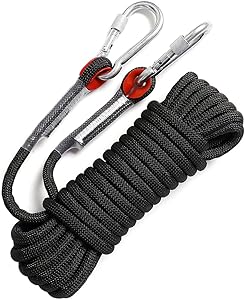
-
Length Options: 35ft – 250ft
-
Diameter: 10mm–16mm
-
Type: Static climbing rope
-
Material: High-strength synthetic fiber
GINEE static ropes are ideal for ice climbers who prioritize stability and durability. Available in a range of diameters and lengths, these ropes can handle anything from short vertical ice routes to longer alpine climbs. The static nature ensures minimal elongation, which is critical for maintaining secure anchor points on ice surfaces. Climbers benefit from the rope’s resilience against fraying from ice screws and axes.
The ropes’ synthetic fiber construction offers low water absorption, keeping them light even in wet, frozen conditions. The thick sheath improves handling and grip, while the robust core supports repeated use in demanding environments. These ropes are particularly well-suited for technical ice climbs and rescue operations where stability and reliability are paramount.
Pros:
-
Range of diameters for different climbing needs
-
Low water absorption in icy conditions
-
Minimal stretch for stability
-
Thick sheath resists abrasion
Cons:
-
Heavier than some ultralight options
-
Static rope not suitable for long falls
5. EMEKIAN Indoor/Outdoor Climbing Rope
-
Type: Static rock climbing rope
-
Material: High-strength nylon
-
Length: 30–50 meters typical for ice climbing
-
Accessories: Non-slip gloves included
The EMEKIAN climbing rope is tailored for ice climbers seeking a safe and reliable static rope. Constructed from high-strength nylon, it maintains structural integrity in freezing temperatures and rough terrain. The included non-slip gloves enhance grip, an essential feature when handling ropes on icy surfaces. This rope is ideal for fixed lines, rescue setups, or direct ice ascents where minimal rope stretch is desired.
Its static properties make it excellent for stability-focused climbing, allowing climbers to ascend vertical ice safely and efficiently. The rope’s nylon composition ensures durability against abrasion, while the gloves provide additional protection against frostbite and accidental rope burns. This combination makes the EMEKIAN rope a solid choice for technical ice climbs or alpine rescue missions.
Pros:
-
Includes non-slip gloves for icy conditions
-
Durable nylon construction
-
Static design provides stable climbing
-
Suitable for rescue and fixed-line setups
Cons:
-
Not ideal for lead climbing with high falls
-
Shorter lengths may require rope joining
6. NTR 8mm Static Climbing Rope
-
Diameter: 8mm
-
Length Options: 10m – 50m
-
Color: Orange, Black, Blue, Green
-
Type: Static rope with 2 steel hooks
The NTR 8mm static rope is a compact, lightweight option for ice climbers who need a reliable rope for short ascents and anchor setups. Its smaller diameter makes it easier to handle and carry while still providing sufficient strength for personal climbing and fixed-line use. The included steel hooks simplify anchoring, allowing climbers to secure themselves quickly on ice walls.
This rope is ideal for steep ice sections where stability and control are crucial. Its static nature minimizes stretch, giving climbers confidence during vertical ascents. The bright color options also improve visibility in snowy conditions, which is beneficial for both safety and route management. While lighter than thicker ropes, it remains durable enough to withstand abrasion from ice tools over multiple climbs.
Pros:
-
Lightweight and easy to handle
-
Includes steel hooks for quick anchoring
-
Multiple color options improve visibility
-
Static rope provides stable climbing
Cons:
-
Limited length for long multi-pitch climbs
-
8mm diameter may feel thin for heavier loads
7. Squirrel Products Outdoor Climbing Rope for Kids (8.5ft)
-
Length: 8.5ft
-
Type: Knotted climbing rope
-
Material: Heavy-duty nylon
-
Designed for: Vertical climbing and rope practice
Although originally designed for children’s playgrounds, the Squirrel Products rope can serve as a lightweight training rope for ice climbers practicing vertical movement techniques or knot work. The knotted steps make it easy to grip, which is useful when developing footwork and hand positioning skills on icy training walls. Its heavy-duty nylon construction ensures durability and resistance to fraying.
This rope is not intended for serious ice climbing but can be valuable for building foundational climbing skills safely. It allows climbers to rehearse ascents, practice rope handling, and simulate anchor techniques before transitioning to full-length technical ropes. Its compact size and robust build make it convenient for home or gym setups.
Pros:
-
Knotted steps enhance grip for practice
-
Heavy-duty nylon is durable
-
Compact for easy training setup
-
Safe for skill development
Cons:
-
Not suitable for actual ice climbing
-
Very short length limits climbing applications
How to Choose the Best Ice Climbing Ropes
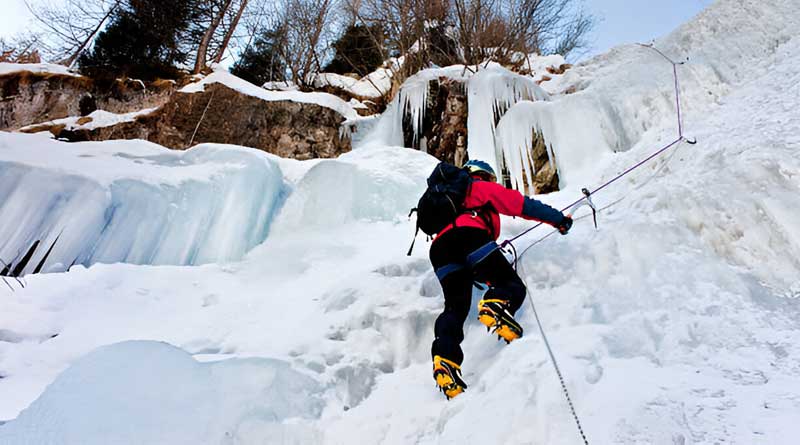
Ice climbing is one of the most exhilarating and challenging outdoor sports, combining the thrill of mountaineering with the technical precision of rock climbing. Whether ascending frozen waterfalls, steep ice walls, or alpine glaciers, safety is paramount. Among the many pieces of equipment essential for ice climbing, ropes play a critical role. Choosing the right ice climbing rope can mean the difference between a safe, enjoyable ascent and a hazardous situation. This guide explores key factors to consider when selecting the best ice climbing ropes.
Understanding Ice Climbing Ropes
Ice climbing ropes are dynamic ropes, designed to stretch under load to absorb the impact of falls. Unlike static ropes, which are used primarily for rappelling or rescue, dynamic ropes reduce the forces experienced by both climbers and anchors during a fall. Ice climbing ropes must be durable, versatile, and able to perform in extreme cold, wet, and abrasive conditions.
There are generally two types of ropes climbers use: single ropes and twin or half ropes. Single ropes are used alone and are suitable for most ice climbs, offering simplicity and ease of handling. Half and twin ropes are used in pairs, providing redundancy, better rope management on long routes, and reduced rope drag on wandering climbs. The choice between these rope types depends on the style of climb, route length, and your personal preference.
Key Factors in Choosing Ice Climbing Ropes
1. Rope Diameter and Weight
Rope diameter directly affects weight, handling, and durability. For ice climbing, ropes typically range from 8.5 mm to 10.5 mm in diameter:
-
8.5–9.2 mm: Lightweight ropes are easier to handle, reduce rope drag, and are ideal for technical ice climbs. However, thinner ropes wear out faster, especially when dragged over ice and rock.
-
9.3–10.5 mm: Thicker ropes are more durable and resistant to abrasion, making them suitable for repeated use or climbing in areas with sharp ice formations.
Weight is also a critical factor. Heavier ropes can slow you down, especially on long approaches or multi-pitch routes. Balancing rope weight against durability is key.
2. Rope Length
Most ice climbing ropes range from 50 to 70 meters. The length needed depends on the routes you plan to climb. For shorter waterfall climbs, a 50-meter rope may suffice, whereas alpine or glacier climbs may require 60–70 meters to cover longer pitches. Always check route information and plan for extra length in case of rappelling or emergencies.
3. Dry Treatment
Ice climbing often involves wet, snowy, or icy conditions. Ropes with dry treatment resist water absorption, keeping the rope lighter and maintaining strength in freezing temperatures. Wet ropes are heavier, freeze more easily, and are prone to ice buildup, which can compromise safety. When climbing in winter conditions, always prioritize dry-treated ropes.
4. Impact Force and Fall Rating
Dynamic ropes are rated based on impact force and fall rating.
-
Impact force measures the maximum force a rope transmits to the climber and anchor during a fall. Lower impact forces are preferable for protecting delicate ice anchors, such as ice screws.
-
Fall rating indicates how many standard test falls a rope can withstand. While most climbers won’t experience multiple catastrophic falls, a higher fall rating offers peace of mind for frequent use.
When selecting a rope for ice climbing, prioritize lower impact force to protect both the climber and the ice anchors.
5. Sheath Durability
Ice climbing ropes encounter sharp ice edges, crampons, and rough rock surfaces. A durable sheath is essential to prevent fraying and extend rope life. Look for ropes with high-density, tightly woven sheaths, and reinforced tips. A sheath with low water absorption properties is also advantageous in icy conditions.
6. Handling and Flexibility
Rope handling refers to how easily a rope can be coiled, tied, belayed, and fed through gear. Flexible ropes are easier to knot, belay, and rappel with, reducing frustration during complex climbs. A stiff rope may resist tangling but can be harder to manage in multi-pitch settings. For ice climbing, where smooth rope management is crucial, a balance between flexibility and durability is ideal.
7. UIAA and CE Certification
Always check for UIAA (International Climbing and Mountaineering Federation) and CE (Conformité Européene) certification. These certifications ensure the rope meets international safety standards for climbing, including tensile strength, impact force, elongation, and durability. Certified ropes provide reliable assurance of safety in demanding conditions.
8. Single vs. Half/Twin Ropes
The choice between single, half, or twin ropes depends on your climbing style:
-
Single ropes: Simple and reliable, best for straightforward ice routes. They are easier to belay and rappel with and are often preferred by beginner and intermediate ice climbers.
-
Half ropes: Used in pairs, clipped alternately to reduce rope drag on wandering routes. They offer redundancy and are excellent for alpine ice climbs where protection is spaced out.
-
Twin ropes: Also used in pairs, but both ropes must be clipped together through every piece of protection. They provide extra safety and allow for long rappels.
Understanding your climbing needs will guide the appropriate choice.
9. Color and Visibility
High-contrast or brightly colored ropes improve visibility on snowy or icy terrain. This is not only practical for locating ropes but also enhances safety during complex maneuvers, belaying, or rescue situations.
10. Budget Considerations
High-quality ice climbing ropes can be expensive, but investing in a durable, certified rope is essential for safety. While budget ropes may be appealing, they often compromise on water resistance, durability, or handling. Prioritize quality over cost, especially when climbing in harsh conditions.
Maintenance and Care Tips
Proper care prolongs the life of ice climbing ropes. Avoid stepping on ropes, as grit can damage the sheath. After wet climbs, dry the rope thoroughly away from direct heat. Store ropes in cool, dry locations, and inspect regularly for fraying or core damage. Treat dry ropes with proper cleaning techniques to maintain water resistance.
Conclusion
Selecting the best ice climbing rope involves balancing multiple factors: diameter, length, dry treatment, impact force, durability, flexibility, and your climbing style. Safety should always take priority, as ropes are the lifeline that protect climbers from falls in icy, unpredictable terrain. For most ice climbers, a dry-treated single or half rope, with moderate diameter (9–10 mm), sufficient length (50–70 meters), and high sheath durability, provides an ideal combination of performance, safety, and longevity.
By carefully considering your specific climbing needs, environmental conditions, and rope characteristics, you can ensure a safer, more enjoyable ice climbing experience. Remember, the right rope doesn’t just protect you—it enhances your climbing efficiency and confidence, allowing you to focus on the thrill of ascending frozen heights.