Best Indoor Climbing Ropes of 2025
Indoor climbing is becoming more popular every year, and choosing the right rope is one of the most important decisions for climbers. A good indoor climbing rope not only keeps you safe but also makes your climbing experience smoother and more enjoyable. Unlike outdoor ropes, indoor ropes are designed to handle frequent falls, constant use, and the controlled environment of climbing gyms. With so many options available, from different lengths and thicknesses to various levels of durability, it can be confusing to pick the best one. This guide will help you understand what to look for and recommend the best indoor climbing ropes to match your needs.
1. Squirrel Products 6.5 ft Climbing Rope
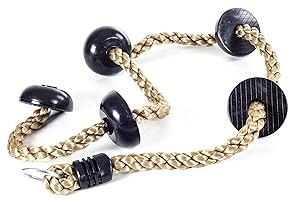 Length: 6.5 feet
- Material: Polypropylene rope with plastic disc platforms
- Maximum weight capacity: 150 lbs
- Suitable for: Indoor/outdoor climbing, kids and light arborist training
The Squirrel Products 6.5 ft Climbing Rope is primarily designed for children but can be repurposed by beginner arborists for practice in a controlled indoor setting. Built with thick polypropylene strands, the rope provides durability against fraying while remaining lightweight and easy to grip. Its disc platforms serve as excellent footholds for beginners learning climbing balance, though advanced arborists may find them less useful compared to plain training ropes.
When used indoors for climbing drills, the rope offers a safe and comfortable experience, especially for those who need to practice grip strength and body coordination. However, since it is intended for lighter users, it is not suitable for heavy-duty arborist work or carrying professional gear. Think of it as a starter rope for conditioning rather than a professional tool.
Pros
- Lightweight and easy to install indoors
- Disc platforms enhance grip and safety for practice
- Affordable entry-level climbing rope
- Good for conditioning and strength training
Cons
- Limited to 150 lbs weight capacity
- Not designed for advanced arborist load-bearing tasks
- Shorter length limits versatility
- Better suited for kids and light users
2. LETSGOOD Gym Fitness Training Climbing Rope
- Length options: 10 ft, 15 ft, 20 ft, 25 ft
- Material: High-strength polyester
- Diameter: 1.5 inches
- Features: Heat-shrink end caps for durability and fray prevention
The LETSGOOD Gym Fitness Training Climbing Rope is a versatile choice that transitions well from fitness training to arborist conditioning. Its polyester build ensures strength and resistance to wear, while the 1.5-inch diameter gives climbers a thick grip for developing hand endurance. The heat-shrink end caps prevent unraveling, which is crucial for long-term indoor use.
For arborists practicing indoors, this rope is particularly effective for simulating grip-heavy scenarios found in tree climbing. The various length options provide flexibility, making it suitable for different ceiling heights. While it lacks features like foothold discs, its professional-grade thickness allows arborists to practice raw grip techniques, an essential skill in the field.
Pros
- Durable polyester construction
- Multiple lengths available for customization
- Thick 1.5-inch diameter for grip training
- Heat-shrink end caps extend rope life
Cons
- Heavier compared to smaller ropes
- No foothold features for beginners
- Requires strong ceiling anchor points
- Indoor use only—less suitable for outdoor weather exposure
3. KEEPARK Gym Climbing Rope for Fitness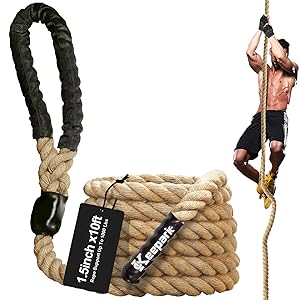
- Lengths: 10 ft, 15 ft, 20 ft, 25 ft, 30 ft
- Material: Polyester hemp blend
- Diameter: 1.5 inches
- End feature: Heavy-duty steel hook for anchoring
The KEEPARK Gym Climbing Rope blends functionality with user-friendly design, making it a good choice for arborists training indoors. Its polyester-hemp blend provides a firm yet slightly textured grip, mimicking the natural feel of tree bark. With a wide selection of lengths, this rope can adapt to both low-ceiling and high-ceiling training environments.
A standout feature is its steel hook, which makes installation simple and secure compared to ropes requiring manual knots. For arborists, this offers convenience and peace of mind when setting up practice sessions indoors. While its weight and thickness are excellent for developing grip endurance, beginners may find the rope slightly abrasive on hands, making gloves a smart option.
Pros
- Sturdy polyester-hemp blend for durability
- Steel hook makes anchoring easy and reliable
- Multiple length options for flexible training setups
- Bark-like grip feel enhances arborist simulation
Cons
- Slightly abrasive for bare-handed use
- Heavier than synthetic-only ropes
- Steel hook adds bulk during storage
- Not designed for heavy outdoor use
4. GM CLIMBING 8mm (5/16in) Accessory Cord Rope
- Diameter: 8mm (5/16 inch)
- Length options: 10m, 20m, 30m, 50m, 100m
- Material: Polyester sheath + nylon core
- Breaking strength: ~16 kN
The GM CLIMBING 8mm Accessory Cord is a compact yet reliable rope designed for versatility. While it’s not intended to be a primary load-bearing climbing rope, it excels in indoor arborist training for knot practice, rigging techniques, and supplemental climbing support. Its polyester sheath resists abrasion, while the nylon core gives it just enough flexibility to tie and untie knots repeatedly without wear.
For arborists in training, this cord works best as a secondary rope—ideal for learning hitch knots, ascender setups, and lightweight hauling practice. Its thinner diameter makes it unsuitable for standalone climbing, but as part of a training kit, it’s invaluable for building rope-handling skills essential in the field.
Pros
- Excellent for knot-tying and rigging practice
- Lightweight and easy to handle indoors
- Multiple length options available
- Strong enough for accessory tasks
Cons
- Not suitable for primary climbing use
- Thinner diameter can be hard to grip for conditioning
- Requires gloves for knot-heavy sessions
- Limited arborist load-bearing applications
5. Perantlb Polyester Climbing Rop
- Lengths: 10 ft, 15 ft, 20 ft, 25 ft, 30 ft, 50 ft
- Diameter: 1.5 inches
- Material: 100% polyester
- End feature: Heat-shrink caps for anti-fray protection
The Perantlb Polyester Climbing Rope is a heavy-duty option ideal for arborists seeking durability and strength in their training. Made from 100% polyester, the rope resists fraying, abrasion, and moisture, making it more robust than hemp blends. Its 1.5-inch diameter provides a solid grip for hand-strengthening workouts, which directly translates to better endurance in tree climbing.
Indoors, this rope excels for conditioning drills like rope climbs, pulls, and grip endurance routines. With lengths up to 50 feet, it accommodates a variety of setups, from gym ceilings to professional arborist training spaces. Its durability and versatility make it a smart investment for serious arborists, though beginners may find the thick diameter challenging at first.
Pros
- Heavy-duty polyester for maximum durability
- Wide length range including 50 ft option
- Resistant to moisture and abrasion
- Heat-shrink ends maintain rope integrity
Cons
- Thick diameter can be tough for novices
- Heavier weight compared to smaller ropes
- Requires strong mounting points indoors
- Lacks quick-install hardware like hooks
How to Choose Indoor Climbing Ropes
Indoor climbing has grown into one of the most popular adventure sports worldwide. Whether for training, competition, or recreation, it provides climbers with a safe and controlled environment to test strength, endurance, and skill. But while climbing gyms provide most of the infrastructure, climbers often invest in personal gear — and one of the most critical pieces is the climbing rope.
Choosing the right indoor climbing rope can be confusing, especially for beginners faced with different lengths, diameters, and rope types. Unlike outdoor climbing, where ropes must withstand harsh weather, sharp rock edges, and long routes, indoor climbing ropes face unique conditions: repeated falls, frequent lowering, and friction against artificial holds and walls. This guide will help you understand what to look for when selecting an indoor climbing rope so that you balance safety, durability, and comfort.
1. Understanding Rope Types
Before diving into specifications, it is essential to understand rope categories.
- Dynamic Ropes:
These ropes stretch under load, absorbing the energy of a fall. They are the only type suitable for lead climbing indoors or outdoors. - Static Ropes:
These ropes stretch very little and are typically used for hauling, rappelling, or setting up top-ropes in outdoor environments. For indoor climbing, static ropes are not recommended for lead climbing but may be used by gym staff to rig anchors.
For indoor climbers, the dynamic single rope is the standard choice. Multi-rope systems such as twin or half ropes are unnecessary indoors, where climbs are short and straightforward.
2. Rope Length
Indoor climbing walls are usually shorter than outdoor routes, so you do not need the long ropes often required outside.
- Standard indoor lengths: 30–40 meters.
- Why shorter ropes work: Most gyms have walls between 10 and 20 meters high. A 30-meter rope allows you to climb to the top and be lowered safely while keeping rope weight and cost down.
- Advantages of shorter ropes: Lighter to carry, easier to handle, quicker to flake and coil.
Tip: Always check the wall height of your local gym and choose a rope length that is at least twice the wall height to ensure safe lowering.
3. Rope Diameter
The diameter of a climbing rope affects handling, durability, and compatibility with belay devices.
- Thicker ropes (9.8–10.2 mm):
Ideal for indoor use because they withstand frequent falls, repeated lowering, and abrasion. They are easier to grip and handle for beginners and work well with most belay devices. - Thinner ropes (8.9–9.5 mm):
Lighter and smoother to handle, often used by advanced climbers who prioritize performance. However, they wear out faster indoors and may feel slippery for inexperienced belayers. - Ultra-thin ropes (<8.9 mm):
Designed for elite climbers, outdoor projects, or alpine climbing. Rarely practical indoors.
For most indoor climbers, a 9.8–10 mm rope is the sweet spot — durable, safe, and easy to use.
4. Rope Handling and Feel
The “hand” of the rope refers to its stiffness, suppleness, and general feel. A rope that is too stiff can be difficult to knot, while one that is too soft may tangle easily. Indoor climbers should choose ropes that feed smoothly through belay devices and tie easily into knots such as the figure-eight follow-through.
Tip: If possible, test how the rope feels in your hands and in a belay device before purchasing.
5. Sheath Proportion and Durability
The rope’s sheath (the woven outer layer) takes the brunt of the wear and tear indoors. Constant lowering and catching falls on plastic holds can fray or fuzz the sheath quickly.
- High sheath proportion: Ropes with a thicker sheath (more of the rope’s weight dedicated to the outer layer) last longer in indoor settings.
- Durability vs. weight: While thicker sheaths add weight, this is less of an issue indoors, where carrying long distances is unnecessary.
For heavy indoor use, always prioritize durability over weight savings.
6. Dry Treatment — Do You Need It Indoors?
Dry-treated ropes are coated to resist water, dirt, and freezing, making them essential for outdoor ice or alpine climbing. For indoor climbing, however, this feature is unnecessary.
- Non-dry ropes: Cheaper, more environmentally friendly, and perfectly adequate indoors.
- Dry ropes indoors: They still work but cost more without offering real advantages in a gym environment.
Unless you plan to use the same rope outdoors, skip the dry treatment for an indoor-specific rope.
7. Middle Mark and Bi-pattern Design
Climbing ropes often feature markings to indicate the middle point, which helps with rappelling and rope management.
- Middle mark: A black or colored mark at the rope’s halfway point. Useful, but not essential for indoor climbing.
- Bi-pattern design: The weave pattern changes at the middle, making it easy to spot instantly. This is convenient but adds cost.
For indoor use, a simple middle mark is sufficient.
8. Rope Safety Ratings
All dynamic climbing ropes are tested and certified by the UIAA (International Climbing and Mountaineering Federation). While most ropes sold by reputable brands meet these standards, knowing the key ratings can help you choose wisely:
- UIAA Falls: Indicates how many standard falls the rope can withstand before failing. Indoor ropes often experience many falls, so a higher rating means greater durability.
- Impact Force: Measures how much force is transmitted to the climber during a fall. Lower is generally better, but all ropes meet safe standards.
- Dynamic Elongation: The percentage the rope stretches in a fall. More stretch means a softer catch but may feel bouncy indoors.
While these ratings are important, remember that for indoor use, durability is often more important than performance numbers.
9. Rope Maintenance Indoors
Choosing the right rope is only half the battle — caring for it ensures longevity and safety.
- Rope bag: Always use a rope bag or tarp to keep chalk dust and dirt off your rope.
- Regular inspection: Check for soft spots, sheath damage, or flat sections. Retire the rope if you notice core exposure or significant wear.
- Washing: Indoor ropes can be machine-washed on a gentle cycle with rope-specific cleaner or mild soap.
- Storage: Keep in a cool, dry place away from direct sunlight and chemicals.
A well-maintained rope can last much longer, even under heavy gym use.
10. Budget Considerations
Indoor ropes are often cheaper than outdoor ropes because they are shorter and lack dry treatment. Prices vary depending on brand, sheath thickness, and design.
- Entry-level ropes (30–40m, 9.8–10mm, non-dry): Affordable and durable — ideal for most climbers.
- Premium ropes (bi-pattern, dry-treated, thinner diameter): More expensive, designed for performance or dual indoor/outdoor use.
If you climb mainly indoors, invest in a simple, durable, and cost-effective rope, and save the premium options for outdoor adventures.
Conclusion
Selecting the right indoor climbing rope doesn’t need to be overwhelming. By focusing on durability, ease of handling, and gym-specific needs, you can make a practical and safe choice. For most climbers, a 30–40m dynamic rope, 9.8–10mm in diameter, with a durable sheath and no dry treatment, is the perfect fit.
Remember: your rope is your lifeline. Treat it well, inspect it regularly, and retire it when necessary. With the right rope, you’ll climb with confidence, progress faster, and enjoy the sport safely for years to come.