
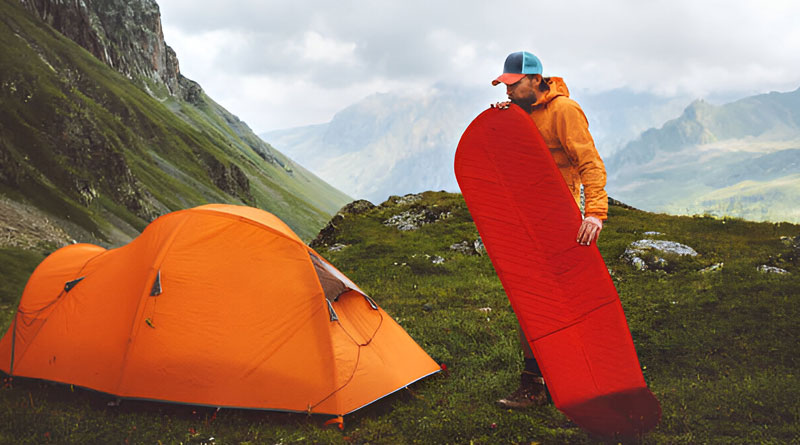
Best Mountaineering Sleeping Pads of 2025
When heading out on a mountaineering adventure, one of the most important pieces of gear you can carry is a good sleeping pad. At high altitudes and in rough conditions, a sleeping pad does much more than just provide comfort. It acts as a layer of insulation between you and the cold ground, helping you stay warm through freezing nights, while also giving your body the support it needs after long, tiring climbs. Choosing the right pad can make the difference between a restful night and a sleepless one. In this article, we explore the best mountaineering sleeping pads to keep you comfortable, warm, and ready for the climb ahead.
1. ALPS Mountaineering Outback Pad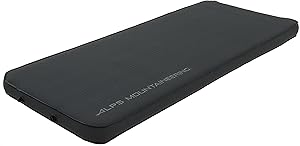
- Type: Self-inflating foam pad with air core
- Thickness: ~4 inches for maximum comfort
- R-Value: Approx. 6 (suitable for 3-season use)
- Weight: ~6.5 lbs, designed for car camping or base camp
The ALPS Mountaineering Outback pad is a luxury option for campers who prioritize comfort over ultralight portability. With its combination of foam and air, it offers a plush sleeping surface similar to a home mattress, making it ideal for car camping or extended base camp stays. The self-inflating system works smoothly, and just a few breaths are enough to firm it up for personalized comfort. Its insulation provides a cozy barrier against the cold ground, ensuring restful nights even in cooler seasons.
While it’s not intended for backpackers due to its bulk and weight, this pad shines in situations where you don’t need to carry it far. It rolls up into a manageable size for transport and comes with compression straps to keep things tidy. The fabric is durable, built to withstand repeated use, and the overall construction feels premium. If you want hotel-like comfort while camping without worrying about every ounce of weight, this is a reliable choice.
Pros
- Thick, cushioned surface for superior comfort
- Easy self-inflation with adjustable firmness
- Durable construction and high-quality fabric
- Excellent insulation for 3-season camping
Cons
- Heavy and bulky, not suitable for backpacking
- Premium price compared to standard pads
2. Elegear Self Inflating Sleeping Pad

- Thickness: 3.15″ ultra-thick with memory foam
- Inflation: Built-in pump inflates in ~20 seconds
- R-Value: ~9 (4-season insulation)
- Weight: ~5 lbs, moderate portability
The Elegear Self Inflating Sleeping Pad strikes an impressive balance between comfort and convenience. With its 3.15″ memory foam core, it offers a cushioned sleep surface that feels supportive and insulating. The built-in pump is a standout feature—it inflates the pad in about 20 seconds, saving effort after a long day outdoors. For campers who dislike fiddling with manual pumps or blowing up pads, this is a big plus.
Its high R-value makes it suitable for all-season camping, even in freezing conditions. The pad’s surface is soft yet durable, offering both coziness and long-lasting use. While bulkier than ultralight options, it remains compact enough for car camping, tent setups, and even some hiking trips where weight isn’t the main concern. This pad is perfect for campers who want a combination of quick setup, excellent warmth, and reliable comfort.
Pros
- Ultra-fast inflation system
- Thick memory foam provides great comfort
- High insulation for 4-season use
- Built-in pillow for extra convenience
Cons
- Bulkier than backpacking pads
- Heavier compared to minimalist sleeping mats
3. Stansport Pack Lite Pad

- Material: Closed-cell foam construction
- Thickness: 0.75″ (thin and lightweight)
- Weight: ~14 oz, ultralight design
- Dimensions: 72″ x 20″ (standard size)
The Stansport Pack Lite pad is designed for minimalist adventurers and ultralight backpackers. Its closed-cell foam construction is simple but effective, offering basic cushioning against uneven terrain and solid insulation from the ground. At just under a pound, it’s featherlight and easy to strap onto a backpack without adding noticeable weight. It’s especially useful for thru-hikers, mountaineers, or cyclists who want no-fuss sleeping gear.
However, this pad prioritizes portability over comfort. The 0.75″ thickness provides only modest cushioning, so side sleepers or those needing extra support may find it less comfortable. Despite that, it excels as a reliable and nearly indestructible option that can double as a backup pad. Budget-friendly and long-lasting, the Stansport Pack Lite is a practical choice for those who value simplicity, light weight, and durability over luxury.
Pros
- Extremely lightweight and portable
- Affordable and budget-friendly
- Virtually indestructible closed-cell foam
- Easy to set up, no inflation needed
Cons
- Minimal comfort, very thin
- Not ideal for cold-weather camping
4. Hikenture 4″ Thick Pad
- Thickness: 4″ with foam + air hybrid design
- Inflation: Self-inflating with valve adjustment
- R-Value: 9.5 (excellent all-season insulation)
- Dimensions: 78″ x 30″, oversized design
The Hikenture 4″ pad is designed for serious campers who want warmth and comfort regardless of season. With its thick foam-and-air design, it offers one of the most comfortable sleeping surfaces in its class. The self-inflating system works well, requiring minimal effort to reach full firmness. Its 9.5 R-value makes it suitable for winter mountaineering or high-altitude trips where insulation is critical.
This pad’s oversized dimensions make it great for taller or broader campers, offering extra room without compromising stability. Despite its bulk, it packs down reasonably for its size, making it manageable for car camping and even some trekking where comfort outweighs weight considerations. Durable fabric ensures longevity, while the thick padding guarantees restful sleep. Overall, it’s a premium pad that delivers on insulation and comfort for all-season use.
Pros
- Extremely high insulation (R-Value 9.5)
- Thick, cushioned design for excellent sleep quality
- Self-inflation works efficiently
- Oversized, great for taller campers
Cons
- Bulky when packed
- Heavier than ultralight pads
5. AKUDY Self Inflating Sleeping Pad with Electric Pump
- Thickness: 4″ memory foam + air hybrid
- Inflation: Built-in electric pump
- R-Value: 9.5 for 4-season insulation
- Weight: ~6 lbs, medium-heavy design
This self-inflating pad with an electric pump is all about convenience and comfort. The 4″ thickness paired with memory foam makes it feel close to a real mattress, ideal for campers who want the best possible rest outdoors. The electric pump feature is especially helpful, taking away all the effort of inflating manually. Within minutes, the pad is ready for use, with adjustable firmness for personal preference.
Its 9.5 R-value makes it reliable in extreme conditions, ensuring warmth and insulation from frozen ground. While it’s bulkier than standard pads, the trade-off is excellent comfort and effortless setup. The construction feels durable, with reinforced seams and quality fabric. It’s a particularly good fit for car camping, overlanding, or truck camping where power is available to charge the pump. If portability isn’t your top priority, this pad offers a luxury outdoor sleep solution.
Pros
- Electric pump makes setup effortless
- Very comfortable with thick memory foam
- Excellent insulation for year-round use
- Durable build for long-term reliability
Cons
- Requires power source for pump
- Heavier and bulkier than lightweight options
6. BREVITRIP Camping Sleeping Pad
- Inflation: Built-in foot pump, ~30s inflation
- Thickness: ~2.7″ air cushion design
- Weight: ~1.5 lbs, ultralight portability
- Material: Waterproof ripstop nylon
This ultralight camping sleeping pad is built for hikers, mountaineers, and cyclists who want minimal weight without sacrificing too much comfort. At around 1.5 lbs, it’s easy to carry on long treks, and the integrated foot pump inflates it quickly without needing extra gear. The ~2.7″ thickness offers decent cushioning for an air pad, and the built-in pillow adds a layer of convenience.
The pad is constructed from tough ripstop nylon, making it waterproof and resistant to punctures. While it doesn’t offer the warmth of foam-insulated pads, it’s a great option for summer or mild-weather camping. Its packability is one of its strongest features, rolling down to a compact size that fits easily in a backpack. For minimalist adventurers who need a reliable balance of comfort and ultralight design, this pad is a solid pick.
Pros
- Lightweight and easy to pack
- Fast foot-pump inflation in ~30s
- Built-in pillow for added comfort
- Waterproof and durable material
Cons
- Not suitable for cold-weather camping
- Thinner than foam-based pads
7. PINEHIKE Camping Sleeping Pad with Electric Pump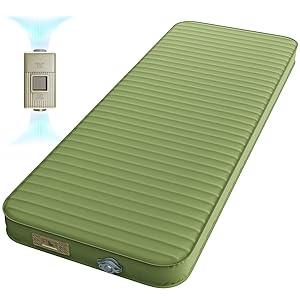
- Thickness: 4″ ultra-thick memory foam with air support
- Inflation: Built-in electric pump
- R-Value: 9.5, suitable for all seasons
- Dimensions: ~78″ x 30″, oversized comfort
This camping sleeping pad offers the ultimate luxury for campers seeking a balance between convenience and comfort. The 4″ memory foam combined with air support ensures a soft, cushioned feel that rivals a home mattress. Its built-in electric pump makes inflation quick and hassle-free, ideal for those who want minimal setup effort after a long day outdoors.
With a high R-value of 9.5, this pad performs exceptionally well in cold-weather environments, keeping sleepers warm even on frozen ground. Its oversized dimensions give extra space, making it perfect for tall campers or those who value freedom of movement. While bulkier and heavier than ultralight options, it excels for car camping, overlanding, and tent setups where weight isn’t the primary concern. For comfort-driven campers, this is one of the most reliable and premium options available.
Pros
- Superior comfort with thick memory foam
- Built-in electric pump for quick inflation
- Excellent warmth for 4-season camping
- Oversized design suits taller campers
Cons
- Heavy and not backpack-friendly
- Requires charging for the electric pump
How to Choose Mountaineering Sleeping Pads
When preparing for a mountaineering expedition, climbers often focus on technical gear like ropes, crampons, and boots, while sometimes underestimating the importance of a good sleeping pad. However, the quality of your sleep can significantly impact your energy, decision-making, and overall safety in the mountains. A mountaineering sleeping pad is not just a comfort item—it provides insulation from the cold ground, reduces heat loss, and ensures better recovery during demanding climbs. Choosing the right one requires careful consideration of weight, warmth, durability, packability, and design. Below is a detailed guide to help you understand how to select the best mountaineering sleeping pad for your needs.
1. Understand the Purpose of a Sleeping Pad
A sleeping pad serves two critical roles:
- Insulation: It prevents body heat from escaping into the frozen ground. Even with the best sleeping bag, without insulation beneath you, the cold will seep in quickly.
- Comfort: Sleeping on snow, ice, or rocky terrain can lead to restless nights. A good pad cushions your body, reduces pressure points, and helps you wake up refreshed.
Therefore, a mountaineering sleeping pad is not optional—it is essential gear that contributes directly to performance and survival.
2. Types of Sleeping Pads
Sleeping pads come in three main categories. Each has its strengths and weaknesses, and the right choice often depends on the nature of your expedition.
a. Closed-Cell Foam Pads
- Made of dense foam filled with tiny air pockets.
- Extremely durable, lightweight, and inexpensive.
- Excellent insulation, especially when paired with another pad.
- Downsides: bulky, less comfortable compared to inflatable models.
- Best for climbers who want reliability and toughness in extreme conditions where punctures are a risk.
b. Self-Inflating Pads
- Combine open-cell foam insulation with an air chamber.
- Offer more comfort than closed-cell foam while still being durable.
- Easy to use: simply open the valve, and the foam expands to pull in air.
- Provide good insulation, though slightly heavier and bulkier.
- Best for climbers prioritizing balance between warmth, comfort, and durability.
c. Air Pads (Inflatable Pads)
- Fully inflatable and often designed with advanced baffles for comfort.
- Lightweight and compact when packed.
- Can be warmer with synthetic or down insulation inside.
- Require careful handling since punctures can occur.
- Best for alpinists seeking lightweight gear for fast ascents where every gram matters.
3. R-Value: Measuring Warmth
The R-value is the industry standard for measuring a sleeping pad’s insulating ability. It indicates how well a pad resists heat loss to the ground.
- R-Value 1–2: Suitable for warm conditions, not recommended for high-altitude mountaineering.
- R-Value 3–4: Adequate for three-season climbing and moderate cold.
- R-Value 4.5–6: Strong insulation, ideal for high-altitude conditions and winter climbing.
- R-Value 6+: Best for extreme expeditions on snow and ice.
Mountaineers typically aim for R-Value 5 or higher, especially when sleeping on glaciers or snowfields. Many climbers combine a foam pad (R-Value 2) with an inflatable pad (R-Value 4) to achieve both durability and warmth.
4. Weight and Packability
Weight is a constant concern in mountaineering, where every extra gram can slow progress. However, comfort and insulation cannot be sacrificed for the sake of shaving weight.
- Foam pads are very light but bulky.
- Inflatable pads pack down small but may weigh slightly more.
- Consider how much space you have in your backpack and whether bulk or weight is more of a limitation.
A common strategy is using a foldable foam pad strapped to the outside of the pack for backup, while keeping a lightweight inflatable pad inside for comfort.
5. Durability and Reliability
In harsh mountain environments, reliability is crucial. Rocks, ice, and crampon points can easily puncture fragile gear.
- Foam pads are nearly indestructible.
- Inflatable pads should be chosen with reinforced fabrics and high-quality valves.
- Always carry a repair kit for inflatable pads—tiny punctures can ruin a night’s sleep and put you at risk in freezing conditions.
Durability is especially critical during multi-day expeditions where replacement is not an option.
6. Size and Shape
Sleeping pads vary in length, width, and shape. Mountaineers must choose based on body size, comfort preference, and weight considerations.
- Length: Full-length pads provide insulation from head to toe, while three-quarter length pads save weight but require placing clothing or a pack under your feet for insulation.
- Width: Standard pads are around 20 inches wide, but wider options are available for those who move a lot while sleeping.
- Shape: Mummy-shaped pads taper towards the feet to reduce weight, while rectangular pads provide more surface area and comfort.
For mountaineering, mummy-shaped or three-quarter pads are often preferred to minimize weight without compromising too much on warmth.
7. Surface and Design Features
Some pads include extra features that improve performance in challenging conditions:
- Textured or sticky surfaces: Prevents sleeping bags from sliding off on sloped ground.
- Reflective layers: Bounce body heat back for extra warmth.
- Baffles and chambers: Improve stability and distribute air evenly for comfort.
- Dual valves: Make inflation and deflation quicker and more efficient.
These features may seem small but can greatly enhance your experience in the mountains.
8. Combining Pads for Extreme Conditions
Mountaineers often use a double-pad system:
- A closed-cell foam pad on the bottom for durability and insulation.
- An inflatable pad on top for comfort and added warmth.
This approach ensures redundancy in case of punctures and increases total R-value. It is especially effective on expeditions involving snow camps or high-altitude bivouacs.
9. Testing Before the Trip
Never wait until your climb to test new gear. Inflate your pad at home, check for leaks, and practice setting it up with your sleeping bag. On multi-day treks, even minor defects can become serious problems.
Additionally, try sleeping on the pad for at least one night before the expedition to confirm comfort and insulation. Small issues, like sliding or stiffness, are better solved before reaching the mountains.
10. Budget Considerations
Sleeping pads range widely in price. Foam pads may cost very little, while insulated inflatable pads can be expensive. When budgeting, remember that:
- A high-quality sleeping pad is an investment in safety and rest.
- For demanding mountaineering trips, it is often better to spend more for higher R-value and durability.
- However, you can save money by pairing an affordable foam pad with a mid-range inflatable pad.
Balancing cost with performance is key, but never compromise warmth in extreme conditions.
11. Environmental Considerations
Sustainability is becoming an important aspect of outdoor gear. Some brands now use recycled fabrics, bluesign®-approved materials, and eco-friendly insulation. If possible, look for pads with environmentally conscious manufacturing without compromising performance.
Conclusion
Choosing the right mountaineering sleeping pad is a balance of warmth, comfort, weight, and durability. While a sleeping bag keeps you warm from above, the pad is what protects you from the cold ground beneath. In mountaineering, where every ounce of energy matters, sleeping well can mean the difference between success and failure.
To recap:
- Focus on R-value for insulation, aiming for 5 or higher in alpine conditions.
- Decide between foam, self-inflating, and inflatable pads based on your priorities.
- Consider weight, size, and durability carefully.
- Use a double-pad system for extreme environments.
- Test your pad before the trip to avoid surprises.
By carefully evaluating these factors, you can select a sleeping pad that supports both your safety and comfort in the mountains, helping you wake up strong, warm, and ready to climb.