Best Scarpa Climbing Shoes of 2026
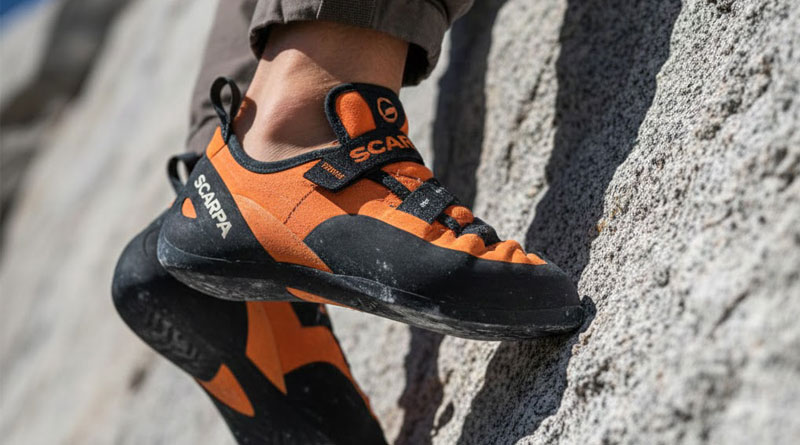
When looking for climbing shoes, Scarpa is a trusted name known for great quality and fit. This guide makes it simple, helping you find the best Scarpa shoe for your style, whether you’re just starting or tackling steep cliffs. We’ve tested popular models, focusing on comfort, performance, and durability, so you don’t have to. Discover which shoe gives you the perfect blend of support and sensitivity to confidently reach your next hold.
1. Origin

- EU Size: 43.5 – US 10-10.5 Men
- Fit: Flat-lasted, wide last, high volume
- Heel System: Pressure-absorbing design for comfort
- Sizing Advice: Street shoe sizing or larger recommended
The Scarpa Origin is designed for climbers who prioritize comfort without sacrificing grip. Its flat-lasted construction and wide last provide a roomy fit, making it ideal for beginners or anyone seeking long sessions without toe fatigue. The leather upper stretches slightly over time, but the roomy design means you can enjoy climbing from your first session. The pressure-absorbing heel system reduces strain on the Achilles while maintaining forward tension, helping you maintain a stable stance on footholds.
This shoe is particularly suitable for men with higher-volume feet, offering a slightly asymmetric fit that supports technical movements. While it does not have the extreme downturn of performance shoes, it still provides the grip and sensitivity necessary for developing solid climbing techniques. The Origin balances comfort and functionality, making it a reliable choice for indoor and outdoor routes alike.
- Pros: Comfortable fit, supportive heel, good for beginners, versatile use
- Cons: Not highly aggressive, leather stretches over time, limited performance on steep overhangs
2. Instinct VSR

- EU Size: 43.5 – US 10-10.5 Men / 11-11.5 Women
- Fit: Less stiff than Instinct VS, synthetic upper
- Rubber: Vibram XS Grip 2 for optimal grip
- Toe Rubber: Large patch for toe hooks and bat hangs
The Instinct VSR is a versatile climbing shoe that caters to lighter climbers seeking sensitivity without the stiffness of the original Instinct VS. Its synthetic upper doesn’t stretch much, so most climbers prefer sizing close to street shoes. The Vibram XS Grip 2 rubber provides excellent adhesion on rock and plastic alike, while the extensive toe rubber coverage allows for confident toe hooks and bat hangs.
This model balances comfort with performance, making it ideal for indoor climbing and moderate outdoor routes. Its slight asymmetry and softer structure deliver precise foot placement while reducing strain over long sessions. Overall, the Instinct VSR offers a great entry into performance climbing without compromising comfort or durability.
- Pros: Comfortable fit, sensitive, sticky rubber, good toe hook coverage
- Cons: Runs small, less stiff for advanced climbers, synthetic upper limits stretch
3. Veloce
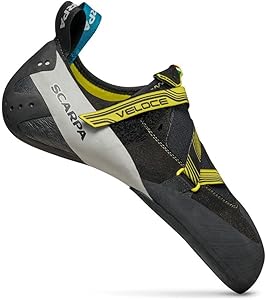
- EU Size: 40.5 – US 7.5-8 Men / 8.5-9 Women
- Fit: Wide toe-box, relaxed performance fit
- Rubber: S-72 ultra-soft for friction and surface coverage
- Rand System: DTS Active Rand transfers power to big toe
The Scarpa Veloce is perfect for gym climbers and beginner to intermediate climbers seeking comfort for longer sessions. Its wide toe box and relaxed fit reduce fatigue while maintaining effective power transfer to the big toe. The DTS Active Rand enhances sensitivity and maintains the downturned shape, allowing climbers to tackle slightly more technical routes comfortably.
The S-72 rubber conforms to footholds for increased friction, making edging and smearing more reliable. With synthetic construction, it maintains its shape over time, so climbers should ensure a snug fit initially. Overall, the Veloce balances comfort and technical performance, making it ideal for prolonged indoor climbing and moderate outdoor routes.
- Pros: Comfortable fit, great for long sessions, versatile, friction-enhancing rubber
- Cons: Not aggressive enough for steep overhangs, synthetic upper limits stretch, moderate edging sensitivity
4. Origin VS

- EU Size: 44 – US 10.5 Men / 11.5 Women
- Fit: Flat profile, low asymmetry
- Rubber: SCARPA S72 super sticky
- Upper: Microfiber with padded tongue and oversized strap
The Origin VS is ideal for beginners transitioning from gym to outdoor climbing. Its flat profile and low asymmetry prioritize comfort for day-long climbing sessions, ensuring climbers can focus on technique without experiencing toe pain. The super sticky S72 rubber delivers reliable grip on various surfaces, from plastic holds to real rock.
The synthetic microfiber upper is durable and maintains shape, while the padded tongue and large strap provide secure closure. Climbers should size snugly out of the box as synthetic material will not stretch much. Overall, the Origin VS is an excellent all-around starter shoe with a comfortable yet performance-ready design.
- Pros: Comfortable, durable upper, reliable grip, great for beginners
- Cons: Not highly aggressive, synthetic upper doesn’t stretch, limited sensitivity
5. Instinct VS

- EU Size: 45 – US 11-11.5 Men
- Fit: Slightly softer than Instinct, thinner sole
- Rubber: Vibram XS Edge and XS Grip 2
- Toe Rubber: Large patch for toe hooks and bat hangs
The Instinct VS is designed for climbers seeking performance with a touch of comfort. Its thinner sole provides sensitivity, letting climbers feel the rock while standing on thin edges. The XS Edge rubber in the forefoot combined with sticky XS Grip 2 in the heel ensures excellent adhesion for technical moves, including heel hooks and toe hooks.
Wider-fit climbers appreciate this shoe, though low-volume footed climbers may find the toe box slightly roomy. Downsizing by half a size from street shoes is generally recommended. Overall, the Instinct VS delivers a balance of sensitivity, grip, and comfort, making it ideal for technical climbs and overhanging boulders.
- Pros: Sensitive, sticky rubber, great for technical climbs, wider fit
- Cons: Not ideal for low-volume feet, aggressive climbs may require tighter fit, slight learning curve
6. Reflex VS

- EU Size: 42 – US 9
- Fit: Flat, slightly asymmetric for beginner comfort
- Upper: Soft suede with dual hook-and-loop straps
- Outsole: Vision 4mm with nylon midsole for light support
The Reflex VS is an excellent entry-level climbing shoe, combining comfort with just enough performance for technical moves. Its slightly asymmetric, flat profile gently directs pressure to the main toe, providing the sensitivity needed for small holds while remaining comfortable for long gym sessions. The suede upper with dual straps ensures a secure fit and easy adjustments, while the stretch-knit instep allows for quick on-and-off convenience.
This shoe is ideal for beginner climbers seeking a balance between comfort and touch. Its light nylon midsole and Vision outsole offer support on vertical walls without overwhelming the foot. Reflex VS is forgiving on the toes but still provides enough precision to develop climbing technique safely and comfortably.
- Pros: Comfortable, beginner-friendly, easy to put on, light and supportive
- Cons: Not aggressive enough for steep routes, limited edging performance, moderate durability
7. Vapor V
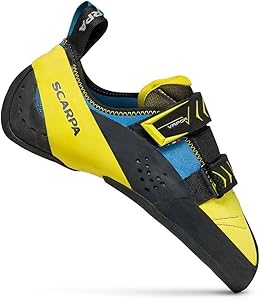
- EU Size: 40.5 – US 7.5-8
- Fit: Moderate downturn, slightly asymmetric
- Upper: Microsuede with reduced tongue volume
- Midsole: Flexan Dynamic for support and reduced fatigue
The Vapor V blends sensitivity and comfort, making it a versatile choice for climbers tackling both steep terrain and moderate angles. Its moderately downturned, slightly asymmetric design allows precise foot placements while still maintaining all-day comfort. The microsuede upper conforms to your foot, and the reduced tongue volume reduces pressure points.
The Flexan dynamic midsole adds support without compromising feel, while the Vibram XS Edge outsole provides stiffness for standing on thin edges. Combined with the Bi-Tension Rand system, the shoe channels power efficiently to the toes for better performance. Ideal for multi-pitch routes or technical bouldering, the Vapor V balances precision and comfort for varied climbing.
- Pros: Comfortable, versatile, good edging, responsive
- Cons: Discontinued, not aggressive for extreme overhangs, moderate support for large feet
8. Drago
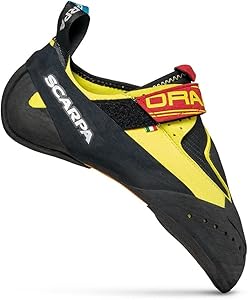
- EU Size: 43.5 – US 10-10.5 Men / 11-11.5 Women
- Fit: Aggressive downturn for technical climbs
- Upper: Synthetic microfiber minimizes stretching
- Rubber: Vibram XS Grip 2 for high adhesion
The Drago is a high-performance climbing shoe built for steep sport climbs and technical bouldering. Its aggressive downturn and thin midsole provide exceptional sensitivity, letting climbers feel every foothold. The PCB Active Rand enhances precision and power transfer, making it ideal for steep or overhanging terrain. The synthetic upper minimizes stretch, ensuring a consistent fit over time.
This shoe is designed for experienced climbers seeking maximum performance and precision. It excels on technical routes where sensitivity and control are critical. While the fit is snug, the Drago rewards those willing to size carefully, providing exceptional grip and responsiveness for demanding climbs.
- Pros: Highly sensitive, precise, sticky rubber, minimal stretch
- Cons: Aggressive fit may be uncomfortable for beginners, limited comfort for long sessions, requires careful sizing
9. Arpia V
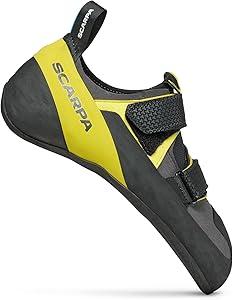
- EU Size: 43.5 – US 10-10.5 Men / 11-11.5 Women
- Fit: Slightly downturned, balanced for comfort and performance
- Rubber: Vibram XS Grip 2 for grip on plastic and rock
- Upper: Microsuede with two hook-and-loop straps and toe cap
The Arpia V is designed for climbers who want a balance of comfort and precision on challenging routes. Its slight downturn offers enough curvature for steep climbing without sacrificing comfort, making it suitable for long sessions on both indoor walls and outdoor boulders. The microsuede upper ensures a snug fit, while the rubber toe cap enhances toe-hooking performance.
Vibram XS Grip 2 rubber gives reliable traction on a variety of surfaces, and the moderately aggressive profile makes the shoe versatile for multiple climbing styles. The Arpia V is ideal for climbers who need a precise yet forgiving shoe for technical ascents and extended climbs.
- Pros: Balanced fit, precise, good grip, durable upper
- Cons: Synthetic upper doesn’t stretch, not for extreme overhangs, sizing critical
10. Drago LV

- EU Size: 42 – US 9 Men / 10 Women
- Fit: Low-volume for long, narrow, flat feet
- Rubber: Vibram XS Grip 2 for stickiness on steep climbs
- Rand: PCB Active Rand for sensitivity and precision
The Drago LV is designed for climbers with long, narrow feet who need maximum sensitivity for technical routes. Its thin midsole and aggressive downturn offer excellent responsiveness on steep sport climbs and overhanging boulders. The PCB Active Rand minimizes layers around the foot for precision, while the Vibram XS Grip 2 rubber provides dependable traction on all rock types.
This low-volume version ensures a snug, performance-oriented fit for climbers who find standard Drago models too roomy. The synthetic upper maintains its shape, so sizing carefully is crucial. Overall, the Drago LV is ideal for advanced climbers looking for maximum sensitivity and technical performance.
- Pros: Extremely sensitive, precise, sticky rubber, ideal for narrow feet
- Cons: Aggressive fit may be uncomfortable for wider feet, synthetic upper limits stretch, not beginner-friendly
How to Choose Scarpa Climbing Shoes: A Complete Guide
Selecting the right climbing shoe is a deeply personal and crucial decision for your performance and comfort. Scarpa, as a premier brand, offers an incredible range, which can sometimes feel overwhelming. This guide breaks down the key factors to consider, helping you navigate Scarpa’s lineup to find the perfect pair for your feet and your climbing goals.
1. Understanding Your Climbing Discipline
The type of climbing you do most often is the primary filter for your shoe choice. Scarpa designs specific shoes for different styles.
All-Round / Beginner Climbing
If you’re starting out or enjoy a mix of gym climbing and moderate outdoor routes, look for a comfortable, versatile shoe. These prioritize an all-day fit and support for learning proper footwork.
Scarpa Examples: The Origin or Force V. These models feature a flat to moderate asymmetry, a neutral profile, and softer rubber for better smearing comfort.
Sport Climbing & Performance
For pushing grades on steep, technical sport routes, you need a precise and sensitive shoe. These often have a downturned profile for power on small edges and pockets.
Scarpa Examples: The legendary Drago (highly sensitive and soft) or the Instinct VS (sharp downturn, excellent for edging). They provide maximum power transfer to your toes.
Bouldering
Bouldering demands explosive power, sensitivity for smears, and often an aggressive posture. Shoes are typically downturned and snug to allow for precise toe hooks and heel hooks.
Scarpa Examples: The Scarpa Veloce (soft, sensitive, comfortable downturn) or the Instinct VR (aggressive, great for overhangs).
Trad & Multi-Pitch Climbing
Comfort for long durations is king. You need a supportive, often stiffer shoe with a flatter profile for standing on small edges for minutes at a time during crack climbing or long approaches.
Scarpa Examples: The Maestro or Helix. These offer a comfortable last, supportive midsole, and reliable edging capability for all-day adventures.
2. Decoding Shoe Anatomy & Fit
Beyond the climbing type, understanding how a shoe’s construction affects fit and feel is essential.
Last & Shape: Flat, Moderate, or Downturned?
The “last” is the 3D form around which the shoe is built. Flat/Neutral lasts mirror a relaxed foot shape for comfort. Moderate lasts offer a slight curve for a blend of comfort and performance. Aggressive/Downturned lasts curl the toes powerfully, positioning them for maximum force on small holds, but often require a tighter, more performance-oriented fit.
Asymmetry: How Curved is the Toe Box?
Asymmetry refers to how much the big toe is aligned to point inward toward the other toes. High asymmetry focuses power directly through the big toe, ideal for precision edging. Low asymmetry spreads pressure across the forefoot, offering more comfort for smearing or crack climbing.
Stiffness: Soft vs. Stiff Midsoles
Soft Shoes (e.g., Drago, Veloce) provide exceptional sensitivity and conform to volumes and smears. They fatigue your feet faster but are superb for steep, technical terrain. Stiff Shoes (e.g., Instinct VS-R, Maestro) support the foot on small edges, reducing fatigue. They excel at edging and are preferred for long routes or vertical face climbing.
The Closure System: Laces, Velcro, or Slip-On?
Laces: Offer the most customizable, precise fit. They can adjust tension along the entire foot, ideal for varied foot shapes and long climbs. Velcro (Hook-and-Loop): Provide quick on/off and easy adjustability between attempts. They offer a good, secure fit. Slip-On (Slipper): Offer a minimalist, sensitive fit that hugs the foot like a sock. Great for bouldering or warm-ups, but can lack heel tension for hard hooks.
3. The Most Important Step: Getting the Right Size
This is where many climbers go wrong. Forget your street shoe size.
Performance Fit vs. Comfort Fit
A Performance Fit is tight, with no dead space. Your toes should be at the end, lightly curled, but not painfully scrunched. There should be no gaps at the heel. This fit maximizes power but sacrifices long-term comfort. A Comfort Fit allows your toes to lie flat or very slightly bent. There’s minimal dead space, and you can wear the shoes for a full session. This is ideal for beginners, trad, and multi-pitch.
How Scarpa Sizes Run
Scarpa sizing can vary by model. Generally, European-made Scarpas (like the Instinct, Drago lines) often require significant downsizing from your street shoe. Their slip-last construction is designed to be downsized. Their board-lasted, more supportive shoes (like the Maestro) may require less downsizing. Always consult the specific model’s size chart and user reviews. Try them on in the afternoon when your feet are slightly swollen.
The Break-In Period
Leather shoes will stretch more than synthetic ones. A synthetic upper (like in many Instincts) will mold to your foot but stretch very little. A leather upper (like in the Origin or older Maestros) can stretch a half-size or more. Factor this into your sizing decision: a painfully tight leather shoe may become perfect, while a painfully tight synthetic shoe may remain painful.
4. Trying Them On: A Step-by-Step Process
If possible, always try before you buy. Follow this process:
- Wear thin socks or try barefoot as you would when climbing.
- Loosen the laces/straps fully before sliding your foot in.
- Push your heel back firmly into the heel cup.
- Fasten the closure snugly, not tourniquet-tight.
- Stand on a flat surface, then on the edge of a step or book to simulate a foothold. Feel for pressure points, dead space (especially in the heel), and how your toes engage the end.
- Walk around. Some discomfort is normal for performance shoes, but sharp pain or numbness is a red flag.
5. Putting It All Together: Model Recommendations
Based on common needs, here are entry points to Scarpa’s range:
For the First-Time Buyer:
Start with the Scarpa Force V or Origin. They offer a comfortable flat last, forgiving fit, and enough performance to learn excellent technique without foot pain. Size for comfort.
For the Gym Climber Progressing to Grades 5.10+/V3:
The Scarpa Veloce (if you like soft, sensitive shoes) or the Instinct VS (if you prefer a stiffer, more precise edge) are phenomenal “first performance shoe” options. They offer a noticeable upgrade without being overly specialized.
For the Project-Oriented Sport Climber or Boulderer:
Look to the specialized tools: the Drago for steep, powerful, and sensitive terrain, or the Instinct VS-R for technical edging and precision. Expect a snug, performance fit.
For the Trad & Adventure Climber:
The Scarpa Maestro (for stiff support on granite cracks) or the Helix (for an all-day comfortable workhorse) are classics for a reason. Prioritize a fit you can tolerate for hours.
Conclusion: It’s a Journey
Choosing your Scarpa climbing shoes is an investment in your climbing journey. There is no single “best” shoe, only the best shoe for you today. Consider your primary climbing style, be honest about the fit you can handle, and don’t rush the process. The right pair will feel like an extension of your body, providing the confidence to trust your feet and push your limits. As you evolve, your shoe quiver might too, but starting with a well-considered choice will pay dividends in every move you make.