Best Rock Climbing Carabiners of 2025
Rock climbing carabiners are one of the most important tools for any climber, whether you are a beginner or an experienced pro. They act as a strong, secure connector between your climbing rope, harness, and other gear, keeping you safe while you climb. With so many types and designs available, choosing the right carabiner can feel overwhelming. Factors like size, weight, shape, strength, and locking mechanism all play a big role in performance and safety. The right choice depends on your climbing style and needs. In this guide, we’ve rounded up some of the best rock climbing carabiners to help you find reliable, durable, and easy-to-use options for your next climbing adventure.
1. Rhino Produxs 12kN Heavy Duty Carabiner
-
Strength Rating: 12kN (2,697 lbs)
-
Lock Type: Auto-locking wiregate
-
Material: Durable aluminum alloy
-
Applications: Pets, camping, hiking, hammocks, dog leashes, keychains
The Rhino Produxs 12kN Heavy Duty Carabiner is a compact yet reliable solution for securing gear in outdoor activities or for pet control. Its auto-locking wiregate design ensures quick and secure attachment, reducing the chances of accidental unclipping. The lightweight aluminum build balances strength with portability, making it an excellent choice for camping trips, hiking trails, or hammock setups.
While not intended for professional climbing, it excels in general utility purposes where dependable performance is needed without the bulk of larger climbing-rated carabiners. Its smooth gate action makes it easy to clip on and off, and the design offers peace of mind for casual outdoor tasks or everyday carry needs like keychains.
Pros
-
Lightweight yet strong design
-
Easy and quick auto-locking mechanism
-
Versatile use for pets and outdoor gear
-
Corrosion-resistant material
Cons
-
Not rated for technical rock climbing
-
Limited load capacity compared to pro-grade carabiners
2. FresKaro UIAA Certified 25KN Carabiner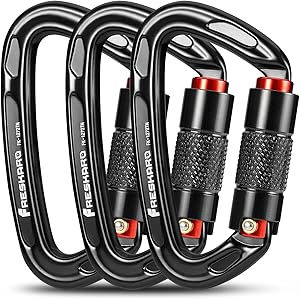
-
Strength Rating: 25kN
-
Certification: UIAA safety certified
-
Lock Type: Twist lock, D-shaped
-
Size: 3.93 inches, large format
The FresKaro UIAA Certified 25KN Carabiner delivers exceptional strength and reliability for serious climbing, rappelling, and mountaineering. The twist-lock mechanism provides an extra layer of security, requiring deliberate action to open—ideal for high-risk environments. The D-shape optimizes load distribution, reducing stress on the gate and enhancing durability.
Its robust build doesn’t compromise on smooth handling. Even with gloves, the gate operation remains comfortable, making it a dependable tool in challenging weather conditions. Whether used for anchoring, belaying, or rescue tasks, the FresKaro offers professional-grade security backed by a globally recognized safety certification.
Pros
-
UIAA certified for maximum safety assurance
-
High 25kN load capacity for demanding use
-
Smooth gate action even with gloves
-
Large size for versatile applications
Cons
-
Slightly heavier than lightweight recreational carabiners
-
Twist lock may take longer to operate for quick clips
3. SOB Auto Locking Carabiner
-
Strength Rating: Heavy duty (exact rating not specified)
-
Lock Type: Auto-locking asymmetrical design
-
Material: High-strength aluminum alloy
-
Applications: Rappelling, rescue, outdoor gear, pet leashes
The SOB Auto Locking Carabiner is designed for those who prioritize quick security and multi-use versatility. Its asymmetrical shape allows for efficient weight distribution and easy handling, while the auto-locking system eliminates the need for manual screw operation—making it faster in critical scenarios like rescue work or rappelling setups.
Despite its strong build, the SOB carabiner remains relatively lightweight, making it a practical choice for extended outdoor use. It works well for attaching gear, securing ropes, or even as a dependable dog leash connector, offering a balance of strength and convenience across a range of activities.
Pros
-
Auto-locking for quick, one-handed use
-
Strong and durable material construction
-
Versatile enough for rescue and recreational use
-
Asymmetrical shape improves handling
Cons
-
No official kN rating listed for technical climbing
-
May be overbuilt for casual everyday use
4. DEKABR 45KN Twist Lock Carabiner
-
Strength Rating: 45kN
-
Material: Alloy steel
-
Lock Type: Twist-lock, large size (4.21 inches)
-
Certification: ANAB certified
The DEKABR 45KN Twist Lock Carabiner stands out for its exceptional load-bearing capacity, making it suitable for professional-grade climbing, tree work, and rescue operations. The alloy steel construction ensures maximum durability under extreme loads, and the twist-lock system adds a secure, quick-release functionality.
Its large size makes it compatible with multiple ropes or gear attachments at once, which is particularly useful for complex rigging or anchor systems. This carabiner is built for those who demand top-tier performance in high-stakes situations, from mountaineering to industrial safety work.
Pros
-
Extremely high 45kN strength rating
-
Durable alloy steel for long-term reliability
-
Large size fits multiple ropes or gear loops
-
ANAB certification ensures safety compliance
Cons
-
Heavier than aluminum options
-
Overkill for light recreational use
5. ProClimb Forged Aluminum Snaphook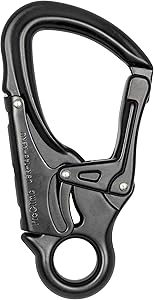
-
Material: Forged aluminum
-
Design: Snaphook style for quick attachment
-
Applications: Rock climbing, arborist work, rescue operations
-
Gate Mechanism: Auto-closing snap gate
The ProClimb Forged Aluminum Snaphook combines speed and strength for professionals who need rapid gear attachment. Its forged aluminum body offers a lightweight yet robust build, while the snaphook gate mechanism allows for one-handed clipping without compromising safety.
This carabiner is favored by arborists, rescue workers, and climbers for its quick usability under pressure. The snaphook design makes it easy to secure onto anchors, harnesses, or gear loops, streamlining operations in time-sensitive environments.
Pros
-
Quick and efficient snaphook mechanism
-
Lightweight forged aluminum build
-
Ideal for both climbing and industrial applications
-
Smooth gate action for fast clipping
Cons
-
Not as secure as screw or twist lock for long-term static loads
-
May not fit smaller gear loops due to gate size
6. PANDENGZHE T-Fly 25KN Carabiner
-
Strength Rating: 25kN (5,620 lbs)
-
Size: 3.9 inches, large format
-
Lock Type: Auto-locking
-
Applications: Rock/ice climbing, rappelling, rescue, hammocks
The PANDENGZHE T-Fly 25KN Carabiner is a rugged, heavy-duty option designed for both vertical adventures and emergency scenarios. Its 25kN rating ensures ample strength for demanding climbing tasks, while the auto-locking gate mechanism provides instant security without manual tightening.
Its large size makes it versatile for attaching thick ropes or multiple gear items. Whether you’re scaling icy cliffs, setting up a rescue system, or lounging in a hammock, the T-Fly delivers reliability and ease of use, making it a strong contender for any outdoor kit.
Pros
-
High 25kN strength for advanced climbing use
-
Auto-locking gate for quick security
-
Works well with thick ropes and gear bundles
-
Durable build for harsh environments
Cons
-
Slightly bulky for minimalists
-
May require extra care to avoid gate jamming in sandy conditions
7. Black Diamond Miniwire Rackpack (6-Pack)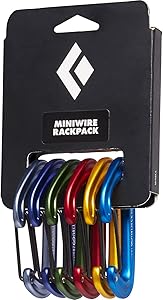
-
Quantity: Set of 6 wiregate carabiners
-
Material: Lightweight aluminum
-
Gate Type: Wiregate for smooth clipping
-
Applications: Mountaineering, camping, hammocks, general outdoor use
The Black Diamond Miniwire Rackpack is perfect for those who need multiple lightweight carabiners without sacrificing quality. Each piece features a wiregate design that reduces weight and minimizes gate flutter, making them ideal for fast-and-light climbing or gear organization.
These carabiners aren’t rated for extreme loads but shine in their versatility for attaching gear, hanging hammocks, or building quickdraws. The set offers excellent value, ensuring you always have extras on hand for organizing or securing your equipment during outdoor adventures.
Pros
-
Comes in a cost-effective 6-pack
-
Extremely lightweight for multi-carry setups
-
Wiregate design prevents freezing in cold conditions
-
Great for organizing climbing gear
Cons
-
Not suitable for high-load professional climbing
-
Smaller size may limit rope compatibility
How to Choose Climbing Carabiners for Beginners
If you’re just starting your climbing journey, you’ve probably already noticed there’s a dizzying variety of gear to choose from — and carabiners are no exception. These small yet vital pieces of metal can literally be the difference between a safe climb and a dangerous fall. Choosing the right ones isn’t just about grabbing whatever looks sturdy; it’s about understanding their types, uses, and features so you can match them to your needs.
In this guide, we’ll break down everything a beginner needs to know about choosing climbing carabiners.
1. What Is a Carabiner and Why Does It Matter?
A carabiner is a specialized metal loop with a spring-loaded gate that allows climbers to quickly and securely connect ropes, harnesses, and other climbing equipment. Think of them as your climbing “connectors.” They’re used in belaying, rappelling, setting anchors, and more.
For beginners, the right carabiner will make your gear easier to handle, reduce the risk of mistakes, and enhance overall safety.
2. Types of Carabiners
Not all carabiners are built for the same job. Knowing the basic types will help you choose the right ones.
a. Shape
Carabiners come in several shapes, each with unique strengths:
-
Oval – Good for general use and racking gear. They’re symmetrical and versatile but not as strong as other shapes.
-
D-shaped – Stronger than ovals and good for most climbing purposes. They naturally guide the rope toward the spine (the strongest part).
-
Asymmetric D (Offset D) – Similar to D-shapes but lighter and with a larger gate opening. They’re very common in modern climbing.
-
Pear-shaped (HMS) – Wider at the top, ideal for belaying and using a Munter hitch. They’re also common for anchor setups.
For beginners, D-shaped or Asymmetric D-shaped carabiners are a safe and versatile choice.
3. Gate Types
The gate is the part that opens to let rope or gear in. Choosing the right gate type affects ease of use and safety.
-
Straight Gate – Strong, durable, and good for clipping bolts or gear.
-
Bent Gate – Curved to make clipping the rope easier, often used on quickdraws.
-
Wire Gate – Lightweight and less likely to freeze in cold weather. Great for alpine and sport climbing.
-
Locking Gate – These have a mechanism to keep the gate closed, adding extra safety. Types include:
-
Screw-lock – Twist to lock; simple and reliable.
-
Auto-lock (twist or magnetic) – Automatically locks when closed, ideal for high-safety situations.
-
Tip for beginners: Always have a few locking carabiners for belaying, rappelling, and anchors.
4. Locking vs. Non-Locking Carabiners
-
Locking Carabiners – Essential for any critical connection where safety is paramount (belay device to harness, anchor points).
-
Non-Locking Carabiners – Lighter, quicker to clip, and good for less critical links like racking gear or connecting slings.
As a beginner, aim for a mix:
-
3–4 locking carabiners (HMS or D-shape)
-
Several non-locking carabiners for quickdraws and general use.
5. Size and Weight
Carabiners come in various sizes:
-
Larger Carabiners – Easier to handle, especially with gloves, and provide bigger gate openings. However, they’re heavier.
-
Smaller Carabiners – Lighter to carry but harder to manipulate and may have smaller gate openings.
Beginners often find medium-sized carabiners best — a balance between easy handling and manageable weight.
6. Strength Ratings (kN)
Carabiners are rated for strength in kilonewtons (kN). One kilonewton equals about 225 pounds of force. You’ll see three numbers on the spine:
-
Major Axis Strength – Strength when loaded correctly along the spine (should be at least 20–24 kN).
-
Minor Axis Strength – Strength when loaded across the gate (usually 7–10 kN).
-
Open Gate Strength – Strength when the gate is open (typically 6–8 kN).
Rule: Always use the carabiner along its major axis, with the gate closed.
7. Gate Clearance and Nose Design
-
Gate Clearance – The distance the gate opens. Larger openings make clipping easier, which is helpful for beginners.
-
Nose Design – Look for a keylock nose if possible. It prevents snagging when unclipping from bolts or gear.
8. Material
-
Aluminum – Lightweight, common for most climbing applications, ideal for beginners.
-
Steel – Much stronger and more durable, but heavier. Often used in gyms or high-wear situations.
For outdoor recreational climbing, aluminum carabiners are the standard choice.
9. Special Carabiners for Beginners
While you can use most carabiners in multiple situations, beginners might benefit from these:
-
HMS Locking Carabiner – Great for belaying and Munter hitches.
-
Auto-locking Belay Carabiner – Reduces the risk of forgetting to lock the gate.
-
Wire Gate Non-Lockers – Lightweight and easy for sport climbing quickdraws.
10. Common Beginner Mistakes to Avoid
-
Using Non-Lockers for Critical Points – Always use locking carabiners for your belay device and anchors.
-
Ignoring the Strength Ratings – Never use gear with unknown or unreadable markings.
-
Overloading the Gate – Avoid loading the carabiner across its gate; it’s much weaker that way.
-
Choosing Too Many Heavy Carabiners – Balance durability with carrying comfort.
-
Not Practicing Clipping Techniques – Even the best carabiner won’t help if you fumble the clip.
11. Recommended Starter Setup
Here’s a sample carabiner kit for a beginner climber:
-
2 HMS Locking Carabiners (belay, anchor building)
-
2–3 D-shaped Locking Carabiners (rappelling, backup)
-
6–8 Non-Locking Carabiners (quickdraws, gear racking)
-
Optional Wire Gate Carabiners for light alpine use
12. Caring for Your Carabiners
Your carabiners will last longer — and stay safe — if you care for them properly:
-
Inspect regularly for cracks, sharp edges, or gate issues.
-
Clean dirt and grit with warm water; dry completely before storing.
-
Avoid dropping from height; even if damage isn’t visible, it can weaken them.
-
Retire old carabiners if the gate doesn’t close properly or markings are unreadable.
Final Thoughts
Choosing climbing carabiners as a beginner might feel overwhelming, but it’s mostly about understanding your needs and matching them to the right features. Start with a few versatile locking carabiners, add some non-lockers for everyday clipping, and focus on safe handling practices.
Remember: no single carabiner does it all. The right mix, combined with proper use, will keep your climbs smooth, safe, and enjoyable.
Once you’ve practiced enough and developed your style of climbing, you can explore more specialized carabiners to fine-tune your setup.