Best Climbing Chainsaws of 2025
Climbing chainsaws are special tools designed to help professionals and tree care workers handle tough cutting jobs while working high above the ground. Unlike regular chainsaws, they are lighter, more compact, and easier to control, making them safe and reliable when working in trees or tight spaces. Whether trimming branches, cutting limbs, or managing tree maintenance, the right climbing chainsaw can make the job faster and more efficient. In this article, we’ll explore some of the best climbing chainsaws available, looking at their features, benefits, and why they stand out. This guide will help you choose the perfect tool for safe and effective tree climbing work.
1. Milwaukee M18 FUEL Top Handle Chainsaw
- Battery: M18 REDLITHIUM™ High Output XC8.0
- Motor: POWERSTATE™ Brushless Motor
- Bar Length: 12″
- Chain Speed: 10.2 m/s
The Milwaukee M18 FUEL Top Handle Chainsaw brings cordless innovation to professional climbing work. Its brushless POWERSTATE motor delivers excellent torque and chain speed, matching smaller gas saws without emissions or noise. Arborists will appreciate the instant start, compact build, and clean operation that makes it perfect for pruning, limbing, and aerial cutting. Runtime with the XC8.0 battery is impressive, allowing users to work for extended sessions without frequent swaps.
This chainsaw also shines in ergonomics. The top handle design ensures balance while climbing, and the lightweight body reduces fatigue when working in tight spaces. Since it is part of the M18 system, those already invested in Milwaukee tools benefit from battery interchangeability. While it won’t fully replace a larger gas saw for ground cutting, its portability, power, and reduced maintenance make it an outstanding professional climbing tool.
Pros
- Cordless design with strong battery life
- Quiet and emission-free operation
- Lightweight and well-balanced for aerial work
- Compatible with Milwaukee M18 ecosystem
Cons
- Limited bar length restricts larger cuts
- Needs extra batteries for uninterrupted work
- Less raw power than high-displacement gas saws
2. Echo CS-355T Top Handle 16″ Chain Saw
- Engine: 35.8 cc 2-stroke gas engine
- Bar Length: 16″
- Weight: 8 lbs (dry)
- Chain Pitch: 3/8″ low profile
The Echo CS-355T is a professional-grade climbing chainsaw tailored for arborists who need a blend of power and maneuverability. Its 35.8 cc 2-stroke engine provides enough strength for tough cuts while remaining compact for aerial work. The 16-inch bar is longer than many climbing saws, giving it more versatility for pruning, limbing, and handling slightly larger branches and logs without needing a second saw. The engine is known for smooth starts and reliable performance, backed by Echo’s reputation in outdoor equipment.
Comfort is another highlight, with an ergonomic handle design that makes overhead and one-handed operations less strenuous. At just 8 pounds, it balances lightness and stability, making it ideal for climbers working long shifts. While gas operation requires fueling and regular maintenance, the raw cutting strength and endurance make it highly dependable. For professionals wanting the familiarity of gas with a little more bar length for flexibility, the CS-355T is an excellent choice.
Pros
- Strong 35.8 cc engine for reliable power
- 16″ bar increases cutting versatility
- Lightweight for climbing use
- Trusted Echo durability and warranty
Cons
- Requires fuel mixing and routine maintenance
- Louder than battery-powered models
- Not as compact as smaller-bar climbing saws
3. ECHO 12 in. 25.0 cc Gas Top Handle Chainsaw
- Engine: 25.0 cc 2-stroke gas engine
- Bar Length: 12″
- Weight: 6.6 lbs (dry)
- Chain Pitch: 3/8″ low profile
The Echo 25.0 cc 12-inch Top Handle Chainsaw is built for arborists who want a balance of lightweight handling and reliable gas performance. Its 25.0 cc engine is powerful enough for standard pruning and limb removal while being compact enough to minimize fatigue when climbing. At just 6.6 pounds, it’s among the lightest professional gas saws, making it especially suitable for extended aerial use. Despite its size, it delivers consistent cutting performance, making quick work of branches up to medium thickness.
Its ergonomic top handle design makes it easy to control in tight spaces, while Echo’s reputation for durability ensures long service life if properly maintained. Starting is generally smooth, though like most gas saws, it requires proper care and fuel mixing. This saw is best suited for arborists who prioritize maneuverability and lightweight handling over raw cutting strength. For aerial jobs where comfort and control are critical, this Echo model delivers.
Pros
- Very lightweight and easy to handle
- Compact size ideal for climbing
- Reliable Echo build quality
- Affordable professional-grade gas option
Cons
- Limited power for thicker branches
- Requires gas/oil mixing
- Shorter bar restricts cutting diameter
4. QZTODO Top-Handle-Chainsaw-Gas-Powered
- Engine: 25.4 cc 2-stroke engine
- Bar Length: 12″
- Weight: ~7 lbs
- Fuel Capacity: 230 ml
The QZTODO Gas-Powered Top Handle Chainsaw is a budget-friendly option designed for light professional or homeowner climbing use. With a 25.4 cc engine and a 12-inch bar, it provides sufficient cutting power for pruning, limbing, and general tree maintenance. Its compact design makes it easy to carry when climbing, and the relatively low weight helps reduce fatigue during prolonged jobs. Despite being less recognized than premium brands, it delivers adequate performance for most small to mid-sized tasks.
The saw’s simplicity is one of its strengths—it’s straightforward to operate and comes with basic features for safety and comfort. However, being from a lesser-known brand, long-term durability and support may not match Echo or Milwaukee. Still, for arborists or homeowners looking for an affordable, functional climbing saw without investing in premium pricing, this model offers decent performance.
Pros
- Affordable compared to premium brands
- Lightweight and compact for climbing
- Adequate power for small to mid-size pruning
- Simple to operate
Cons
- Durability may not match top brands
- Limited support and parts availability
- Smaller fuel tank requires frequent refills
5. NEO-TEC 12” Top Handle Gas Chainsaw
- Engine: 25.4 cc 2-stroke gas engine
- Bar Length: 12″
- Weight: ~7.5 lbs
- Chain Pitch: 3/8″ low profile
The NEO-TEC 12” Top Handle Chainsaw is an emerging competitor in the gas-powered climbing category. Equipped with a 25.4 cc engine, it offers dependable power for pruning, trimming, and small felling tasks. Its 12-inch bar makes it compact and maneuverable, perfect for tree climbers working in confined spaces. Weighing just over 7 pounds, it strikes a good balance between power and portability, making it comfortable for longer sessions in the tree canopy.
What sets this model apart is its affordability combined with respectable build quality. It doesn’t have the long-standing reputation of Echo or Stihl, but it performs admirably for its price point. Maintenance is straightforward, and its ergonomic design makes it accessible for both professionals and serious homeowners. While it may not withstand the same level of abuse as higher-end saws, it offers excellent value for money.
Pros
- Affordable with good performance
- Lightweight and maneuverable
- Adequate power for aerial pruning
- Simple to maintain
Cons
- Less durable than premium brands
- Limited customer support and service centers
- Smaller bar limits versatility
6. VEVOR 25.4 CC 2-Cycle Top Handle Gas Powered Chainsaw
- Engine: 25.4 cc 2-stroke gas engine
- Bar Length: 12″
- Weight: ~7 lbs
- Fuel Tank: 230 ml
The VEVOR 25.4 cc Top Handle Chainsaw is designed for climbers who want a practical, lightweight saw at a budget price. Its 25.4 cc engine delivers solid cutting performance for pruning, trimming, and small branch removal. The 12-inch bar keeps it compact, and its lightweight body makes it a good choice for aerial work where maneuverability is essential. For climbers or homeowners tackling regular maintenance, it provides a decent balance of affordability and efficiency.
Though VEVOR is more known for budget tools, this chainsaw holds up surprisingly well in day-to-day use. It doesn’t match premium saws in terms of build strength or long-term durability, but for the cost, it does its job effectively. The compact form and ease of starting make it beginner-friendly, though serious professionals might find it lacking in power for bigger tasks.
Pros
- Very affordable option
- Lightweight and easy to control
- Adequate for pruning and small jobs
- Simple operation
Cons
- Durability concerns for heavy professional use
- Limited dealer support and service options
- Not suited for larger, demanding tasks
7. SKIL PWR CORE Top Handle Chain Saw
- Battery: 40V lithium-ion (PWR CORE system)
- Bar Length: 12″
- Weight: ~7.5 lbs with battery
- Motor: Brushless electric motor
The SKIL PWR CORE Top Handle Chain Saw is a modern cordless option designed for climbers who want convenience and quiet performance. Its 40V battery system provides a strong runtime and delivers cutting performance comparable to small gas saws. The brushless motor ensures efficient operation with minimal maintenance, while the 12-inch bar keeps it maneuverable in aerial positions. Instant electric start is a big advantage, saving time and effort compared to pull cords.
SKIL’s PWR CORE battery ecosystem is another plus, allowing users to share batteries across other SKIL outdoor tools. While not quite as rugged as premium arborist saws, this model performs reliably for pruning, trimming, and small cutting jobs. It’s especially suitable for homeowners and part-time arborists who want eco-friendly convenience. The lack of fumes, reduced noise, and lightweight feel make it comfortable for extended use, though professionals may need more raw power.
Pros
- Cordless design with instant start
- Quiet, emission-free operation
- Good runtime with 40V battery system
- Lightweight and ergonomic for climbing
Cons
- Less powerful than larger gas saws
- Limited to smaller cutting tasks
- Requires backup batteries for long jobs
How to Choose Climbing Chainsaws
Tree climbing is an adventurous yet demanding task, whether performed by professional arborists or passionate hobbyists. Among the many tools climbers use, the chainsaw is one of the most critical. However, not every chainsaw is designed for climbing purposes. A climbing chainsaw—often referred to as a top-handle chainsaw—is specially built for use aloft, where weight, maneuverability, and safety are paramount. Choosing the right climbing chainsaw is not only a matter of efficiency but also one of safety and long-term comfort. This article provides a comprehensive guide to help you make an informed decision when selecting a climbing chainsaw.
Understanding Climbing Chainsaws
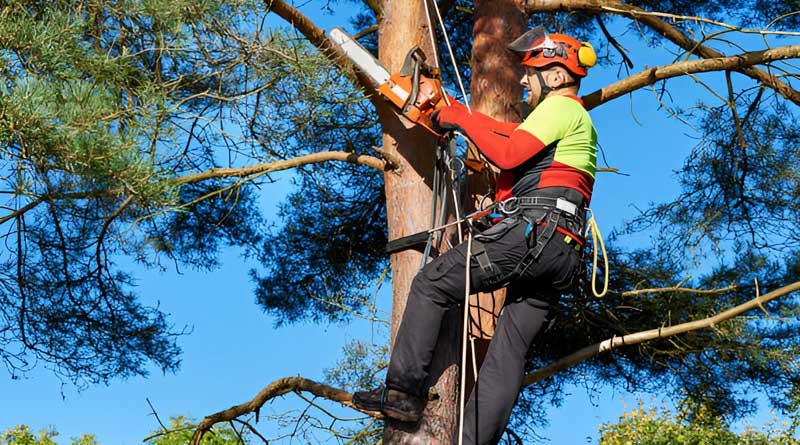
Climbing chainsaws are distinct from ground saws. While conventional rear-handle chainsaws are great for felling or bucking logs on the ground, they are not suitable for use while climbing trees. A climbing chainsaw features a top-handle design that allows the operator to use it with one hand if necessary (though both hands should be used whenever possible for safety). Their compact size, reduced weight, and ergonomic handling make them practical for working in confined spaces among branches.
However, because of the inherent risks of operating a chainsaw in a tree, climbing saws should only be used by trained individuals with proper safety gear and climbing knowledge.
Key Factors to Consider When Choosing a Climbing Chainsaw
1. Weight and Balance
Weight is one of the most crucial factors when selecting a climbing chainsaw. The lighter the tool, the less fatigue you’ll experience while working aloft. Professional climbing chainsaws generally weigh between 5–8 pounds without fuel or battery. A well-balanced saw will feel natural in the hand, reducing strain during extended use.
- Lightweight models are ideal for routine pruning and smaller branches.
- Slightly heavier models with more power may be needed for larger limbs but can be tiring to handle for long periods.
2. Power Source: Gas vs. Battery
Modern climbing chainsaws come in two main types:
- Gas-Powered Chainsaws:
- Provide higher power and longer run time.
- Ideal for heavy-duty professional work.
- Require regular fueling, maintenance, and produce emissions.
- Louder compared to battery models.
- Battery-Powered Chainsaws:
- Quieter, lighter, and environmentally friendly.
- Easy to start and require minimal maintenance.
- Run time is limited by battery capacity, but extra batteries can offset this.
- Perfect for light to medium pruning and urban environments where noise is a concern.
If you’re a professional arborist handling large limbs daily, a gas model might be the better choice. For homeowners or occasional climbers, modern battery chainsaws often provide sufficient power.
3. Bar Length
The bar length determines the maximum cutting diameter of the chainsaw. For climbing work, smaller bars are preferable because they improve control and reduce kickback risks.
- 10–12 inch bars are common for pruning and small branch removal.
- 12–14 inch bars offer more cutting capacity while still being manageable.
- Avoid overly long bars as they add unnecessary weight and can make climbing more hazardous.
4. Engine or Motor Power
Power is measured in cc (cubic centimeters) for gas chainsaws and voltage for battery models. More power allows you to cut thicker branches efficiently, but it often comes at the cost of additional weight. Strike a balance between adequate cutting ability and manageable handling.
- Gas models: Look for 25–35cc engines for most climbing tasks.
- Battery models: A 36V or 40V battery usually provides sufficient power for arborist-level tasks.
5. Ergonomics and Handle Design
Climbing chainsaws should be comfortable to hold for extended periods. Look for:
- Rubberized grips to minimize vibration and slippage.
- Compact top-handle design for maneuverability.
- Even weight distribution so the saw doesn’t feel front- or back-heavy.
A poorly designed handle can quickly lead to fatigue, which increases the risk of accidents.
6. Safety Features
Safety is paramount when using a chainsaw in a tree. Essential safety features include:
- Chain Brake: Stops the chain immediately during kickback.
- Low-Kickback Chain: Reduces the likelihood of dangerous jerks.
- Throttle Lockout: Prevents accidental activation.
- Hand Guard: Protects hands from debris and chain contact.
- Anti-Vibration System: Reduces strain and improves comfort.
Make sure the model you choose complies with international safety standards.
7. Ease of Maintenance
Chainsaws require regular upkeep, especially when used professionally. Features that simplify maintenance include:
- Tool-less chain tensioning systems.
- Easy-access air filters and spark plugs (for gas models).
- Automatic or adjustable chain oilers.
A model that allows quick maintenance means less downtime and better performance in the long run.
8. Durability and Build Quality
Look for robust construction with high-quality materials. Professional climbing saws often have magnesium housings for durability, while budget models may use more plastic components. Remember, a durable saw can withstand rough handling, frequent use, and exposure to outdoor conditions.
9. Noise and Emissions
If you are working in urban or residential areas, noise levels matter. Gas-powered chainsaws are significantly louder and produce exhaust fumes, while battery models are quieter and emission-free. This factor is especially important if you want to minimize disturbances in populated neighborhoods.
10. Budget and Brand Reputation
Your budget will play a key role in the final choice. Professional-grade climbing chainsaws from trusted brands like Stihl, Husqvarna, Echo, or Makita are more expensive but deliver long-term reliability. Cheaper alternatives may be suitable for light use but often lack durability and advanced features.
Tips for Safe and Effective Use
- Training is essential – Never use a climbing chainsaw without proper training in both climbing and chainsaw handling.
- Always wear protective gear – Helmet, goggles, gloves, chainsaw trousers, and boots are non-negotiable.
- Use two hands whenever possible – While top-handle saws can be operated one-handed, this should only be done in specific situations with great caution.
- Inspect your saw before each use – Check chain tension, bar lubrication, and safety features.
- Maintain proper body positioning – Keep the saw away from your body and always maintain three points of contact while climbing.
Conclusion
Choosing the right climbing chainsaw requires careful consideration of multiple factors, from weight and power source to safety features and ergonomics. Professionals may prefer gas-powered models with greater cutting capacity, while hobbyists or those working in residential areas may benefit from lightweight battery-operated versions. Ultimately, the best climbing chainsaw is one that balances power, safety, comfort, and durability to meet your specific needs.
Investing time in choosing the right tool not only enhances efficiency but also ensures your safety in one of the most challenging work environments—high above the ground, among the branches.