Best Quickdraws For Sport Climbing of 2025
When it comes to sport climbing, quickdraws are one of the most important pieces of gear you’ll need. They connect your rope to the bolts on the wall, giving you safety, confidence, and smooth movement as you climb higher. Choosing the right quickdraw can make a big difference in your performance, whether you are projecting a tough route, practicing indoors, or heading outdoors for adventure. With so many options available, it can feel confusing to know which one suits your style best. In this article, we’ll break down the best quickdraws for sport climbing so you can climb smarter, safer, and with more confidence.
1. Petzl DJINN AXESS Quickdraw
- Carabiner type: Bent and straight gate with keylock system
- Sling material: Durable polyester webbing
- Length options: 12 cm and 17 cm
- Weight: ~103 g (12 cm)
The Petzl DJINN AXESS Quickdraw is designed with durability and reliability in mind, making it a favorite among climbers who need solid performance in both sport and trad climbing. Its carabiners are built with a wide rope-bearing surface that reduces rope wear and enhances longevity. The AXESS sling is tough and abrasion-resistant, making it ideal for frequent outdoor climbing where rock edges can be harsh on gear. Petzl also included a rubber “STRING” that keeps the rope-end carabiner securely in place, ensuring easy clipping when it matters most.
In use, the DJINN AXESS strikes a great balance between strength and handling. While slightly heavier compared to ultralight quickdraws, the weight translates into ruggedness, giving climbers confidence during hard falls. Its ergonomic design makes clipping smooth, and the keylock system reduces the risk of snagging on bolts or gear loops. For climbers who want a dependable, all-around quickdraw for sport, trad, and even aid climbing, this option delivers consistent reliability.
Pros
- Extremely durable for outdoor use
- Smooth clipping with keylock system
- Great for both beginners and advanced climbers
- Wide rope contact area reduces wear
Cons
- Slightly heavier than ultralight options
- Not the cheapest quickdraw available
2. Black Diamond Hotforge Hybrid Quickdraw Quickpack
- Carabiner setup: HotForge straight gate (bolt side) + HotWire wire gate (rope side)
- Sling length: 12 cm, polyester dogbone
- Keylock nose for snag-free clipping
- Weight: ~103 g each
The Black Diamond Hotforge Hybrid Quickdraw Quickpack combines the best of two carabiner designs into one functional piece. On the bolt side, the HotForge solid gate with a keylock nose makes clipping and unclipping smooth, while the rope side uses the lightweight HotWire wire gate to minimize gate flutter and reduce weight. This hybrid system ensures performance and safety across a wide range of climbing situations, particularly for sport climbing. The quickpack also comes as a set, which is perfect for building a complete rack without having to buy individual draws.
In real-world climbing, the Hotforge Hybrid shines in terms of reliability and versatility. The polyester dogbone sling feels sturdy in hand, and the integrated Straitjacket insert keeps the rope-end carabiner oriented for quick and efficient clipping. Climbers often appreciate how it balances lightweight design with durability—making it ideal for long routes where gear weight matters but you don’t want to sacrifice strength. This quickdraw is a great middle ground between high-end performance and practical everyday climbing gear.
Pros
- Hybrid design offers durability and reduced weight
- Keylock nose prevents snagging
- Comes as a pack for convenience
- Excellent handling and clipping efficiency
Cons
- Slightly heavier than ultralight wire-gate only draws
- Dogbone width could be wider for extra grabbing comfort
3. Quickdraw Set with Wire Gate Carabiner
- Carabiner type: Dual wire gates (both ends)
- Sling material: Nylon webbing
- Length: 12 cm standard
- Weight: Lightweight design (~90 g average)
This Quickdraw Set with Wire Gate Carabiners is built for climbers who prioritize weight savings without compromising too much on strength. Wire gates are known for being lighter and less prone to freezing in cold conditions, making this set especially useful for alpine and sport climbing alike. The dual wire-gate system also minimizes gate flutter, ensuring added security during falls. Combined with a tough nylon sling, these quickdraws are versatile enough for most sport climbing projects.
In use, the wire gate design makes clipping smooth and reliable, while also reducing the risk of gate whiplash. Though not as rugged as beefier sport-specific quickdraws, this set is particularly attractive for climbers who want an affordable, lightweight option for their rack. The simplicity of the design is a strength in itself—no complicated mechanisms, just straightforward performance. This makes it a solid choice for beginners looking for budget-friendly gear or experienced climbers seeking lightweight draws for longer routes.
Pros
- Lightweight and affordable
- Wire gates resist freezing and reduce gate flutter
- Simple and functional design
- Great for multi-pitch or alpine climbing
Cons
- Not as durable as thicker sport-specific quickdraws
- Narrow dogbone may twist under load
4. CAMP USA Photon Express KS Janja Quickdraws
- Carabiner type: Photon straight gate (bolt side), Photon bent gate (rope side)
- Sling material: Dyneema with Karstop Evo keeper
- Available lengths: 11 cm and 18 cm
- Weight: ~79 g (11 cm)
The CAMP USA Photon Express KS Janja Quickdraws are engineered for sport climbers who want ultralight efficiency without compromising safety. With their wire-thin Dyneema sling and lightweight Photon carabiners, these draws are among the lightest in their category. The bent gate rope-side carabiner allows smooth clipping, while the bolt-side straight gate ensures a secure connection to fixed gear. Designed in collaboration with pro climber Janja Garnbret, these quickdraws deliver professional-grade performance.
In practical use, the Photon Express KS Janja excels on steep sport routes where weight savings make a noticeable difference. The Karstop Evo keeper keeps the rope-side carabiner securely in place, making clipping intuitive and fast. While ultralight gear often compromises durability, this quickdraw manages to maintain a surprising balance between strength and weight. It’s an excellent option for sport climbers pushing their limits on long or overhanging routes, though trad climbers may find the slim sling less confidence-inspiring when grabbing draws.
Pros
- Extremely lightweight and efficient
- Smooth clipping with bent gate design
- Karstop Evo keeps rope-end stable
- Pro-level performance
Cons
- Slim sling less comfortable to grab
- Not as durable as heavy-duty options
5. Fusion Climb Vapor 5 Quickdraw
- Carabiner type: Straight gate (bolt side), bent gate (rope side)
- Sling material: Stitched nylon
- Length: 12 cm standard
- Weight: ~100 g
The Fusion Climb Vapor 5 Quickdraw is built with a focus on durability and reliability. Featuring a strong nylon dogbone and solid gate carabiners, this quickdraw is well-suited for sport climbers who want consistent performance at an affordable price point. Its robust construction makes it a good option for repeated falls on sport projects, where gear takes a lot of abuse. The bent gate on the rope side ensures smooth clipping, while the straight gate on the bolt side locks in securely.
In everyday climbing, the Vapor 5 stands out as a dependable workhorse quickdraw. While not the lightest on the market, it provides confidence with its sturdy feel and reliable strength. Beginners will appreciate its simple, straightforward design, while more advanced climbers may keep it as a training or backup set. If you’re looking for an affordable, tough, and versatile quickdraw for sport climbing, the Vapor 5 fits the bill.
Pros
- Strong and durable construction
- Easy clipping with bent gate rope-side carabiner
- Affordable price point
- Good for repeated falls
Cons
- Heavier than many modern options
- Basic design without advanced features
6. Black Diamond Hotforge Hybrid Quickdraw
- Carabiner setup: HotForge straight gate (bolt side) + HotWire wire gate (rope side)
- Sling: Durable polyester dogbone with Straitjacket insert
- Length: 12 cm and 16 cm
- Weight: ~103 g
The Black Diamond Hotforge Hybrid Quickdraw is a refined option for sport climbing that blends strength, smooth clipping, and practical design. With a HotForge solid gate on the bolt side and a HotWire wire gate on the rope side, it provides durability where it’s most needed and lightweight efficiency where it counts. The dogbone is thick enough to grab comfortably on steep routes, and the Straitjacket insert ensures the rope-side carabiner stays oriented for clean clipping every time.
On the wall, this quickdraw performs consistently well. It’s slightly heavier than pure wire-gate models, but the added durability and handling make it a strong choice for everyday sport climbing. Climbers who value dependable clipping and snag-free performance will find this model particularly reliable. Its balance between weight and robustness makes it an excellent go-to for both weekend cragging and projecting harder routes.
Pros
- Hybrid carabiner design for efficiency and durability
- Straitjacket insert keeps rope-end steady
- Comfortable dogbone for grabbing on steep climbs
- Smooth clipping and snag-free bolt side
Cons
- Slightly heavier than minimalist options
- A bit pricier than budget quickdraws
7. DMM Alpha Sport Quickdraw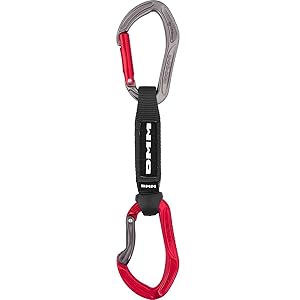
- Carabiner type: Solid gate with ergonomic shape
- Sling: Durable nylon with rubber keeper
- Length options: 12 cm, 18 cm
- Weight: ~113 g (12 cm)
The DMM Alpha Sport Quickdraw is a premium option crafted for demanding sport climbers who prioritize smooth clipping and long-lasting durability. Its ergonomically shaped carabiners are designed for effortless handling, even when pumped, making it a favorite among climbers pushing into harder grades. The nylon dogbone is thick and comfortable, giving climbers extra confidence when grabbing draws mid-route. Built with DMM’s reputation for precision engineering, the Alpha Sport is a standout in both performance and build quality.
During climbs, the Alpha Sport feels exceptionally solid. The gates open smoothly and clip ropes with minimal effort, while the keylock nose prevents snagging on bolts or gear. It’s slightly heavier than ultralight models, but this added heft translates into confidence when taking falls. This quickdraw is clearly designed for sport climbing at the highest levels, where ease of use, safety, and durability matter most. Though it comes at a higher price, many climbers see it as a worthy investment for its unmatched performance.
Pros
- Excellent ergonomics for easy clipping
- Thick dogbone adds comfort and durability
- Premium build quality and reliability
- Great for projecting hard routes
Cons
- Heavier than ultralight draws
- Higher price point
How to Choose Quickdraws for Sport Climbing
When it comes to sport climbing, few pieces of equipment are as essential, and often overlooked, as the quickdraw. These small but crucial tools connect your rope to bolts on the wall, ensuring that your protection is reliable as you move upward. While they may look simple—a pair of carabiners joined by a piece of sewn webbing—quickdraws vary widely in terms of design, weight, durability, and usability. Choosing the right set for your climbing style can make a big difference in both performance and safety.
In this article, we’ll explore what quickdraws are, break down the key factors to consider when choosing them, and provide practical advice for sport climbers seeking the best options for their needs.
What is a Quickdraw?
A quickdraw is made up of two carabiners connected by a dogbone (a short, strong sling of nylon or Dyneema). One carabiner clips to the bolt hanger or protection on the rock, while the other clips to your climbing rope. The purpose of the quickdraw is to allow the rope to run smoothly through the protection, reducing rope drag and keeping the climber safer in the event of a fall.
For sport climbing, quickdraws are among the most frequently handled pieces of gear—you’ll clip dozens of them during a single session. This makes their functionality, durability, and comfort especially important.
Key Factors to Consider When Choosing Quickdraws
1. Carabiner Gate Type
The type of carabiner gate significantly influences ease of clipping and overall performance.
- Straight Gate: Usually placed on the bolt side. They are sturdy and simple but slightly heavier.
- Bent Gate: Typically used on the rope side for easier clipping. The curve guides the rope in, speeding up clips when you’re pumped.
- Wire Gate: Lightweight and resistant to gate flutter (accidental opening during a fall). They are popular for reducing weight but may not feel as smooth as solid gates.
- Keylock Nose: Prevents snagging when unclipping from bolts or gear. This feature is especially helpful for sport climbing.
For sport climbing, most quickdraws use a solid straight gate on the bolt end and a bent gate on the rope end. If weight savings are a priority, wire gates are also a great option.
2. Carabiner Size and Ergonomics
Carabiners come in various sizes. Larger carabiners are easier to clip and handle, especially when wearing gloves or climbing in cold conditions. Smaller carabiners are lighter and more compact but can be trickier to manipulate.
For sport climbing, many climbers prefer slightly larger carabiners with ergonomic shapes because they make clipping smoother and faster during strenuous moves.
3. Dogbone Width and Material
The dogbone is the webbing that connects the two carabiners. Its width and material affect comfort, durability, and weight.
- Narrow Dogbones (10–12 mm, often Dyneema): Very lightweight and compact. Favored by alpinists and trad climbers where weight savings matter most. However, they are harder to grab when you need to rest mid-climb.
- Wide Dogbones (16–25 mm, usually nylon): Heavier but much easier to handle. Their stiffness makes them hang straight, simplifying clipping. They’re also more comfortable to grab in “emergency” situations when you need to pull on the draw for aid.
For sport climbing, wider dogbones are generally preferred. They last longer under heavy use and are easier to manipulate.
4. Length of the Quickdraw
Quickdraws are available in various lengths, typically ranging from 10 cm to 25 cm.
- Short (10–12 cm): Compact and light, ideal for indoor climbing or short routes where rope drag is minimal.
- Medium (17–18 cm): The most versatile choice for outdoor sport climbing. They balance rope management and usability.
- Long (20–25 cm): Excellent for reducing rope drag on wandering routes or overhangs. They also help keep the rope running straight, preventing gear from shifting.
A good sport climbing rack usually includes a mix: mostly medium draws, a couple of short ones, and a few long ones for overhanging sections.
5. Weight vs. Durability
Lightweight quickdraws reduce fatigue, especially on long climbs, but they may sacrifice durability. Heavier models, with beefier carabiners and dogbones, are built to withstand repeated falls and rough use.
For sport climbing—where repeated falls, dogging, and hang-dogging (working a route in sections) are common—durability often trumps minimal weight. Ultralight quickdraws are better suited for alpine or trad adventures.
6. Ease of Clipping
Not all quickdraws clip equally well. Factors that improve clipping include:
- Bent-gate or wide-opening carabiners.
- Stiff dogbones that position the rope-end carabiner securely.
- Rubber retainers on the rope-end carabiner, preventing it from rotating.
When shopping, it’s worth handling quickdraws in a store or borrowing from friends to see which models feel smooth and intuitive.
7. Durability of Components
Over time, quickdraws wear down. Metal grooves can form where ropes run, especially on the rope-end carabiner. Dogbones may fray or weaken after extended use. For sport climbing, where gear takes a lot of abuse, look for quickdraws with:
- Thick dogbones that resist wear.
- Durable carabiners with strong gate action.
- Replaceable dogbones in some high-end models.
Remember to regularly inspect your quickdraws for sharp edges or worn slings and retire them if they show signs of dangerous wear.
8. Number of Quickdraws Needed
How many quickdraws should you buy? For indoor climbing, 6–10 quickdraws may be enough. For outdoor sport climbing, most routes require 12–16 quickdraws. On longer pitches or multi-pitch climbs, you may need 18 or more.
It’s better to have a full set of matching quickdraws because they handle consistently, reducing confusion and speeding up clipping.
9. Price and Value
Quickdraws range in price depending on weight, features, and brand. While budget options work fine for beginners, investing in mid-range or premium quickdraws pays off with smoother handling, longer lifespan, and greater confidence.
A common strategy is to buy one or two premium draws for crux sections (where easy clipping matters most) and fill out the rest of your rack with more affordable models.
Recommendations for Different Climbers
- Beginners: Choose affordable, durable quickdraws with wide nylon dogbones and keylock carabiners. These will be easy to use and forgiving.
- Intermediate Sport Climbers: Look for a balance of comfort, clipping efficiency, and weight. A set of medium-length draws with bent-gate rope ends is ideal.
- Project Climbers: If you spend a lot of time working routes, beefier draws with wide dogbones are worth it, since you’ll often grab them to rest.
- Lightweight Enthusiasts: If you climb long approaches or multipitch sport routes, wire-gate lightweight quickdraws might make sense, though you’ll trade durability.
Practical Tips for Buying and Using Quickdraws
- Test in the Shop: Clip a rope into a display quickdraw to feel how smooth it is.
- Mix and Match Lengths: A varied rack helps you handle different terrain.
- Use Rope-End Protectors: Rubber inserts keep the rope-end carabiner properly oriented.
- Mark Your Gear: If climbing with partners, mark your quickdraws to avoid mix-ups.
- Retire Worn Gear: Replace draws with sharp grooves or frayed dogbones immediately.
Conclusion
Choosing quickdraws for sport climbing is not just about grabbing the cheapest or lightest set available. It’s about finding the right balance of ease of use, durability, and comfort that matches your climbing style. Beginners benefit from wider, sturdier dogbones and keylock gates, while more experienced climbers might prioritize weight savings or specialized designs.
At the end of the day, your quickdraws are your lifeline on the wall. By investing time and thought into choosing the right set, you’ll climb more confidently, clip more efficiently, and ultimately enjoy your sport climbing experience to the fullest.